
Tokyo is one of the few major cities in the world where the nighttime is genuinely better than the daytime. Not just more dramatic — actually better. The crowds thin out (mostly), the neon kicks in, the izakayas fill up, and the streets start showing you things that don't exist in daylight. If you're spending time in Tokyo, planning around the night is not optional. This guide covers everything worth knowing.
Why Tokyo at Night Is Different
Most global cities follow a recognizable pattern: business hours, then a restaurant window, then things go quiet. Tokyo doesn't follow this pattern. The train system runs until well past midnight, the convenience stores are open and staffed 24 hours, and entire neighbourhoods — Shinjuku, Shibuya, Roppongi, Kabukicho — are specifically designed for extended nighttime activity. The city infrastructure assumes you'll be out late. Plan accordingly.
The other thing worth understanding is the light. Tokyo's street-level neon, lantern-lit alleyways, and glowing signage create a visual environment that's almost impossible to photograph badly once you know where to point the camera. The hour between 9pm and 10pm, when the sky still holds a faint blue and the artificial light is at full strength, is what photographers call blue hour — and in Tokyo, it's spectacular.
The Best Neighbourhoods for Tokyo Nightlife
Shinjuku: The Centre of It All
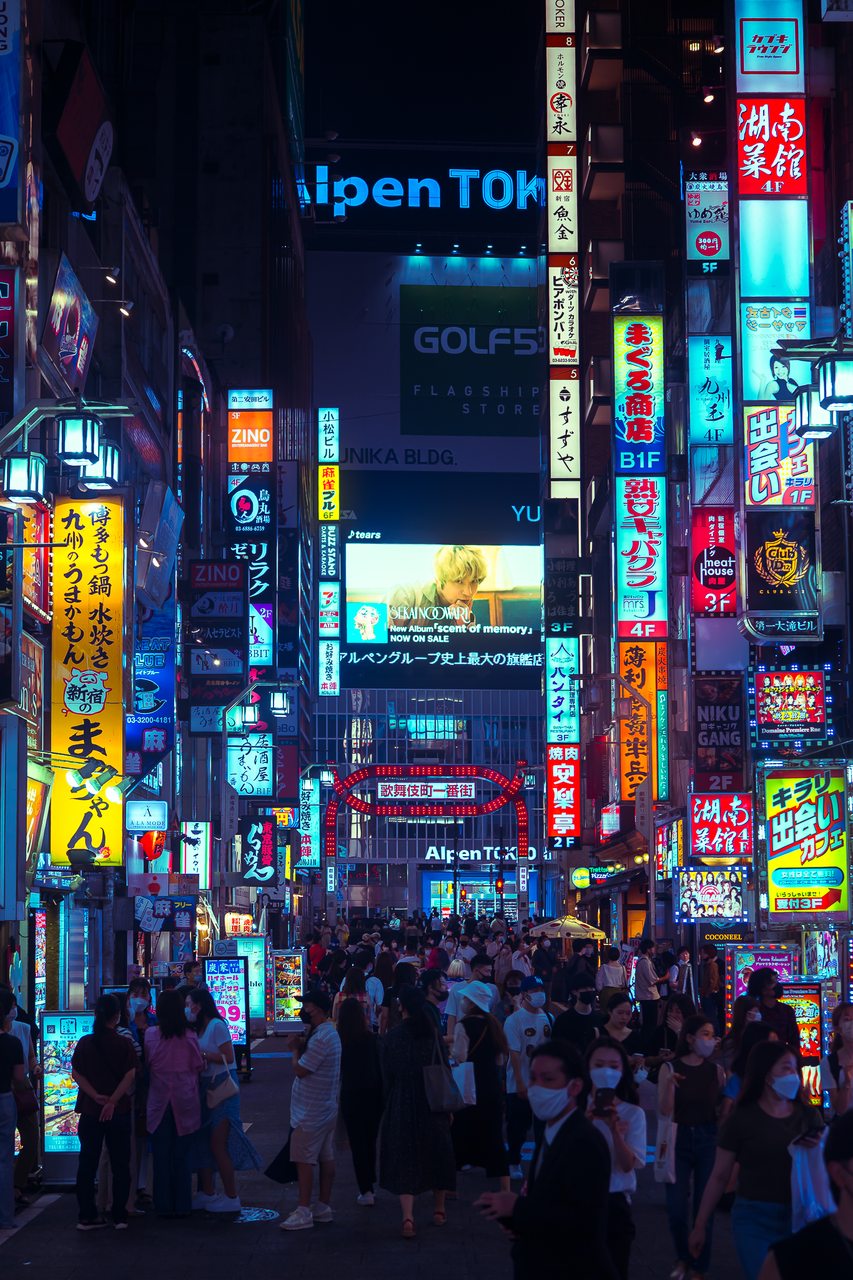
Shinjuku is the most dense and chaotic night destination in Tokyo, which is exactly why it works. The east side of Shinjuku station gives you immediate access to Kabukicho — Japan's largest entertainment district — and the grid of covered alleys, bars, and restaurants that surround it. The famous Memory Lane (Omoide Yokocho) is a narrow alley of yakitori stalls running directly behind the station's west exit, charcoal smoke and all, operating since the postwar era.
For a proper deep-dive into Shinjuku after dark — the best streets to walk, the right timing, and how to actually shoot it — see the Shinjuku After Dark photography guide.
Shibuya: Beyond the Crossing
Everyone knows the Shibuya Crossing. Most visitors photograph it, put it in a Story, and move on. That's a mistake. Shibuya at night extends well beyond the intersection — the Centre-gai pedestrian arcade, the side streets around Dogenzaka, the quieter lanes of Daikanyama fifteen minutes on foot to the south. The crossing itself is genuinely worth spending time at if you go past 10pm, when the crowd density is high enough to make the choreography interesting.
The full breakdown of how to approach Shibuya after dark is in Shibuya After Dark: What 900 Photos Taught Me.
Akihabara: Electric Town After Hours
Akihabara is best known as the anime and electronics district, but at night the illuminated signage, the multi-storey arcades, and the density of neon make it one of the better areas in Tokyo for aimless walking. The main boulevard stays lit until late. The side streets offer a different, quieter version of the same energy. Most of the shops close by 8 or 9pm, but the visual environment is at its peak for another few hours after that.
Golden Gai and the Hidden Bar Alleys
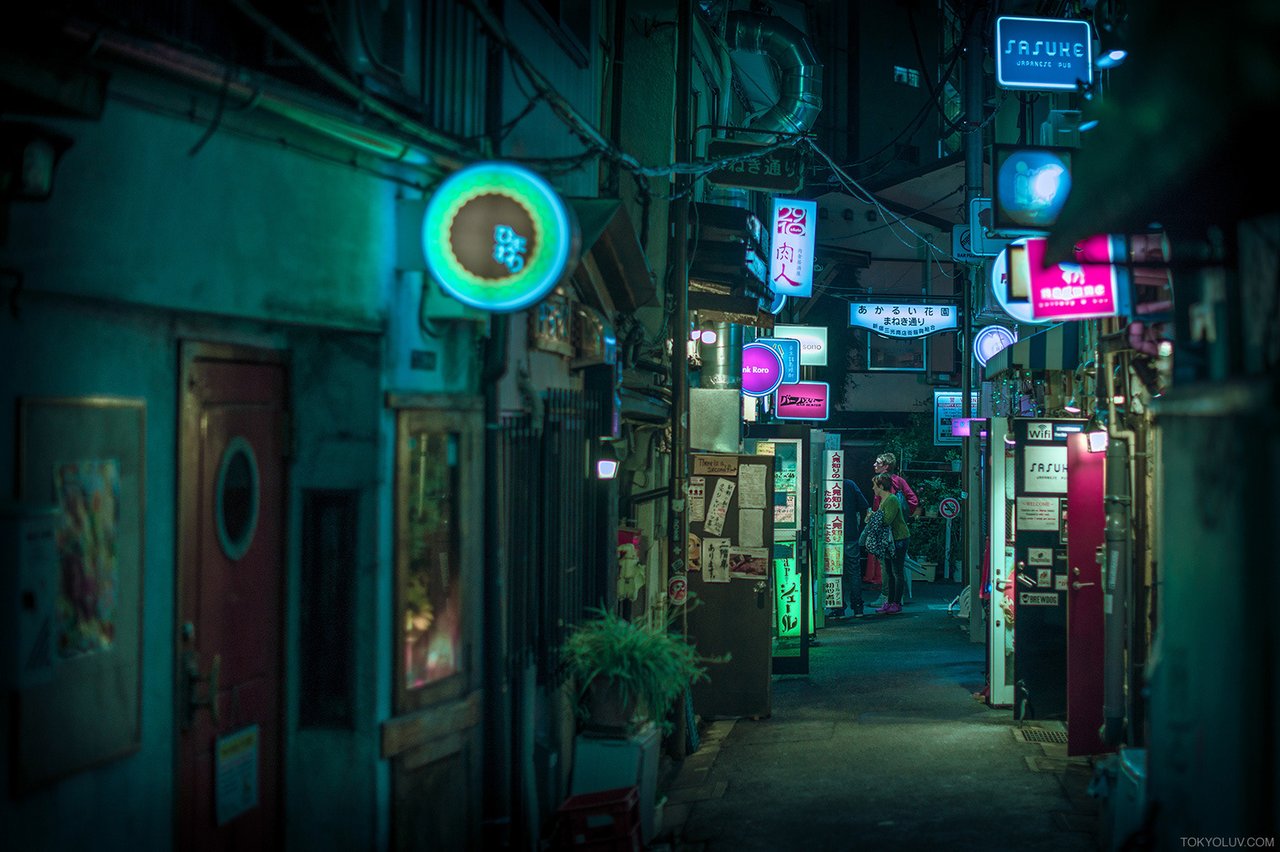
Golden Gai is a small grid of six narrow alleyways in east Shinjuku containing around 200 micro-bars. Most fit between 5 and 10 people. Each has its own personality — some are themed around jazz or horror films or specific baseball teams, others are just small rooms where the owner pours drinks and talks. Cover charges are typically ¥500–¥1,000. It's a genuine Tokyo institution, though the tourist footfall has increased significantly over the past few years.
If Golden Gai is too crowded or too well-known for your taste, there are comparable alley districts elsewhere in the city that most visitors never find. The full list is in Tokyo's Hidden Bar Alleys: Alternatives to Golden Gai.
Izakayas: The Real Tokyo Nightlife
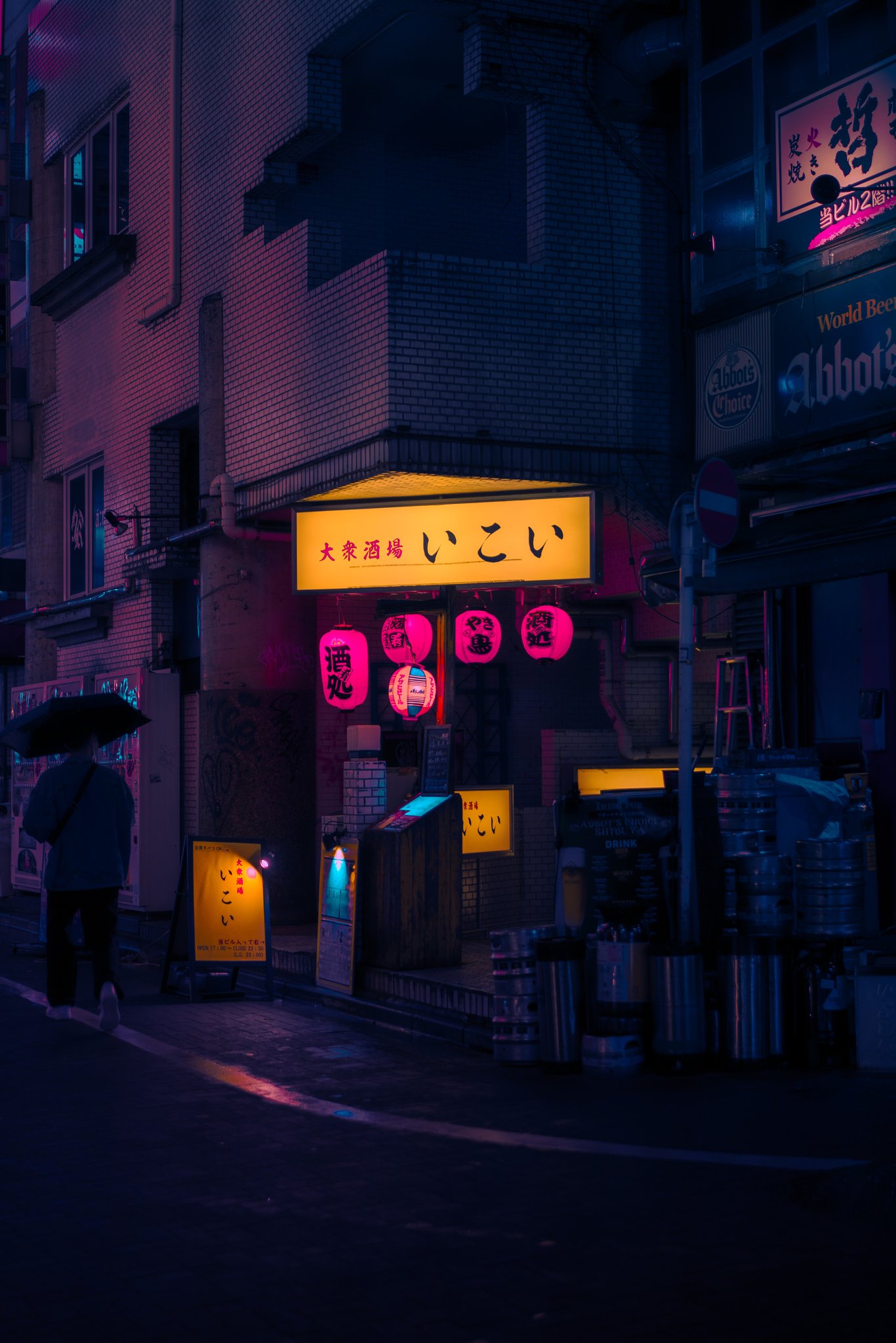
The izakaya — Japan's answer to the pub, the tapas bar, and the late-night diner simultaneously — is where most of actual Tokyo nightlife happens. You order drinks, you order small dishes, you stay longer than planned. The format is designed for exactly that. Entry is usually free, drinks start around ¥500, and most kitchens run until midnight or later.
The best izakayas are not in the tourist districts. The neighbourhoods that deliver consistently are the ones built around commuter stations — Akabane, Asagaya, Koenji, Ogikubo — where the clientele is local and the pricing hasn't been adjusted for foreign visitors. Akabane in particular has a density of izakayas per square metre that should be on every itinerary. The full guide is at Akabane: The Izakaya Neighbourhood Nobody Told You About.
For a west Tokyo alternative that operates on the same principle, Asagaya is two stops from Shinjuku on the Chuo line and feels like a different city.
Late-Night Eating in Tokyo
Ramen After Midnight
Tokyo's ramen culture runs late. Most ramen shops in entertainment districts operate until 2am or later, and a significant number are open 24 hours. The late-night bowl after a few drinks is a specific Tokyo ritual and one that's almost universally good, regardless of which shop you pick. The city's baseline quality for ramen is high enough that even average is worth it at 1am.
For a proper guide to which ramen is worth seeking out — styles, specific shops, and timing — see The Best Ramen in Tokyo: A Photographer's Guide.
Convenience Stores
This deserves its own entry because it's not a joke: the Japanese convenience store at night is a genuine experience. FamilyMart, Lawson, and 7-Eleven all operate 24 hours with hot food counters, onigiri, sandwiches, and an assortment of surprisingly good prepared meals. At 2 or 3am, the mix of people at the counter — shift workers, students, people on the way home from exactly where you were — is a cross-section of the city that you won't see anywhere else.
Tokyo Night Photography and Street Walking
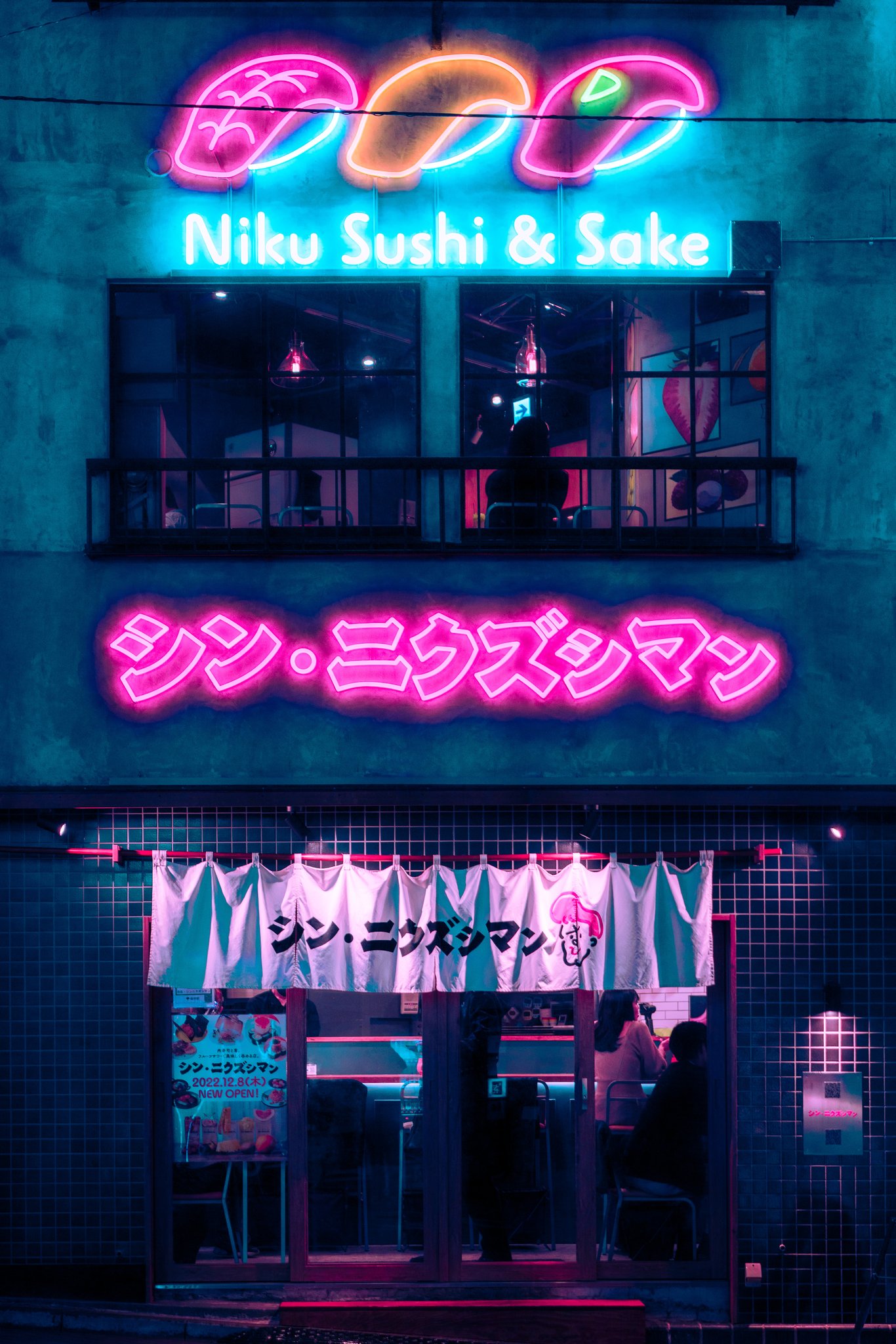
Tokyo is one of the best cities in the world for night photography, and you don't need a professional camera to take advantage of it. The street-level neon, the lantern-lit alleyways, and the covered arcades all create contained, well-lit environments where a smartphone or a basic mirrorless camera will produce results. The key variables are timing and location, not equipment.
The best time to shoot is between 9pm and midnight. Blue hour starts around 8:30–9pm depending on the season, and the combination of ambient sky light and artificial neon is the visual sweet spot. After midnight the sky goes fully black and the contrast increases — more dramatic, but harder to expose correctly.
Street photography in Tokyo is legal and generally comfortable. Photographing people in public spaces, street scenes, and architecture is permitted under Japanese law. A fuller explanation of the legal framework and practical etiquette is in Is Street Photography Legal in Japan?
Night Views and Observation Decks
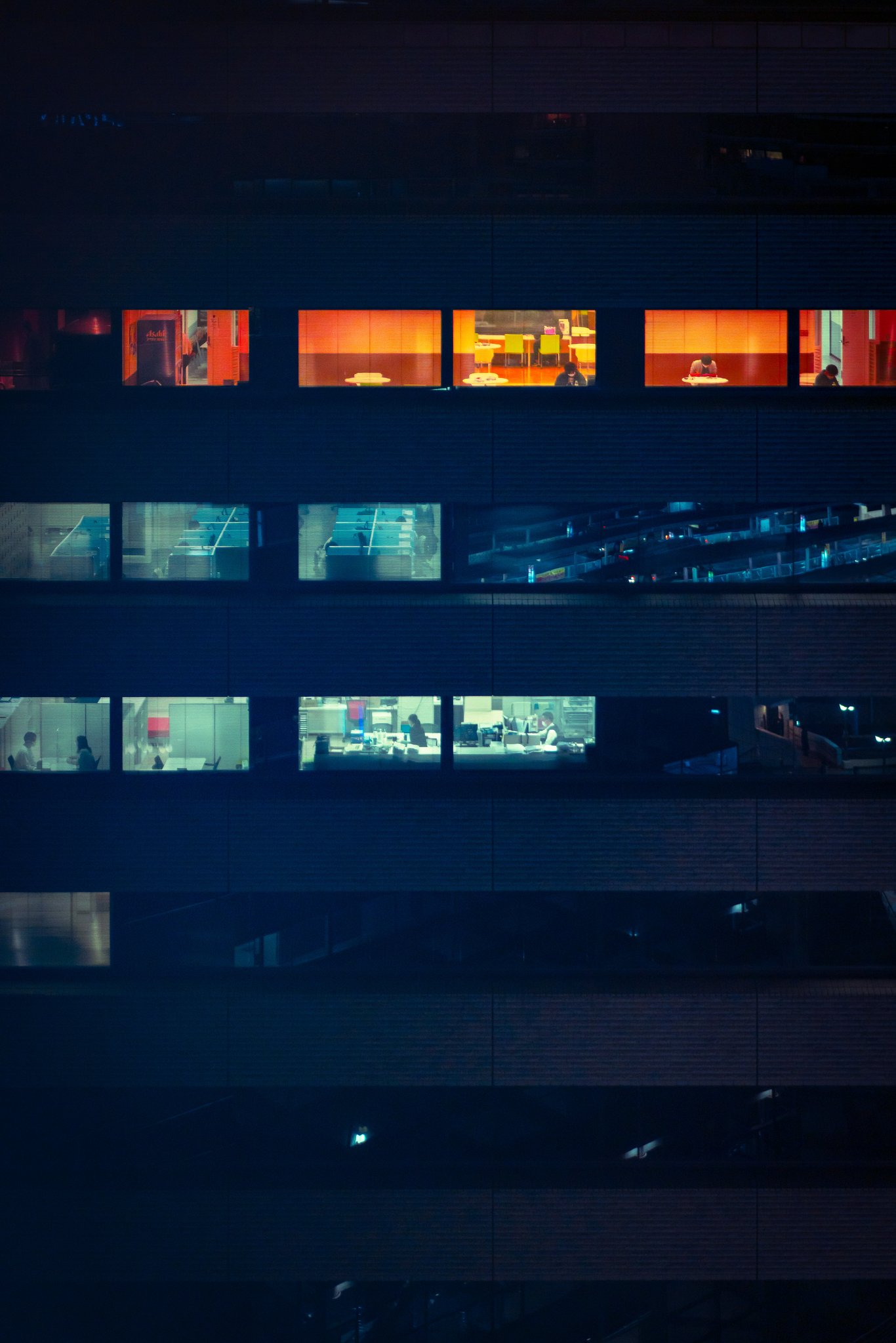
Tokyo's observation decks are genuinely worth visiting, though the crowds at the most famous ones can be significant. The practical options:
Tokyo Skytree (Asakusa/Oshiage) is the tallest structure in Japan and gives a complete 360-degree view of the metropolitan area. Tickets are priced accordingly — around ¥3,100 for the lower deck — and advance booking is recommended. The night view is unambiguous.
Tokyo City View at Mori Tower (Roppongi Hills) is arguably the best photography vantage point in the city. The floor-to-ceiling windows, the rooftop Sky Deck (weather permitting), and the view over Minato and the bay make it the strongest option for serious night photography. Entrance is ¥2,000. The full guide to shooting from Mori Tower is coming soon.
Tokyo Metropolitan Government Building (Shinjuku) offers free observation decks on both towers, open until 11pm on most nights. The north tower is generally less crowded than the south. For a free night view in a central location, this is the best option in the city.
Practical Information: Getting Around Tokyo at Night
Train Hours
Tokyo's train network operates until roughly midnight to 12:30am depending on the line. After that, you're on taxis or on foot. The last train is a real constraint — if you're planning to stay out past midnight, either plan your walk home, budget for a taxi (¥2,000–¥5,000 from central Tokyo depending on distance), or factor in the early morning first trains, which restart around 5am. Some people skip the taxi entirely and just stay out until the first train.
Safety
Tokyo is one of the safest major cities in the world by any measurable standard. Walking alone at night, in any neighbourhood covered in this guide, is not a safety concern. The one area that warrants mild awareness is Kabukicho in Shinjuku — not because of serious danger, but because of persistent tout activity around certain hostess clubs and entertainment venues. Walking with purpose and ignoring approaches is all that's required.
Cash vs. Card
Japan remains more cash-dependent than most comparable economies, particularly at smaller bars and izakayas. Golden Gai bars almost universally require cash. Many ramen shops are cash only. ATMs are available 24 hours at every convenience store and accept major foreign cards. Carrying ¥5,000–¥10,000 for a night out covers most situations.
The Best Night in Tokyo: A Practical Order of Operations
If you have one night and want to cover the most ground: start in Shinjuku around 8:30pm for blue hour photography and dinner in Memory Lane or the surrounding alleys. Move to Golden Gai around 10pm for one or two drinks. From there, walk or take one stop on the train to Kabukicho for the visual spectacle. Finish with late-night ramen before the last train, or press on until the first trains if the night is going well. The whole circuit is walkable — Shinjuku station to Golden Gai is under ten minutes on foot.
The version with more time: add Shibuya in the early evening for the crossing at blue hour, then move to Shinjuku as described above. Add Akabane or Asagaya if you want a genuinely local izakaya experience without the tourist density.
Want to see Tokyo at night through a proper lens?
Book a Night Photography Session →