
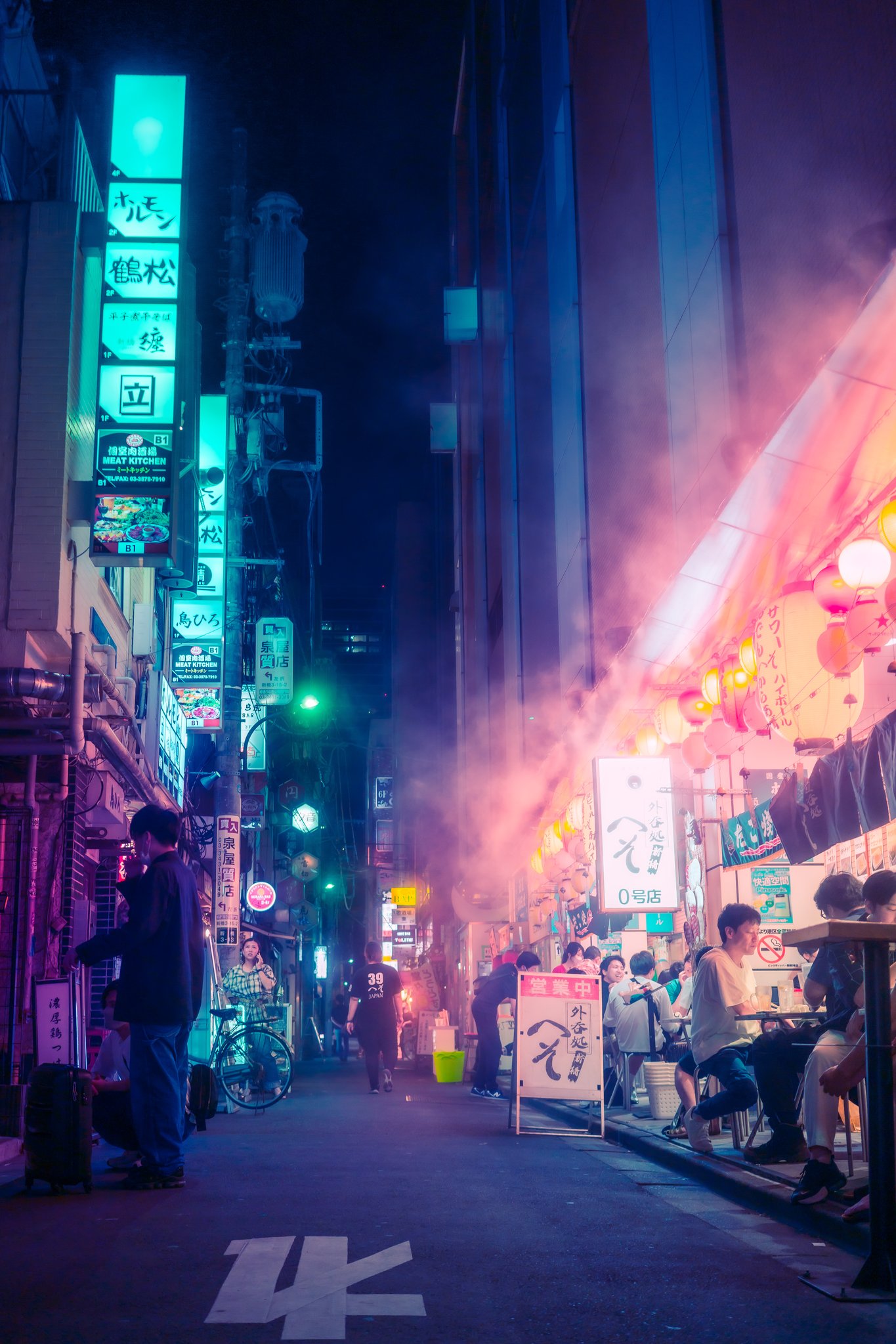
Street photography is legal in Japan. You can photograph people in public spaces without their permission. There is no law that prohibits it, and Japan does not have a general right-to-privacy statute that covers photography in public. I've been shooting here since 2022, several nights a week in some of the most crowded areas of Tokyo, and I've never had a serious legal confrontation. That said, there's a lot of nuance between "legal" and "uncomplicated," and if you're coming here with a camera, it's worth knowing the difference.
What Japanese Law Actually Says
Japan has no single piece of legislation specifically governing street photography. What does exist is a patchwork of civil law around portrait rights (shōzōken) — a concept recognized by Japanese courts that gives individuals some control over commercial use of their image. The key word is commercial. Shooting someone on the street for your own photography practice, for a blog, or for an exhibition is not the same as using someone's face to sell a product without consent. The former is broadly accepted. The latter is where you'd run into problems.
There are also prefectural nuisance ordinances (meiwaku jōrei) that prohibit photographing people in ways that could be considered harassment — following someone, repeatedly photographing a single individual who has asked you to stop, or shooting in ways that clearly invade personal space. These exist in most major prefectures. They're aimed at stalkers and voyeurs, not photographers walking around with a camera. If you're doing normal street photography, none of this applies to you.
Private Property: Where It Actually Gets Complicated
The more practical limitation isn't about people — it's about where you're standing when you photograph them. Shopping malls, covered shopping arcades, and many indoor spaces in Japan are private property, and the owners can and do prohibit photography. Signs are usually posted. In some of the covered shotengai you'll find in neighborhoods like Koenji or Shimokitazawa, photography rules vary by arcade. When in doubt, look for signs. Outdoor public streets, parks, and train station exteriors are generally fine.
Certain shrines and temples restrict photography in specific areas — not because of portrait rights, but out of respect for the space. These restrictions are usually marked and easy to follow. The outdoor grounds of most shrines are open to photography. Interior spaces, ceremonies, and certain sacred objects often are not.
The Cultural Reality vs. the Legal Reality
Here's where it gets interesting. Japan is a country where social harmony carries significant weight, and the legal right to do something doesn't always translate to comfort doing it. Japanese people are, on the whole, more private than people in many Western countries. Not hostile — private. Being photographed by a stranger can feel intrusive in a way that the law doesn't capture.
In practice, this means that shooting at arm's length with a wide lens in someone's face is going to produce more friction here than it might in, say, New York. Not because it's illegal, but because it's socially dissonant. Conversely, shooting with a longer lens at a distance, or being unobtrusive with a smaller camera, tends to produce zero friction at all. Most people simply don't notice.
I've been approached a handful of times over the years, always politely. The exchange is usually someone asking what I'm photographing, not demanding I delete anything. Being straightforward about being a photographer and having a website to point to resolves it immediately. I've never been asked to delete a photo by anyone other than once, at a private event I probably shouldn't have been shooting anyway.
Photographing Minors
This is the area where I'd exercise the most caution. Japan has specific regulations around the commercial use of images of minors, and there's heightened cultural sensitivity around photographing children you don't know, particularly solo children. If a child is part of a crowd scene or public event, it's generally the same as any other street photography. Singling out a child for a portrait-style shot is a different matter, and I'd avoid it without a parent present and some form of consent.
Photographing school groups, festivals where children are the main subject, or school grounds is an area where you're going to draw attention and probably should. Japan takes child privacy seriously. This is one area where the cultural norm and the legal reality point in the same direction.
If Someone Asks You to Stop
It happens occasionally. The right move is to stop, be polite, and move on. Not because you're legally required to, but because it's the correct thing to do and because Japan runs on a social contract that rewards consideration. Getting into a debate about portrait rights on a street corner in Shinjuku achieves nothing except ruining the rest of your night. Nod, apologize briefly, walk away. There are more shots around the next corner.
In Shinjuku's Kabukichō specifically, there are areas where photography is more sensitive because of the businesses operating there. Not illegal, but worth being aware that you're in an area where some people really don't want to be photographed. Read the room.
Practical Takeaways
Go shoot. Don't let a legal question that has a clear answer stop you from practicing. You are not going to be arrested for photographing a public street in Tokyo. You might occasionally create an awkward moment, but that's true anywhere in the world and it has more to do with how you approach people than with any law.
Be unobtrusive where possible. A smaller camera, a longer reach, or simply moving fluidly through a scene rather than stopping and pointing will eliminate 90% of the friction before it starts. Japan rewards people who aren't making a spectacle of themselves.
Know where you're standing. Public street, fine. Covered shopping arcade, check for signs. Private venue, ask first. Shrine interior, look for restrictions. This distinction matters more here than the question of whether you're allowed to photograph the people in those spaces.
The photographers who have the most trouble in Japan are usually the ones who are aggressive, or who have decided that the legal right to do something means they're entitled to do it regardless of how it lands. That approach works poorly everywhere. In Japan, it works particularly poorly. The photographers who have the least trouble are the ones who are quiet, fast, and respectful — which are also the characteristics that produce the best street photography anyway.
Visiting Tokyo and want to shoot portraits with a local?
Book a Session in Tokyo →