
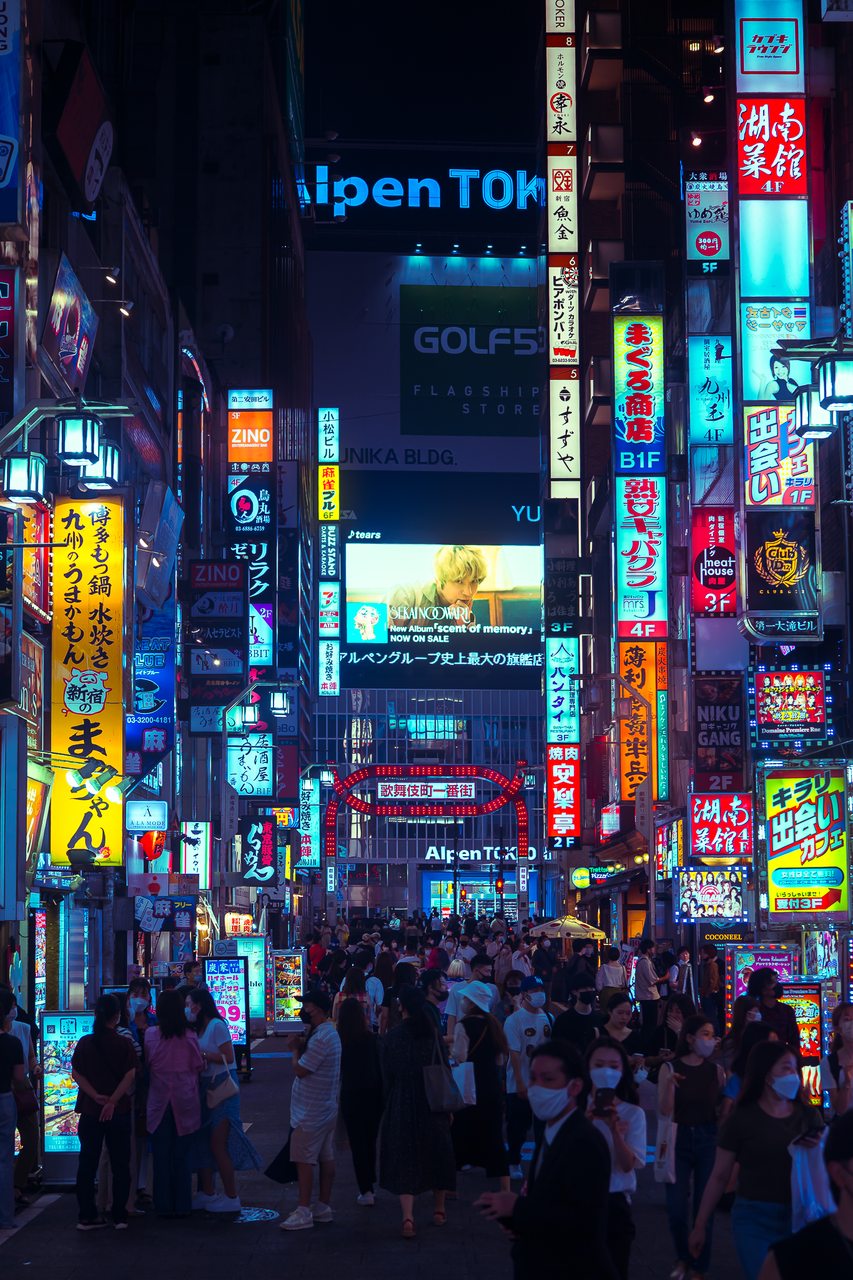
Shinjuku contains multitudes. In a single evening you can move from the west exit's skyscraper plaza to Kabukichō's full neon overload to the narrow alleys of the east side to quiet residential streets that feel like a completely different city. The version tourists see is real and worth your time. But there are layers underneath that most people never reach.
I shoot here more than anywhere else in Tokyo. Here's what I've figured out after a lot of late nights and a lot of frames.
The East Exit After Dark
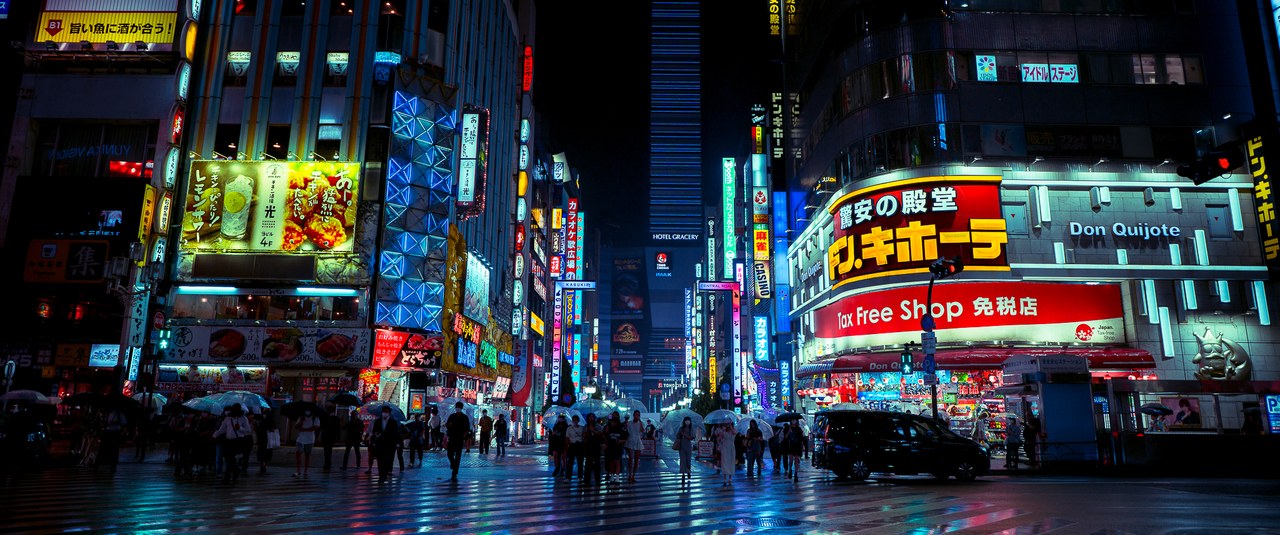
The area around Kabukichō is where the serious neon is. Yasukuni-dori and the streets around it run with light even at 2am — pachinko parlors, karaoke places, host clubs all competing for attention with escalating amounts of LED. For photography, it's almost too much. The instinct is to point the camera at the biggest, brightest thing, and that almost never works. The images come out messy.
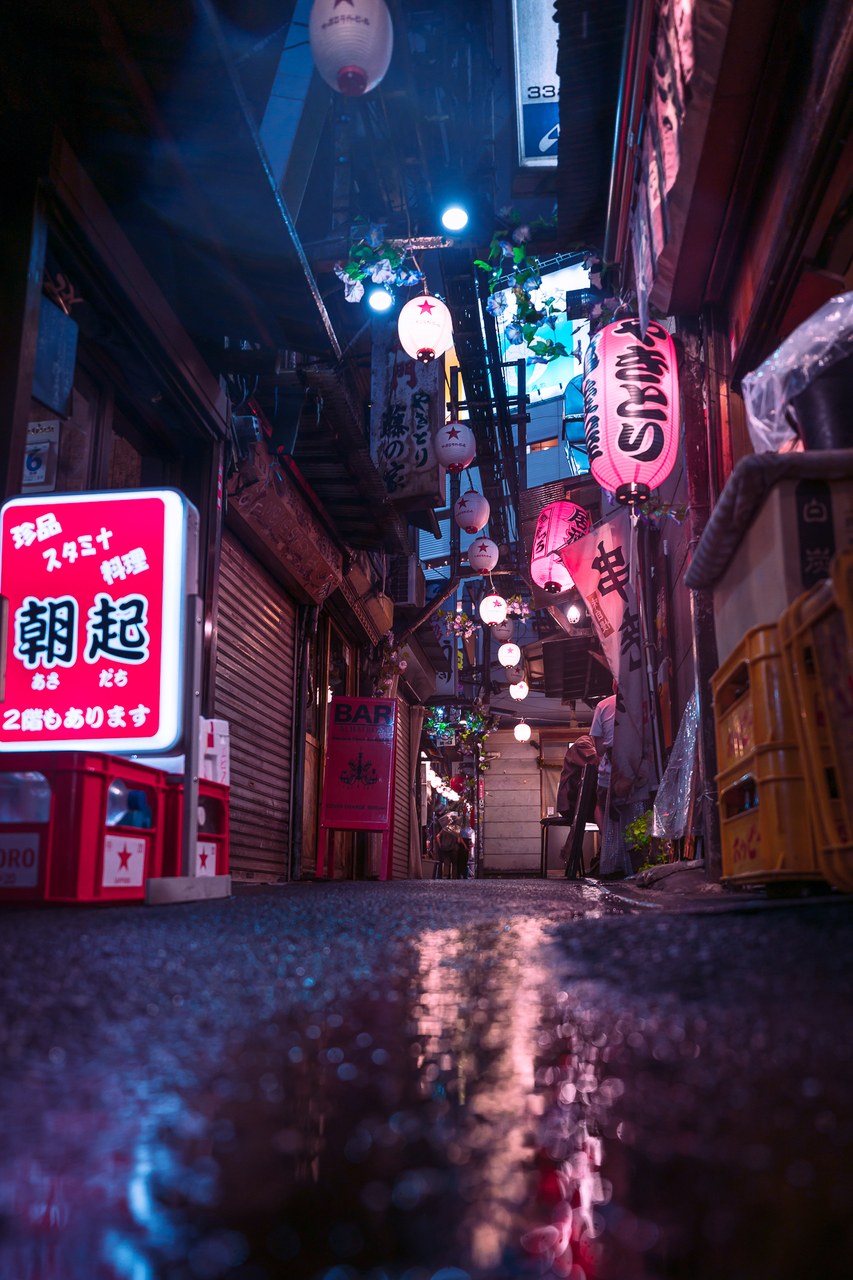
The trick is to find the edges of the chaos, not the center of it. One or two turns off the main Kabukichō drag, you start to get quieter, more cinematic light. A single izakaya sign casting pink across a wet sidewalk. A silhouette in a lit doorway at midnight. These are the shots. The full neon cacophony is visually overwhelming in person but often flat in a frame — there's no subject, just noise.
Rain Changes Everything
This is true everywhere in Tokyo but it's especially true in Shinjuku. Rain doubles the light — every surface becomes a mirror, reflections multiply off the road, and you suddenly have twice as much visual material to work with. A drizzly Monday night in Kabukichō is worth more photographically than a clear Saturday. I check the forecast before going out, and I'm more motivated by a rain warning than by good weather.
Wet ground and neon is a combination that flatters almost any composition. If you're in Tokyo and it rains, go to Shinjuku. Don't wait for it to stop.
Timing Matters
Shinjuku is one of the few places in Tokyo that doesn't die at midnight. Crowds thin around 1–2am but they don't disappear — there's a particular energy in the people still out at 3am on a Friday, which is its own kind of interesting to photograph. The light is the same but the streets feel different. If you're only going once, go at 11pm. If you're going twice, save the second trip for after midnight.
Don't Skip the West Exit
Most photographers ignore the west exit. This is a mistake. The plaza under the Tokyo Metropolitan Government Building has a strange, architecturally interesting quality — open concrete, severe lines, different in texture from the chaos on the east side. And the streets around it, especially late at night when the salary workers have gone home, have a quieter, more desolate feel that's worth exploring.
If you want images that don't look like every other Tokyo neon photo, start at the west exit before you cross over to Kabukichō.
The Honest Summary
Shinjuku is overexposed as a subject. Thousands of photographers shoot it every week, and most of the results look the same — wide angle, everything in frame, hoping the chaos does the work. It doesn't. You need patience, a specific idea of what you're looking for, and an understanding that the best shot of the night is probably not the first thing that looks impressive. Walk more, shoot less, and let the city show you something instead of trying to capture all of it at once.
Want portraits with Shinjuku as the backdrop?
Book a Session in Tokyo →