
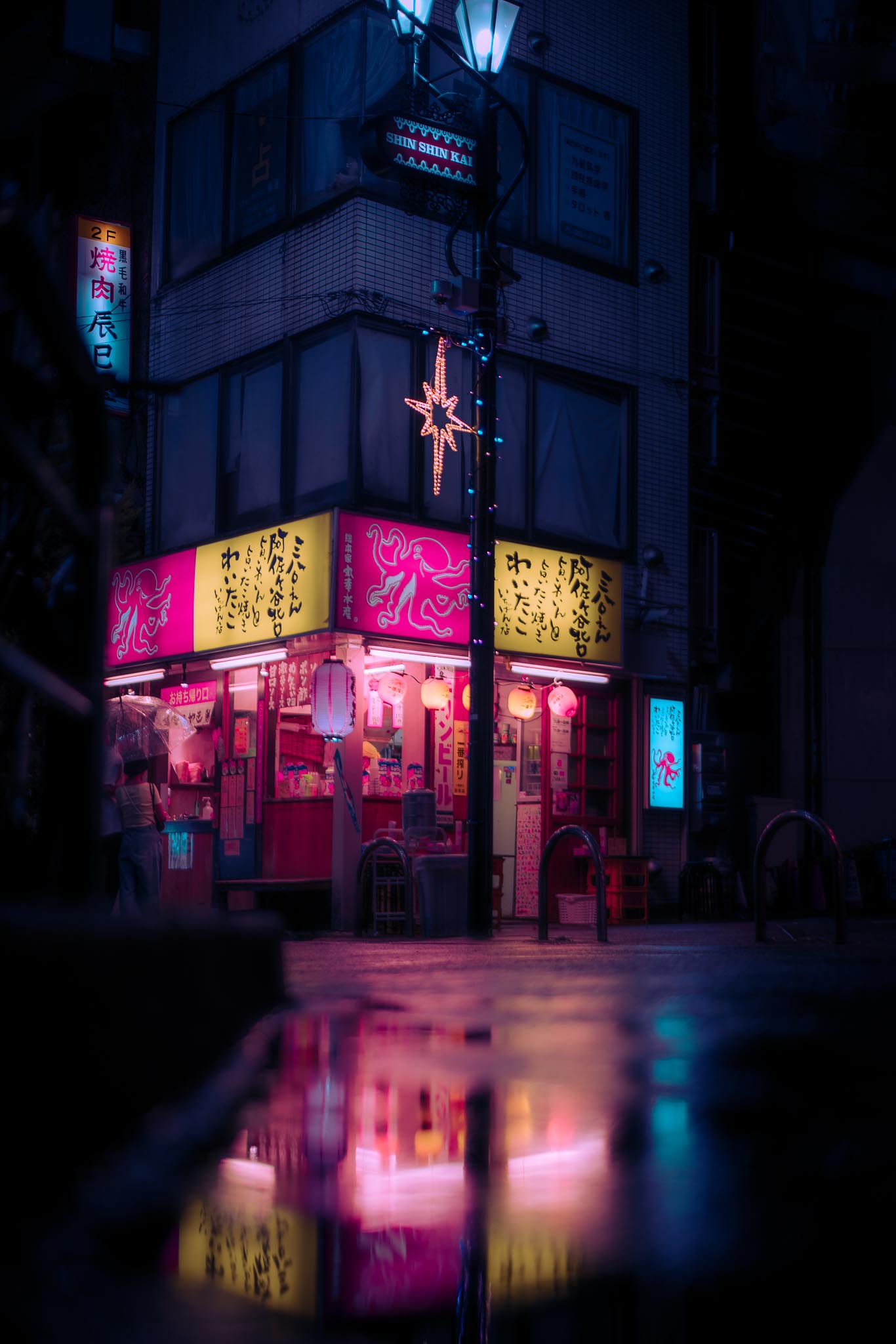
Asagaya is one of the best neighbourhoods for street photography in Tokyo, and it rarely comes up in any conversation about where to shoot in the city. It sits two stops west of Shinjuku on the Chuo line — eight minutes by train — and it has a character that the more famous neighbourhoods have spent years and significant money trying to manufacture. Asagaya never had to. It's been this way for decades, and it doesn't appear to be in any hurry to change.
I keep coming back here, especially when it rains. The combination of old shotengai streets, traditional lantern lighting, and wet pavement produces images that are hard to get anywhere else in the city.
Getting to Asagaya and Finding Your Bearings
Asagaya Station is on the JR Chuo-Sobu line, with direct trains from Shinjuku (8 minutes) and Tokyo Station (about 25 minutes). The south exit puts you at the entrance to Pearl Center — the covered shotengai shopping arcade that runs south from the station and serves as the neighbourhood's main artery. The north exit opens onto a quieter residential and dining area that rewards slower exploration.
The neighbourhood divides roughly into three zones worth knowing. Pearl Center and the covered arcade running off it — daytime shopping, food stalls, old-school retail. The streets east and west of the arcade — izakayas, small bars, places that have had the same sign since the 1980s. And the back streets further south — residential, quiet, occasionally surprising.
Pearl Center: The Shotengai at Night
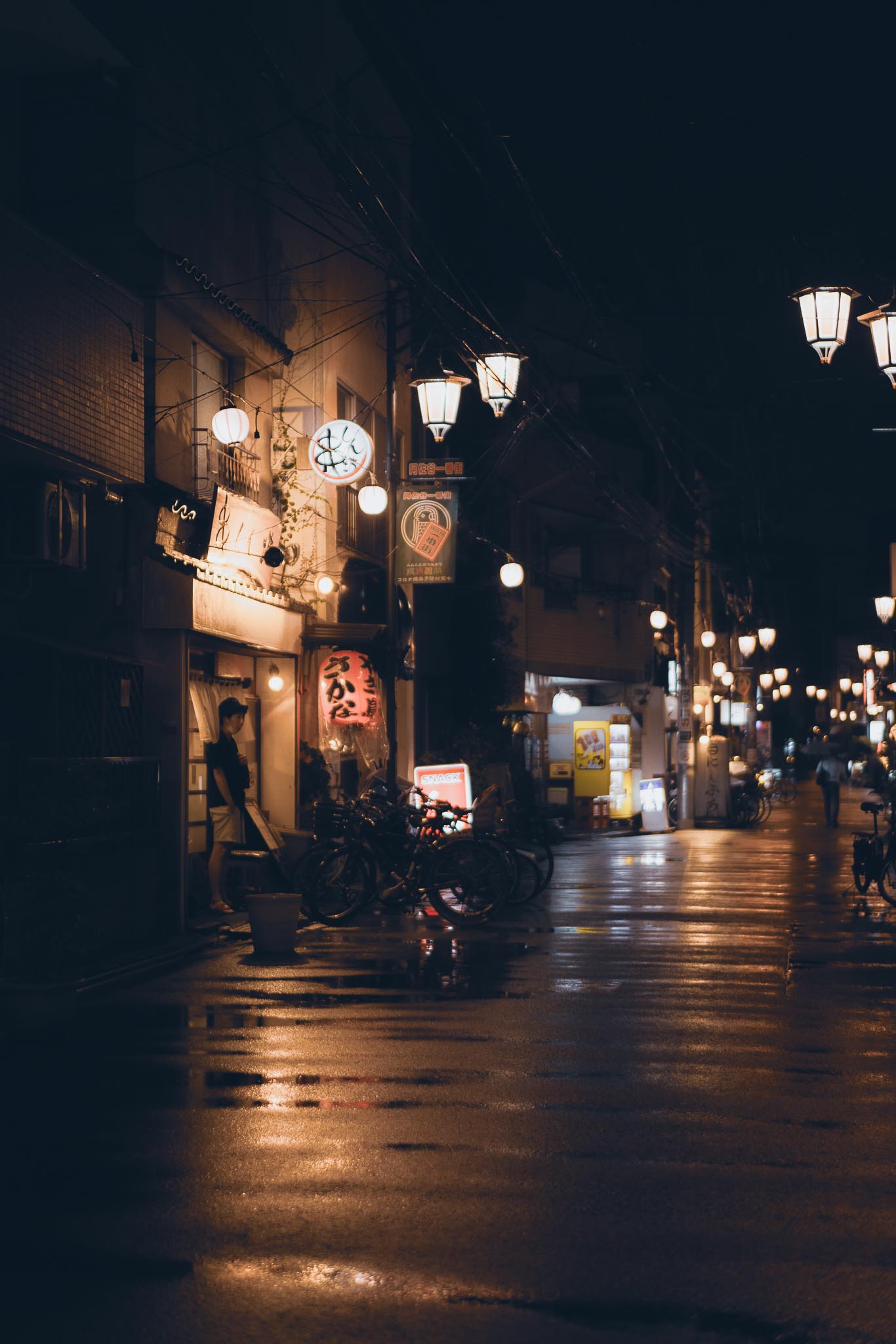
Pearl Center is Asagaya's covered shopping arcade, and like most shotengai in Tokyo it has a split personality depending on when you visit. During the day it's functional — groceries, hardware, clothing shops, a few places to eat. After the shops close and the overhead lights shift to the warmer evening setting, it becomes something else. The lanterns that line the arcade take over as the primary light source, the foot traffic changes character, and the whole street starts to look like a film set for a movie nobody has made yet.
This is where the photography happens for me. The arcade's covered structure means rain doesn't stop you — if anything, rain improves it, because the edges of the arcade where the roof ends turn into reflective surfaces and the light pools on the pavement. A slow walk through Pearl Center at 10pm on a rainy Wednesday is worth more frames than a dry Saturday afternoon almost anywhere else in west Tokyo.
The Side Streets: Where Asagaya Keeps Its Character
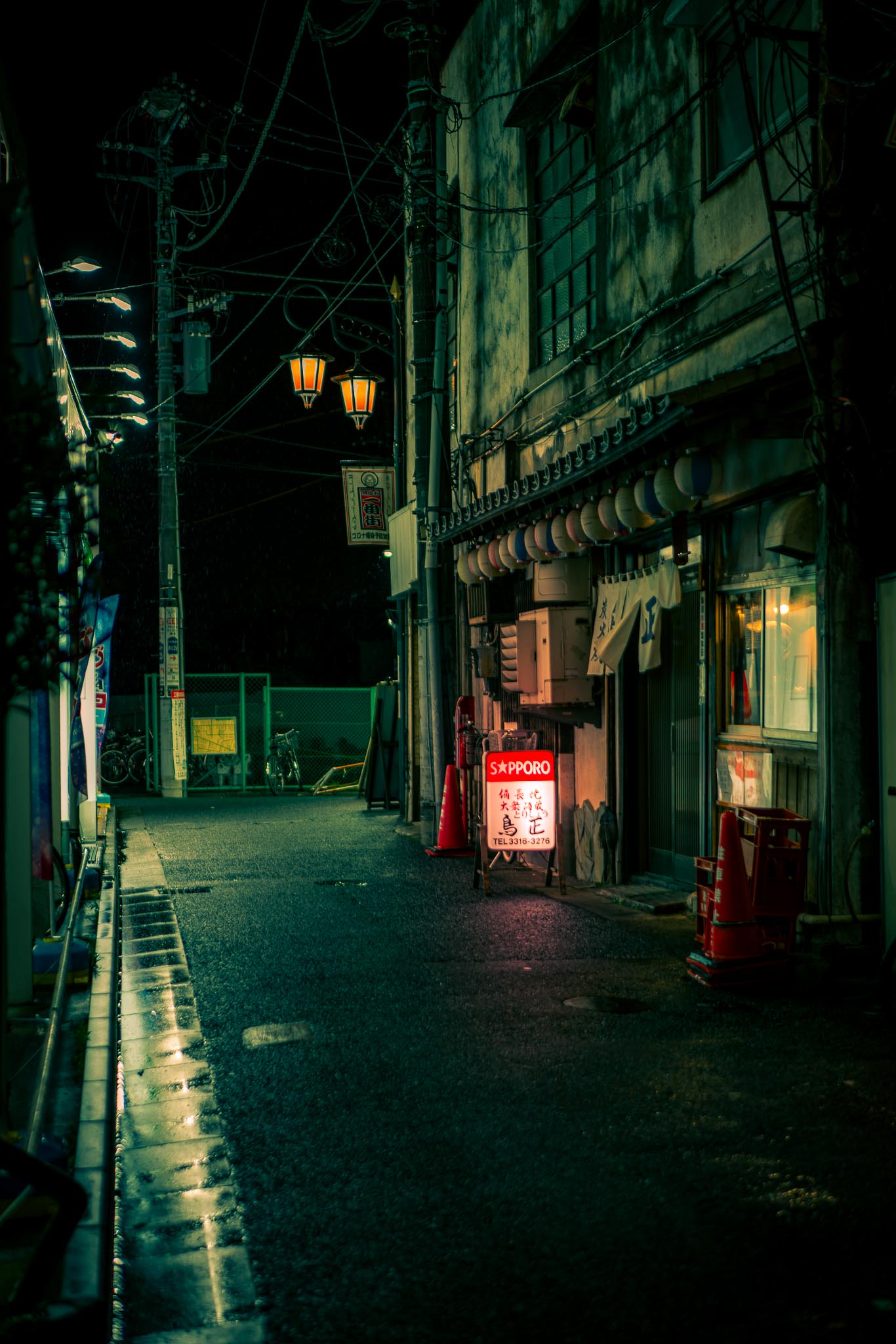
The streets running off Pearl Center — particularly to the east, toward the smaller alleys that thread between the back of the arcade and the residential streets — are where Asagaya gets genuinely interesting for a photographer. These are narrow, dark, and lit by a combination of streetlamps and whatever glow leaks out of the establishments along the way. An izakaya door open with light and sound spilling out. A yakitori place with a Sapporo sign the only thing visible from twenty metres away. A ramen counter visible through a steamed-up window.
The visual register here is quieter than Shinjuku or Shibuya — less neon, more lantern, more shadow. The shots that work are less about compression and chaos and more about isolation: one element, well-lit, everything else dark. A single lamp above a doorway. A sign cutting into frame from the left. The kind of composition that requires patience rather than reflexes.
Asagaya and Jazz
Asagaya has a jazz culture that goes back to the postwar period, when the neighbourhood developed a reputation as a gathering point for artists, musicians, and the kind of people who weren't particularly interested in the corporate trajectory that was reshaping the rest of Tokyo. That reputation has persisted. There are jazz bars here that have been running continuously since the 1960s, with record collections and bartenders to match.
Every autumn, Asagaya hosts the Asagaya Jazz Street festival — a multi-day event that spreads across the neighbourhood's bars and public spaces and draws a crowd that comes specifically for the music rather than for the Instagram opportunity. It's worth planning a trip around if you're in Tokyo in October. The neighbourhood during the festival has an energy that's different from its usual register — more people, more noise, but the same underlying character.
For photography, the jazz bars themselves are difficult — low light, small spaces, and it's rude to point a camera at people in an intimate setting without asking. But the streets around them during festival nights, the overflow of people, the warm light from open doors — that's accessible and worth shooting.
Rain Changes the Entire Proposition
Most of my best Asagaya frames came on rainy nights, and this isn't a coincidence. The neighbourhood's lighting — a mix of traditional lanterns, warm shop signs, and the occasional neon that doesn't try too hard — is designed, unintentionally, to look exceptional when reflected in wet pavement. The pink takoyaki stand on the corner near the station entrance, with its bold graphic signage and paper lanterns, doubles itself in a puddle into something that looks deliberately composed. It isn't. It's just there, and the rain reveals it.
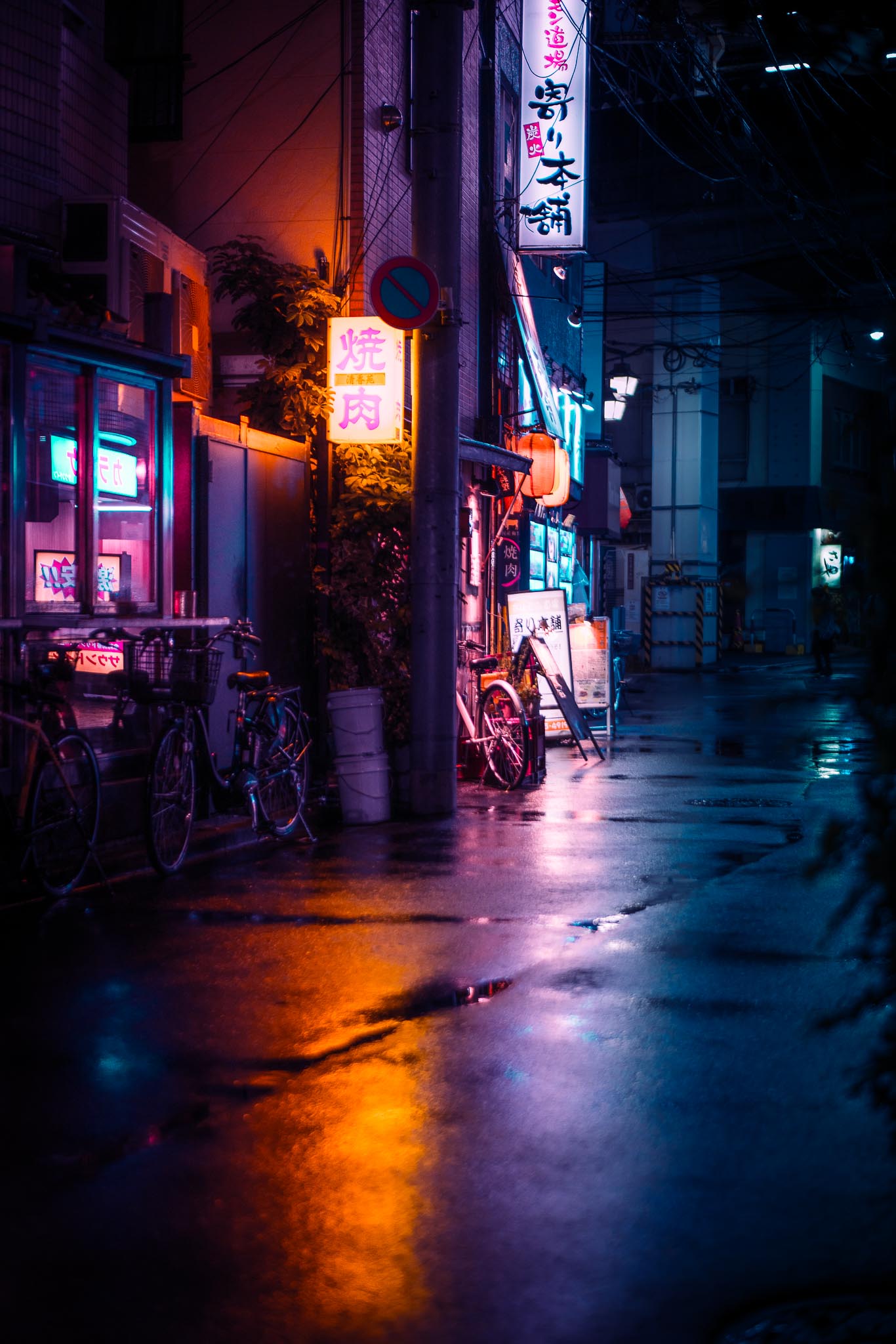
If you're planning a shoot in Asagaya and you have a choice of nights, pick the rainy one. The covered sections of the shotengai keep you dry while the edges do the visual work. The back streets become mirrored. The colour contrast between warm lantern light and the cooler ambient glow sharpens into something the camera responds to.
How Asagaya Compares to Shimokitazawa
The comparison comes up often because both neighbourhoods occupy a similar cultural space — west Tokyo, arts-adjacent, younger population, independent rather than chain-dominated. But they've gone different directions. Shimokitazawa has become a destination; there are articles and guides and a specific aesthetic associated with it, and on weekends it fills with people who've come specifically to experience the Shimokitazawa version of Tokyo.
Asagaya hasn't done that. There's no Asagaya aesthetic being marketed. The people in the shotengai on a Tuesday night are there because they live nearby and this is where they eat and drink. The bars aren't angling for coverage. The neighbourhood is indifferent to its own reputation in a way that increasingly few places in Tokyo manage to be, and that indifference is exactly what makes it worth visiting.
When to Visit
Asagaya works at any time of year but has specific peaks worth knowing. The Tanabata festival in early August transforms Pearl Center with traditional decorations and brings the whole neighbourhood out. The Jazz Street festival in October is the other major draw. Outside those events, weekday evenings from around 7pm are the most reliable conditions — the izakayas fill up, the shotengai has foot traffic, and the neighbourhood is fully itself without being crowded.
Late night — after midnight on a Friday or Saturday — has a different quality. The arcade is quiet, a few places are still open, and the empty streets with the lantern light on wet pavement are as good as street photography conditions get in this city without taking the Yamanote line to Shinjuku.
Looking for a portrait session away from the tourist circuit?
Book a Session in Tokyo →