
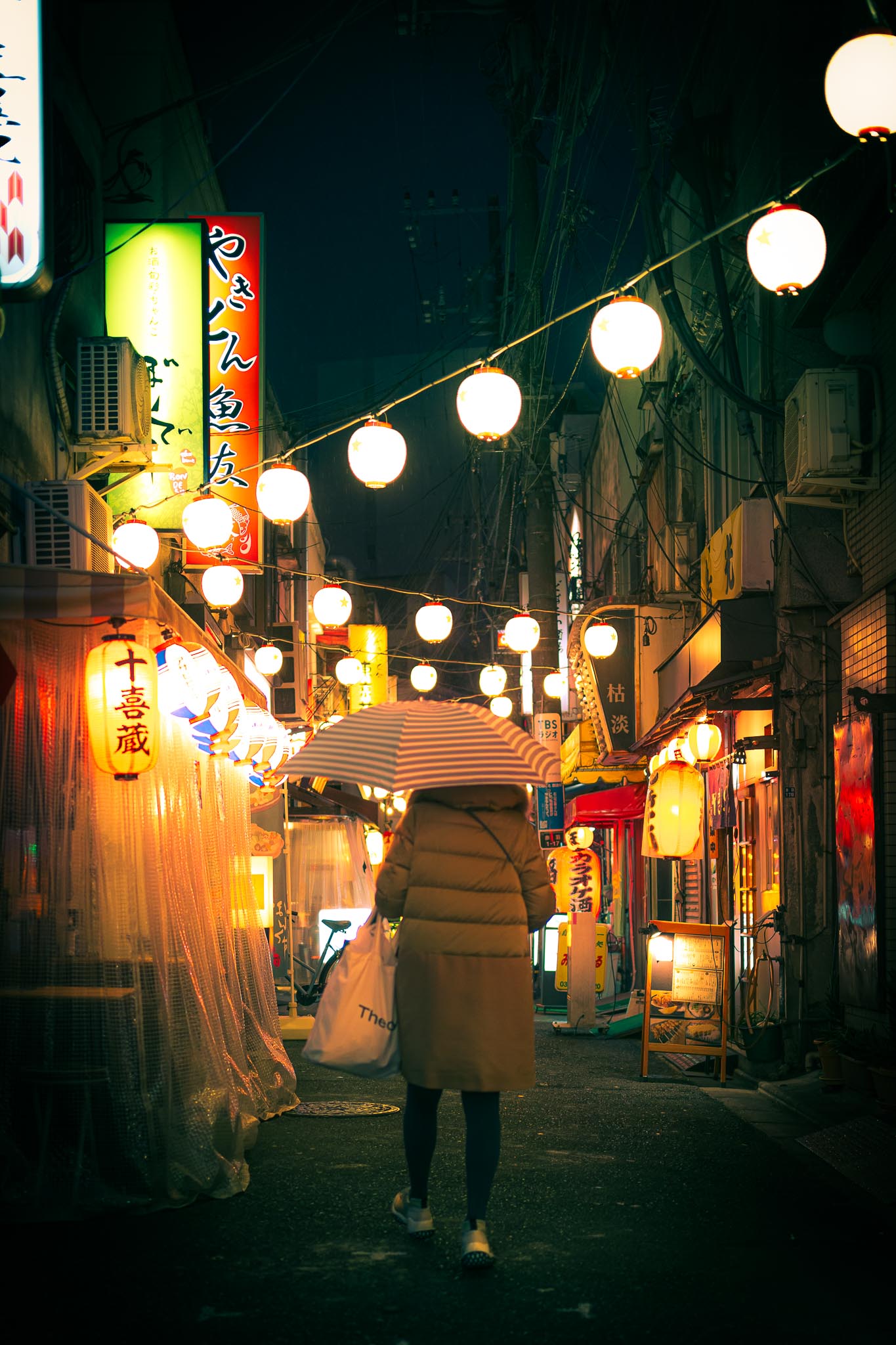
Akabane is one of Tokyo's most famous drinking neighbourhoods — famous within Japan, that is. It's been the subject of manga, TV dramas, and domestic travel shows for years. Japanese people know exactly what Akabane is. International visitors almost never make it here, not because it's hidden but because it's not on the tourist circuit, and nobody has told them to go. That gap is the opportunity. It sits in Kita-ku in north Tokyo, and if you're looking for the Tokyo that feels lived-in rather than performed, it's one of the most reliable answers in the city.
Getting to Akabane
Akabane Station is served by the JR Saikyō and Shōnan-Shinjuku lines, both of which run direct from Shinjuku in about 15 minutes — no transfer needed. The Keihin-Tohoku line also stops here and connects directly from Ueno in around 20 minutes. From most of central Tokyo, Akabane is straightforward to reach. It just doesn't feel that way because it's not between any two places tourists typically move between.
The east exit is what you want. The izakaya district starts almost immediately once you clear the ticket gates — a tight cluster of alleys that lights up after dark in a way that makes it clear this neighbourhood has been drinking seriously for a long time.
Ichibangai, OK Yokocho, and the Senbero Culture
Akabane Ichibangai — "Number One Street" — is the main drag of the drinking district, an open-air street marked by large illuminated archways and lined with izakayas, standing bars, and cheap food counters. It's the heart of what makes Akabane famous: the senbero. Senbero is a Japanese portmanteau meaning roughly "get drunk for 1,000 yen," and Akabane is arguably the most celebrated senbero district in Tokyo. The prices here are low in a way that stops feeling like a deal and starts feeling like a different economic reality. A beer, a highball, a plate of yakitori — you can drink properly for what you'd spend on a single cocktail in Ginza.
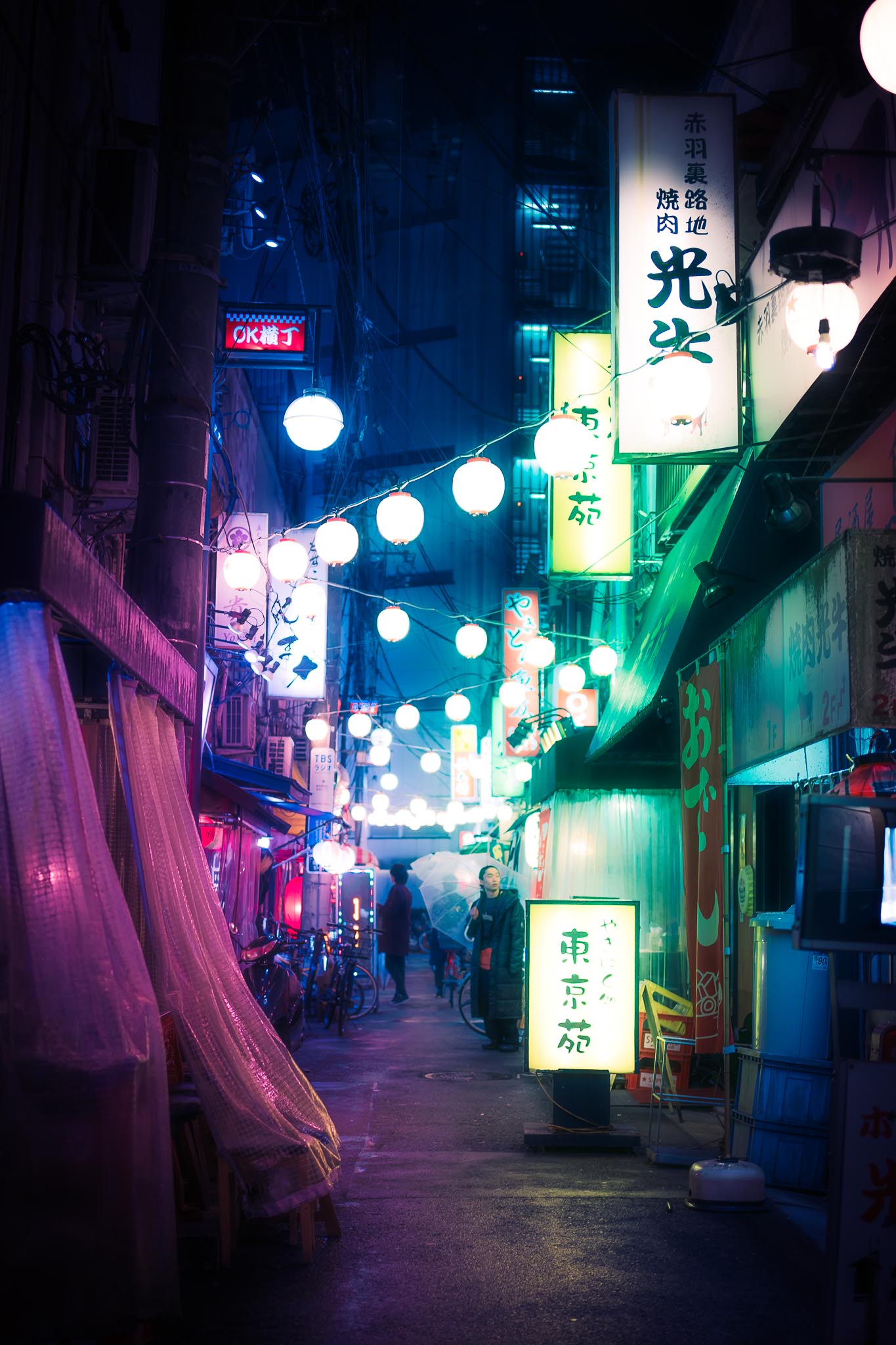
For the narrower, more atmospheric experience closer to Golden Gai, the place to look is OK Yokocho — a tight alley just off the main street where the bars compress into a genuinely narrow corridor of small counters, paper lanterns, and the kind of intimacy that makes you lower your voice without thinking. This is where the long-lens photography happens. From one end, an 85mm or 135mm shot compresses the lanterns into a tunnel of light with figures moving through it. It's a frame that makes itself — you just wait for the right person to step into position.
How Akabane Compares to Golden Gai
The comparison comes up because the format overlaps — both have small bars in tight alleys — but the experience is different in ways that matter. Golden Gai has gone through its international discovery moment. It's in every Tokyo travel article, and on weekend nights you'll find as many tourists as regulars. The bars have adapted accordingly: English signs, foreigner-friendly menus, a few that are essentially themed around their own reputation.
Akabane's international profile is still low. The signs are in Japanese. The menus are in Japanese. The people at the counter are, for the most part, people who live in north Tokyo and come here because this is where they drink. That's not unwelcoming — Japanese izakaya culture is more open than it appears from outside — but it's a different register. Less performance, more habit. For photography, that difference shows up directly in the images.
Shooting Akabane at Night
Akabane photographs differently from Shinjuku or Shibuya because the light source is different. Instead of neon competing from every direction, the alleys here are lit primarily by paper lanterns — warm, diffuse, hanging in rows that create a continuous ceiling of soft light. The effect is intimate rather than overwhelming. Your camera isn't fighting to extract a subject from visual noise. The subject is the alley and the people moving through it.
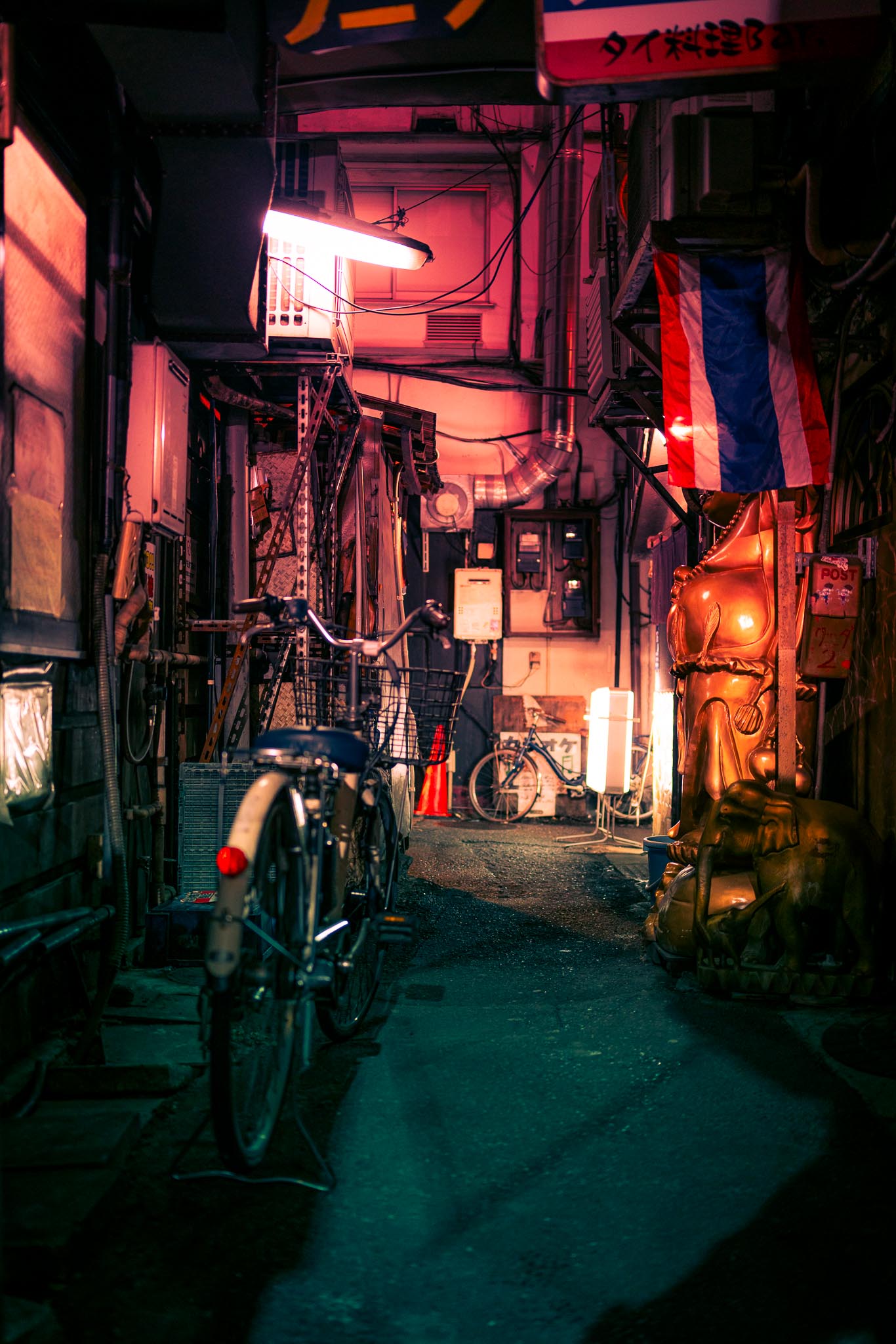
The back streets off the main district are a different kind of shot entirely. Less warm, more urban — exposed pipes, cables, bicycles in gaps between buildings, signs from places that don't quite fit the surrounding aesthetic. I found one alley with a Thai flag draped over a doorway, pink neon from a sign above hitting wet concrete, a bicycle locked against the wall. It looked like a still from a film I hadn't seen. These frames exist because the neighbourhood is genuinely mixed and hasn't been curated for effect.
Rain and Akabane
Like most of Tokyo, Akabane in the rain is better than Akabane without it. The lanterns reflect in the wet stone of the alley floor, the neon from adjacent streets bleeds in from the edges, and the covered passage keeps you dry while everything outside it becomes a wet-pavement mirror. A light drizzle on a weeknight, when the crowd is thinner and the light on the ground is doing something interesting, is close to ideal conditions here.
The other effect of rain is that it changes who's out. On a clear Saturday night Akabane fills up — it's not overrun, but it's busy. A rainy Tuesday has a different population: the regulars, the people for whom coming here isn't a decision but a habit. Those are usually the more interesting people to be around, and the more interesting photographs.
What to Eat and Drink
The default order in any Akabane izakaya is a beer or a highball and whatever is on the small plates menu. Yakitori is everywhere. Oden in the colder months. The price point is low enough that ordering without thinking much about cost is fine — this is neighbourhood drinking, not destination dining.
There's more variety than the izakaya clusters suggest. The surrounding streets have ramen shops, curry places, a few Thai spots, the occasional Chinese restaurant. LaLa Garden — the covered shopping arcade on the Suzuran-dori side — is worth a pass for the daytime version of the neighbourhood. Different light, different pace, different material.
When to Go
After dark, any night of the week. Weekday evenings from around 7pm have a good energy without being crowded. Fridays and Saturdays are busier and louder and still worth it, just different. Avoid national holidays if you want the local version — it fills up significantly and the atmosphere shifts toward something more self-conscious.
The covered alleys stay open late — last trains from Akabane run after midnight on most lines, and the bars tend to close around the time the trains stop. If you're staying in central Tokyo, getting back isn't a problem. If you miss the last train, there are plenty of reasons to stay until the first one at 5am.
Why International Visitors Don't Come Here
It's not that Akabane is unknown — domestically, it's well-documented. There are manga set here, TV dramas built around it, and a steady stream of Japanese visitors who come specifically for the senbero culture. What it lacks is an international profile. It's not between any two places on the standard tourist itinerary, so it doesn't get foot traffic from people passing through. You have to decide to go.
That's a low bar, and the payoff is real. Golden Gai and Shimokitazawa have been through their international discovery cycles. Akabane hasn't. The neighbourhood doesn't need the attention — it has all the customers it wants — but that gap between domestic reputation and international visibility is exactly the window worth using.
Shooting portraits in Tokyo? Akabane makes for an extraordinary backdrop.
Book a Session in Tokyo →