
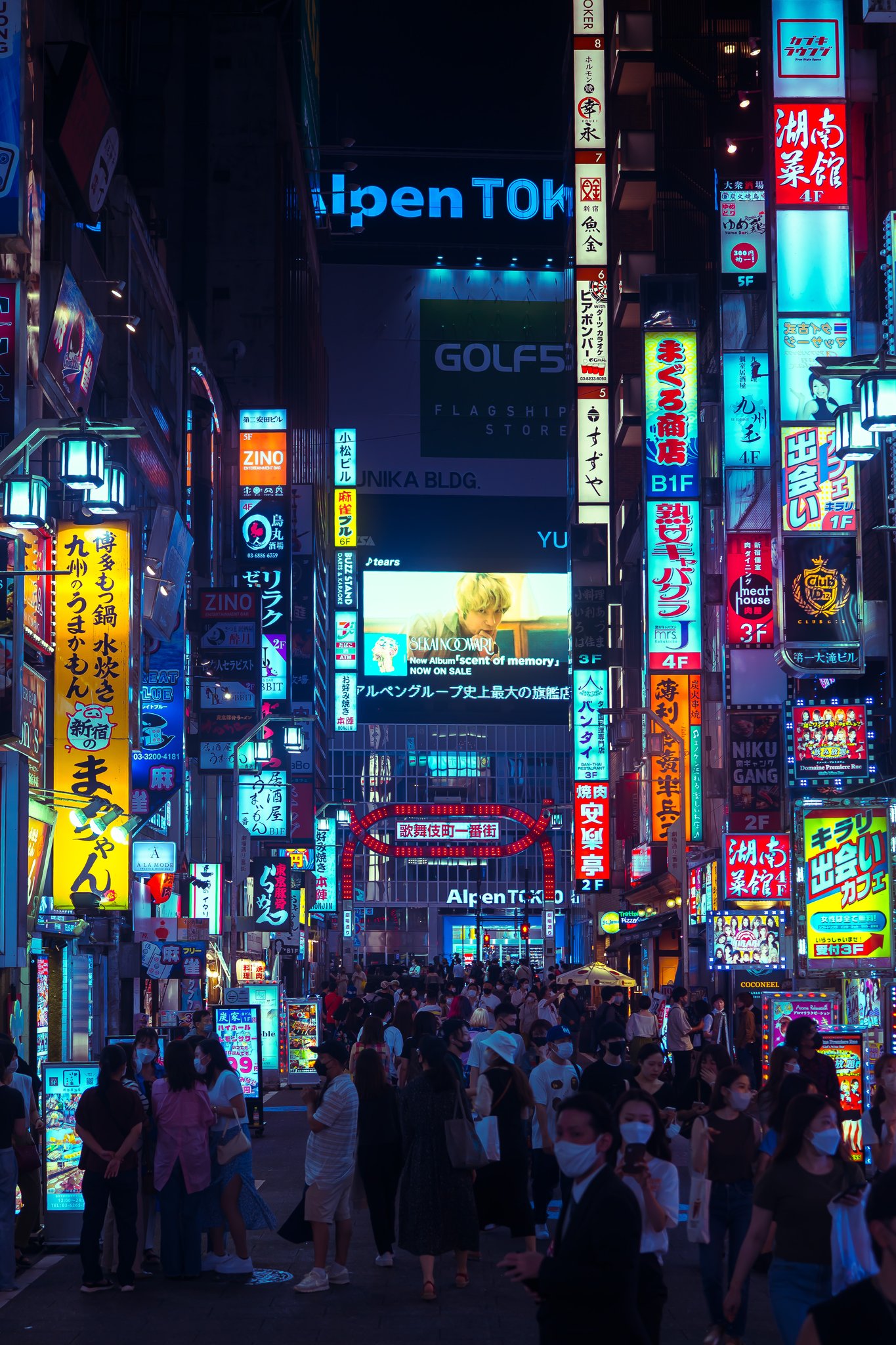
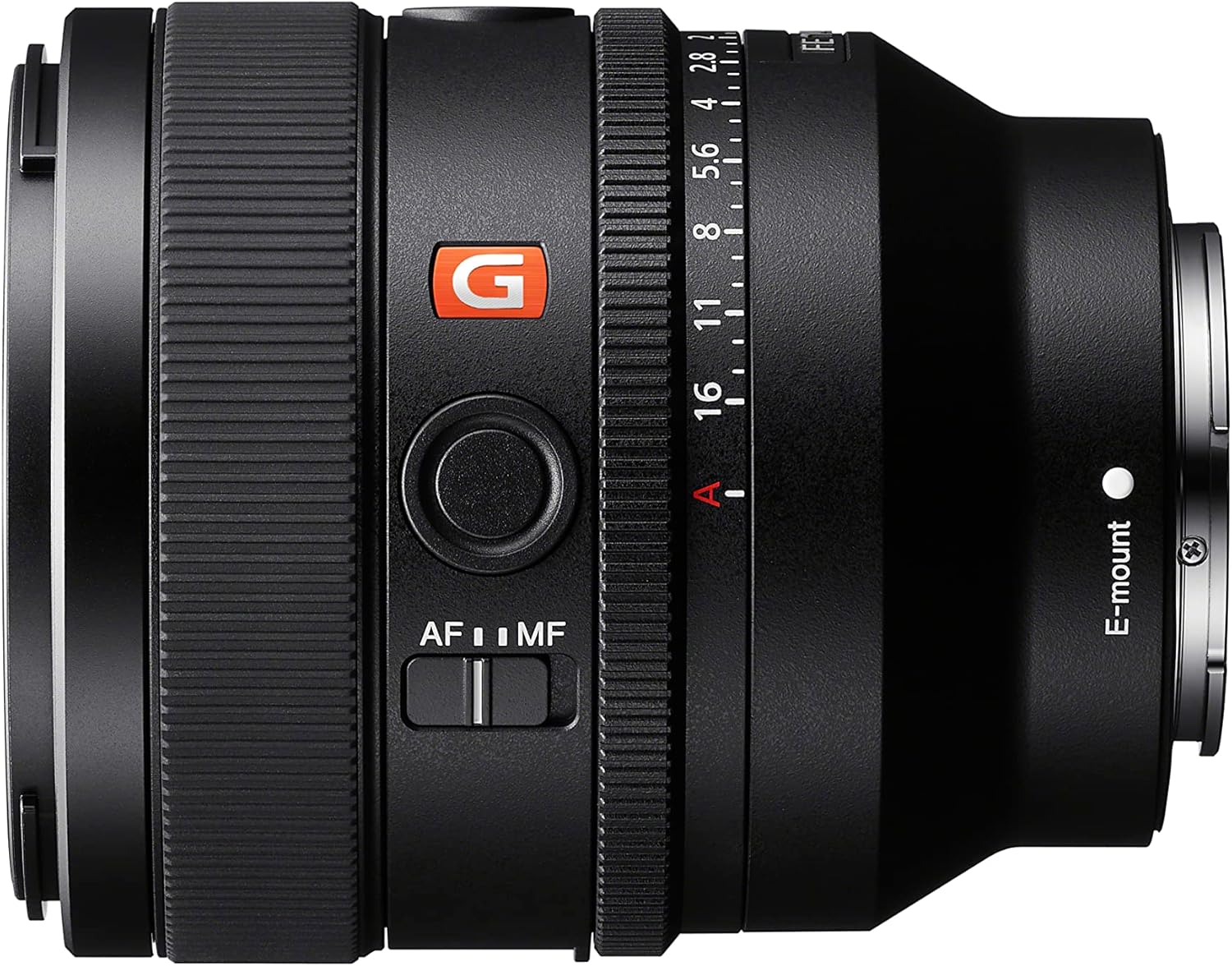
I came to the 50mm the way most photographers do — by using other focal lengths, being frustrated with the results for reasons I couldn't articulate, and eventually landing on the one that matched how I see. I shoot a Sony 50mm f/1.4 GM on an A7R IV body, which gives me a standard field of view on full frame and an aperture wide enough to handle Tokyo's darkest alleys without fighting ISO. I've been using it almost exclusively for street work since 2023, and at this point changing to a different focal length feels like putting on glasses with the wrong prescription. Everything looks slightly wrong until I'm back on the 50.
What 50mm Actually Sees
The 50mm field of view on full frame is approximately what the human eye sees when you're paying attention to a specific thing — not the full peripheral sweep, but the focused, deliberate look. This is why 50mm photographs have a quality of presence that wider lenses can't replicate: the compression and angle of view match the way a person actually encounters a scene, rather than the exaggerated perspective of a wide lens or the flattening compression of a long one. When the geometry feels right, images read as documentary rather than composed. That quality is hard to articulate but easy to see in the work.
In Tokyo specifically, the 50mm handles the density of the streets well. Shinjuku's narrow alleys are close-quarters — you're often shooting someone 3 to 5 meters away in a corridor of buildings. A wide lens at that distance distorts the edges of the frame and produces perspective lines that feel aggressive. A 50mm keeps the geometry natural. The buildings look like buildings. The people look like people. The scene reads as observed rather than constructed.
The Discipline It Imposes
A fixed focal length is a constraint, and constraints produce better work in ways that are well-documented and that I'll summarize briefly: when you can't zoom, you move. When you move, you find angles and positions you would have ignored if zooming were an option. When you find those angles, you understand the space differently. The 50mm trained me to read a scene physically — to walk it before shooting it, to understand where I needed to stand before I raised the camera, to commit to a position rather than adjusting the focal length until the composition resolved.
This is especially useful at night, when moving through a crowd to find position is harder and the light is changing. Having one focal length eliminates a variable. I know what 50mm sees. I know how close I need to be for a face to fill a third of the frame, how far I need to step back to include context, what distance produces the compression ratio I want between subject and background. That knowledge is in my body after years of use. It wouldn't be if I were switching lenses.
f/1.4: The Actual Reason
The focal length is a philosophical choice. The f/1.4 aperture is a practical one. Tokyo's entertainment districts are well-lit by neon, but the streets threading off the main roads can drop three or four stops in ten steps. At f/1.4, I can maintain 1/125 at ISO 3200 in conditions that would require ISO 12800 at f/2.8. That difference in ISO is the difference between a file with manageable grain and a file where the shadows become noise. It matters.
The depth of field at f/1.4 is also useful for isolating subjects in visually dense environments. Shibuya and Akihabara are full of competing visual elements — signs, crowds, vehicles, architecture. A shallow depth of field at f/1.4 lets me separate a subject from that background without losing the sense that they exist within it. The background is still recognizably a street, still has the neon and the crowd, but the subject is distinct. At f/4 or f/5.6, everyone is equally sharp and the frame reads as a document. At f/1.4 with careful focus placement, it reads as a portrait of a moment.
What the 50mm Costs
Honesty requires acknowledging what the 50mm doesn't do well. It's not a wide lens — if I'm in a tight interior and want to include context, I'm often cutting something I'd rather keep. It's not a long lens — if I want to isolate someone from distance or compress a cityscape, I'm reaching for the 20mm or accepting that this frame isn't available to me today. The Shinjuku Golden Gai alleys at their narrowest are uncomfortable with a 50mm; a 28mm or 35mm would be easier.
The depth of field at close range and f/1.4 is also unforgiving. At one meter, the plane of focus is a few centimeters deep. Focus on the eyes and the nose is already slightly soft. For street work at distance this doesn't matter; for close-quarters candid work it requires very accurate focus and occasional acceptance that a frame with near-perfect timing has slightly soft focus. That's the cost of shooting wide open at close range and it's a trade I make regularly.
The 20mm on Rainy Nights
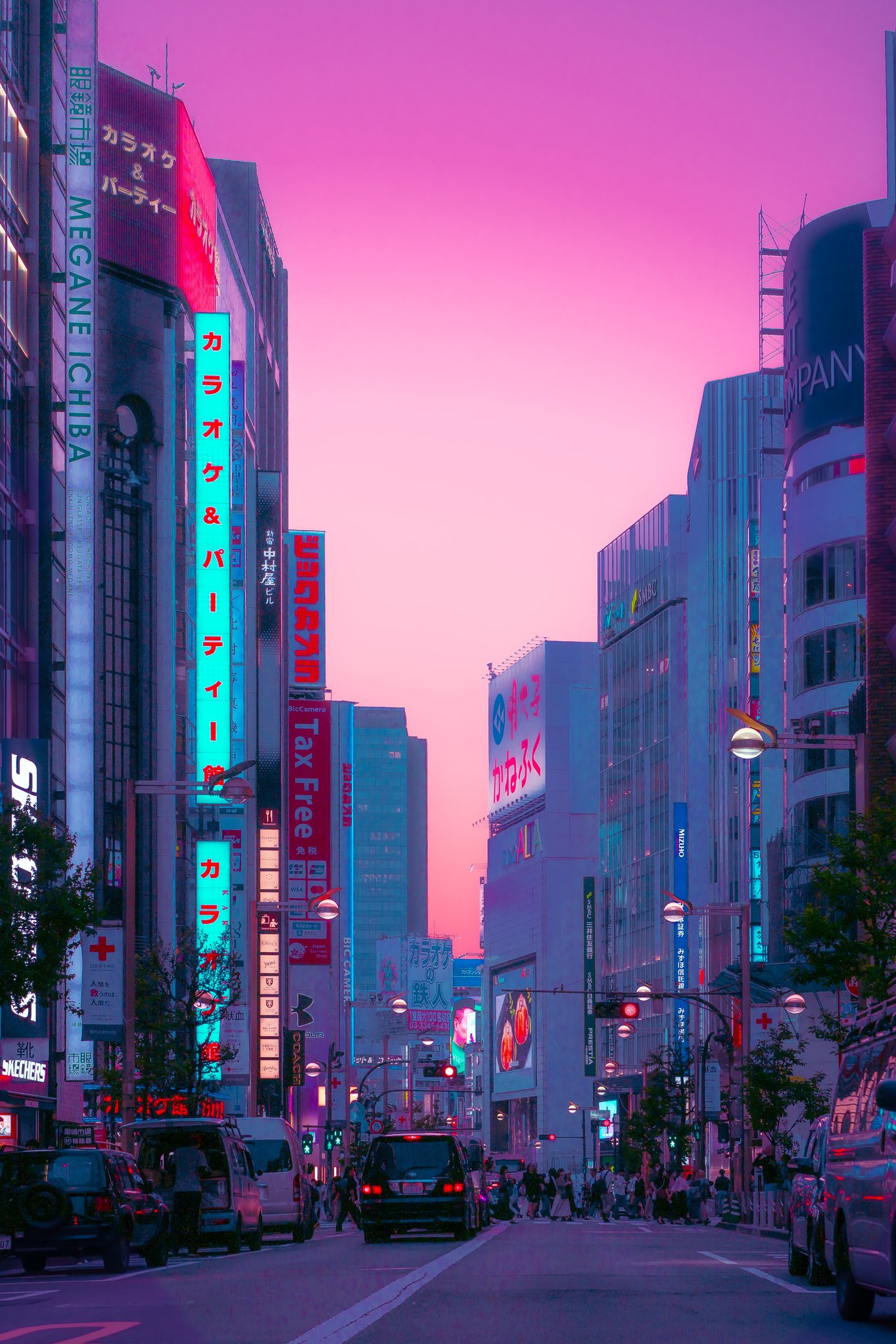
The one time I consistently reach for the 20mm is in heavy rain when the reflections on the pavement extend far from the sign source and the scene benefits from a wider angle of view that includes both the sky (if there's blue hour light remaining) and the full stretch of the wet street. The 20mm at f/1.8 is still fast enough for low light, and at 20mm the perspective exaggeration actually works in favor of the reflection — it makes the street look longer, the reflections deeper, the scene more spatially interesting than it would at 50mm. For that specific type of frame, it's worth the lens change. For everything else, the 50 stays on.
The Broader Point
The 50mm is not the correct choice for every photographer. It's the choice that worked for me after trying the alternatives, and the reasons it worked are specific to how I see and what I want to make. Someone who works closer and faster might prefer a 35mm. Someone who shoots primarily from a distance might find an 85mm serves them better. The general principle — pick a focal length, learn it until it's internalized, stop looking at the others — applies regardless of which one you choose.
The photographers I find most interesting consistently have a visual signature that's partly a function of how they see and partly a function of the specific lens they use consistently. That consistency is visible in the work. It's worth more than access to every focal length. Read about my full gear setup here if you want the complete picture — but the short version is that the lens matters more than the body, and the discipline of using one lens matters more than either.
Want to see what this looks like applied to your portraits in Tokyo?
Book a Session in Tokyo →