
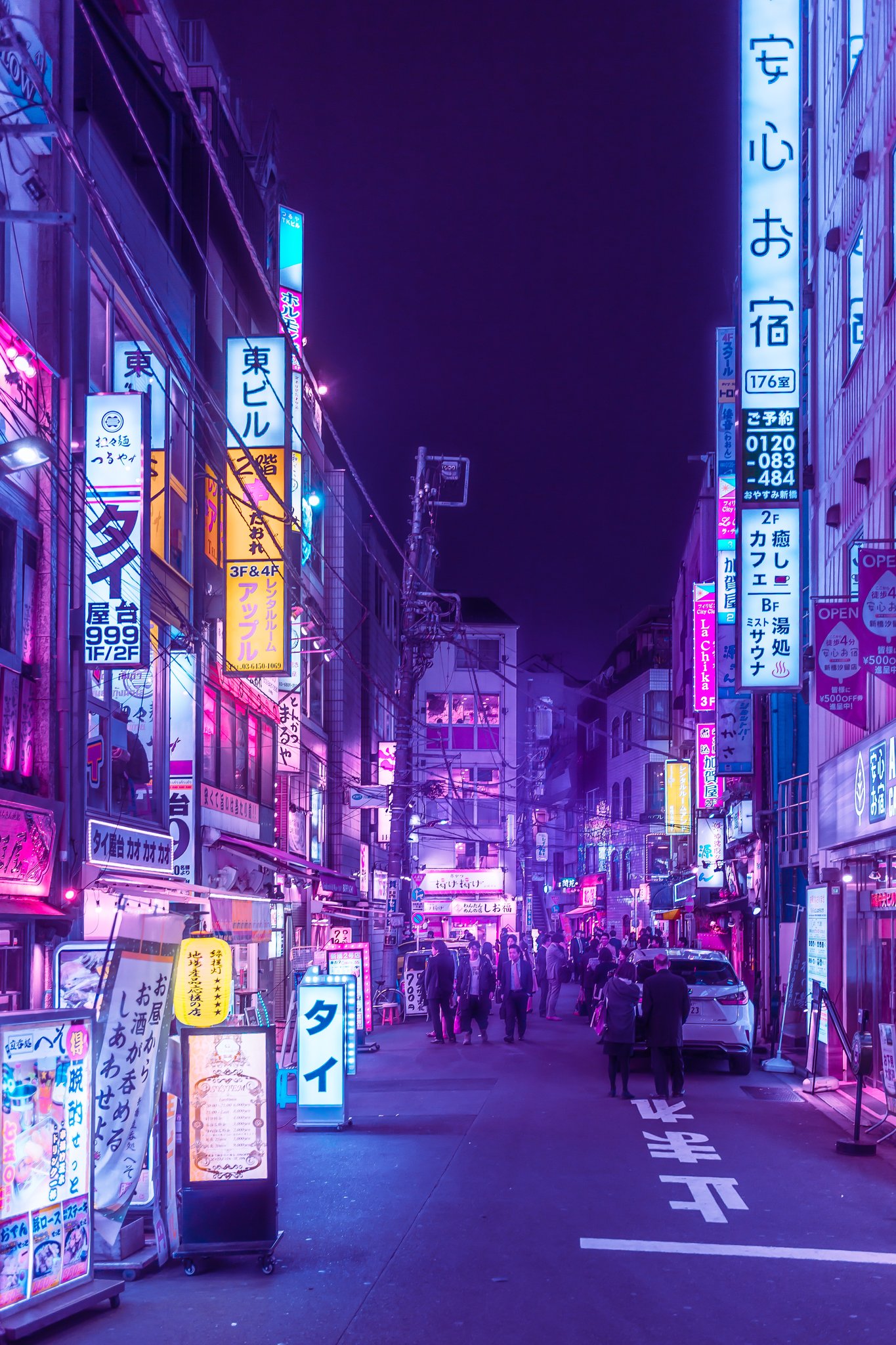
The best camera for Tokyo street photography is the one that disappears when you're holding it. That's not a dodge — it's the most useful framing I've found for this question, because Tokyo at night creates a specific set of problems that most gear recommendations don't address. You're shooting in low light, often in rain, often in crowds, often quickly. The camera needs to be fast, it needs to handle high ISO without falling apart, and it needs to not make you feel self-conscious every time you raise it. If your camera fails any of those tests, no amount of megapixels will compensate.
What I Actually Shoot With
My main body is a Sony A7R IV — 61 megapixels, full frame, built for resolution. I used it originally for portrait work and it stayed in the bag when I started shooting street more seriously, because it's large, conspicuous, and overkill for anything that doesn't need to be printed at billboard scale. Then I started shooting with it anyway, because it was what I had, and I figured out how to make it work. The high resolution is actually useful for tight crops. The dynamic range is excellent in low light. The autofocus with subject tracking handles moving people reasonably well. It's not ideal for street work, but it produces files I'm satisfied with and I know it completely.
The reason I'm telling you this is that "best camera for street photography" is often a question asked by people who don't yet have a camera, or who are looking for permission to buy something specific. The actual answer is almost always: learn the camera you have until its limitations are the only reason to upgrade, not your curiosity about something else.
What Tokyo's Streets Actually Demand
If you're building a kit from scratch specifically for shooting Tokyo at night, here's what the city asks of the equipment. Low light performance is first. Shinjuku and Shibuya are well-lit by neon and street signs, but the moment you turn into a side alley, the light drops dramatically. You need a body that can push ISO 3200–6400 without the noise becoming the photograph. This generally means a modern full-frame sensor, or a recent APS-C sensor from a manufacturer that's invested in low light performance.
The second demand is speed — both autofocus and shutter. Street photography is reactive. The decisive moment doesn't wait for your camera to hunt for focus. Fast phase-detect AF and a body that can shoot continuously without lag are worth more here than resolution.
The third is size. Tokyo is crowded. A large camera with a battery grip and a 70-200mm attached to it is going to create social friction before you've pressed a single button. Smaller bodies are less conspicuous, easier to move quickly, and less likely to make people change their behavior when they see you.
The Fujifilm Case
The camera I'd recommend to someone starting fresh is a Fujifilm X100VI or a Fujifilm X-T5 with a 35mm equivalent lens. The X100VI in particular is close to ideal for this use case — compact enough to not draw attention, a fixed 35mm equivalent lens that forces you to work with your feet rather than reach for zoom, excellent high ISO performance, and film simulations that produce images worth looking at straight out of camera without editing. The fixed lens limitation sounds like a problem until you realize most street photographers do their best work within a narrow focal range anyway.
The X-T5 with the 23mm f/1.4 (35mm equivalent) gives you more flexibility and the same excellent sensor in a slightly larger package. If you already shoot Sony, the ZV-E10 II or A7C II are worth considering — the A7C in particular gives you full-frame performance in a body small enough to not announce itself.
The Lens Question Matters More Than the Body
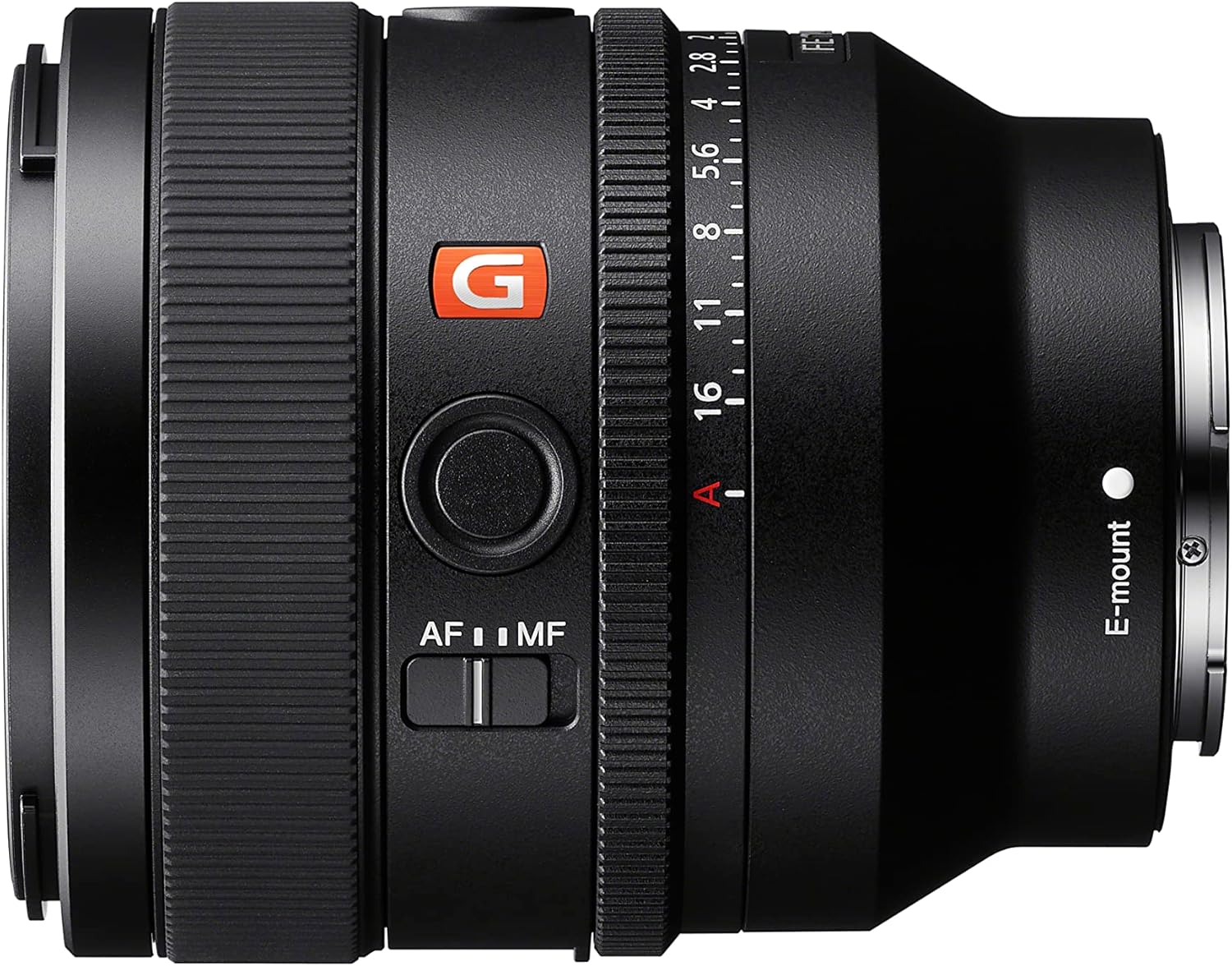
Whatever body you choose, the lens decision has more impact on your street photography than almost anything else. I shoot the Sony 50mm f/1.4 GM almost exclusively for street work. The f/1.4 aperture is the point — in Tokyo's artificial light at night, you need every stop you can get without pushing ISO to the point where shadows turn to mud. The 50mm focal length on full frame sits in a useful middle ground: wide enough to include context, long enough to compress a scene and create separation between subject and background.
On APS-C, a 23mm or 35mm lens gives you the equivalent field of view. The Fujifilm 35mm f/1.4 XF is a classic for a reason — the rendering is good, the size is right, and at f/1.4 you have enough light-gathering capability for Tokyo's darker corners. It's not the sharpest lens in the lineup but sharpness is rarely what makes a street photograph work.
Avoid zooms for this kind of shooting. Not because zooms are bad, but because the convenience of zoom range trains you to adjust the lens instead of adjusting your position. Street photography at its best is a physical practice — you move, you find the angle, you commit to a focal length and work with it. A prime lens enforces that discipline by removing the option to zoom your way to a different composition.
Settings Worth Having Ready
Whatever camera you're using, these are the settings worth dialing in before you arrive in Shinjuku at midnight. Aperture priority, f/2.8 or wider. Auto ISO with a maximum ceiling of 12800 and a minimum shutter speed of 1/125. Subject tracking AF if your body supports it; otherwise continuous AF. JPEG + RAW if you have the card space — the RAW is insurance, the JPEG is for quick review. Set your exposure compensation to -0.3 or -0.7 to protect highlights in neon-heavy scenes.
The goal is a camera that makes decisions for you so you can focus on the photograph. The fewer buttons you're pressing in the moment, the more attention you have available for what's actually happening in front of you.
The Honest Conclusion
If you're visiting Tokyo for a week and shooting with a recent smartphone, you'll get images that would have been technically impossible on professional equipment fifteen years ago. The camera question matters less than people want it to. What matters is being in the right places at the right times — which is a knowledge problem, not a gear problem.
If you're committed to shooting seriously and want a recommendation: Fujifilm X100VI if you want something that handles the full stack without thinking about it, Sony A7C II with a 50mm if you want a full-frame system that grows. Either way, pick something and stop researching. The images are in Shibuya and Shinjuku and every alley in between. They're not on a gear review site.
Want to shoot Tokyo with someone who knows where to go?
Book a Session in Tokyo →