
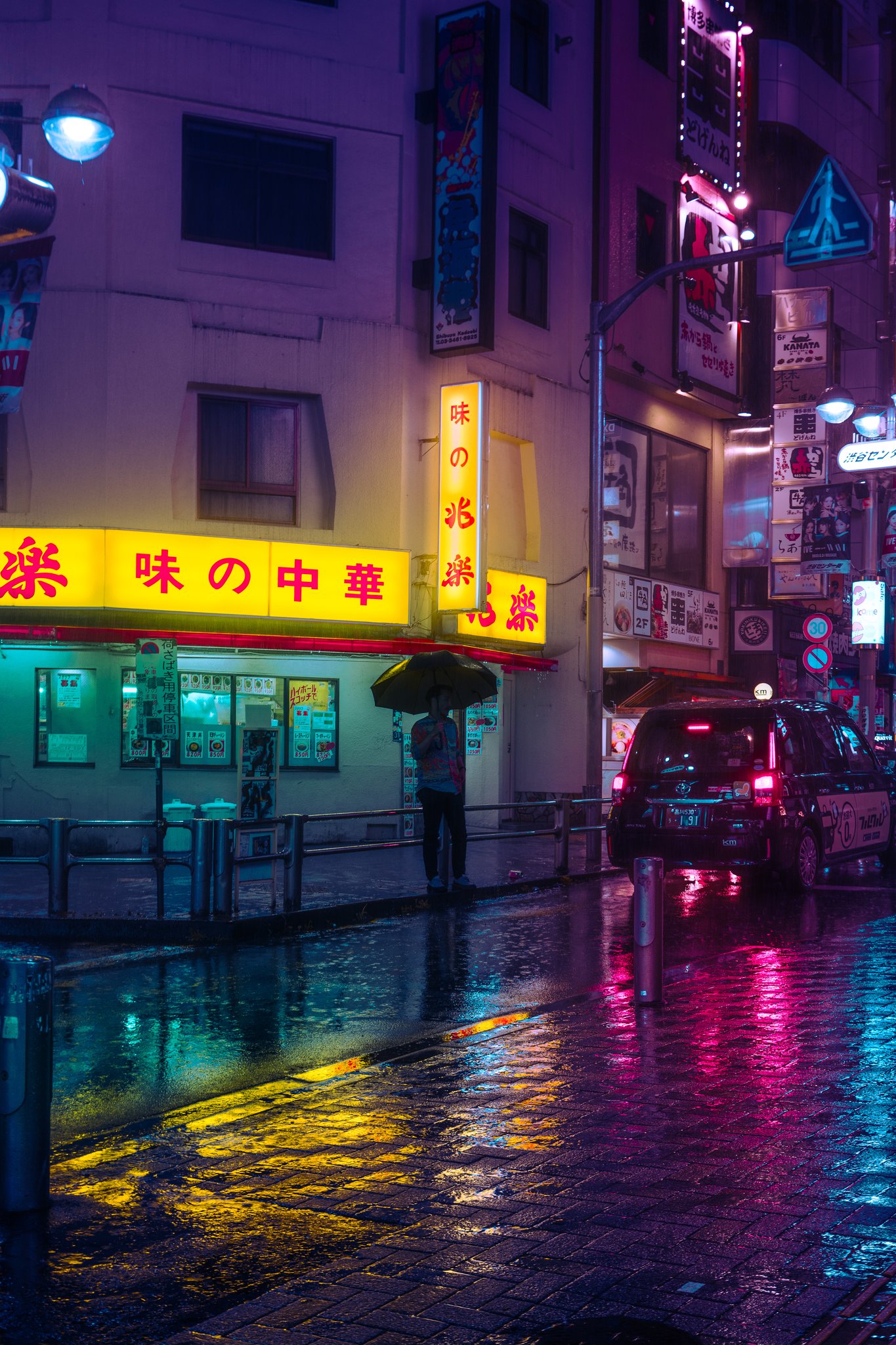
I'll keep this practical. I'm not going to tell you what bag brand I use or turn this into a sponsored gear overview. This is what I actually carry when I go out shooting Tokyo at night, distilled from four years of going out too heavy, then too light, then getting it approximately right. The list is shorter than most gear posts because I've stripped it down over time to what I actually use versus what I thought I'd want to have available.
The Camera
Sony A7R IV body. This is my one camera — I don't bring a backup body for street work. If it fails, I go home. It hasn't failed in four years of regular night shooting, including in rain and cold, so I've decided to extend that trust rather than carry extra weight. The body has basic weather sealing which I've put to use regularly without incident.
One extra battery. The A7R IV battery life is reasonable but not exceptional, and in cold weather it degrades. A full spare battery in a jacket pocket means I never have to cut a night short. The spare battery is the one non-negotiable item on this list — I've been caught without one twice and both times it ended the session early at the worst possible moment.
Two SD cards in the dual slot configuration. I shoot RAW to both slots simultaneously — one is the primary, one is backup. The duplication is paranoid but the cards are small and it costs nothing except a few minutes of download time. I've never had a card fail mid-shoot, and I intend to keep that streak going.
The Lenses
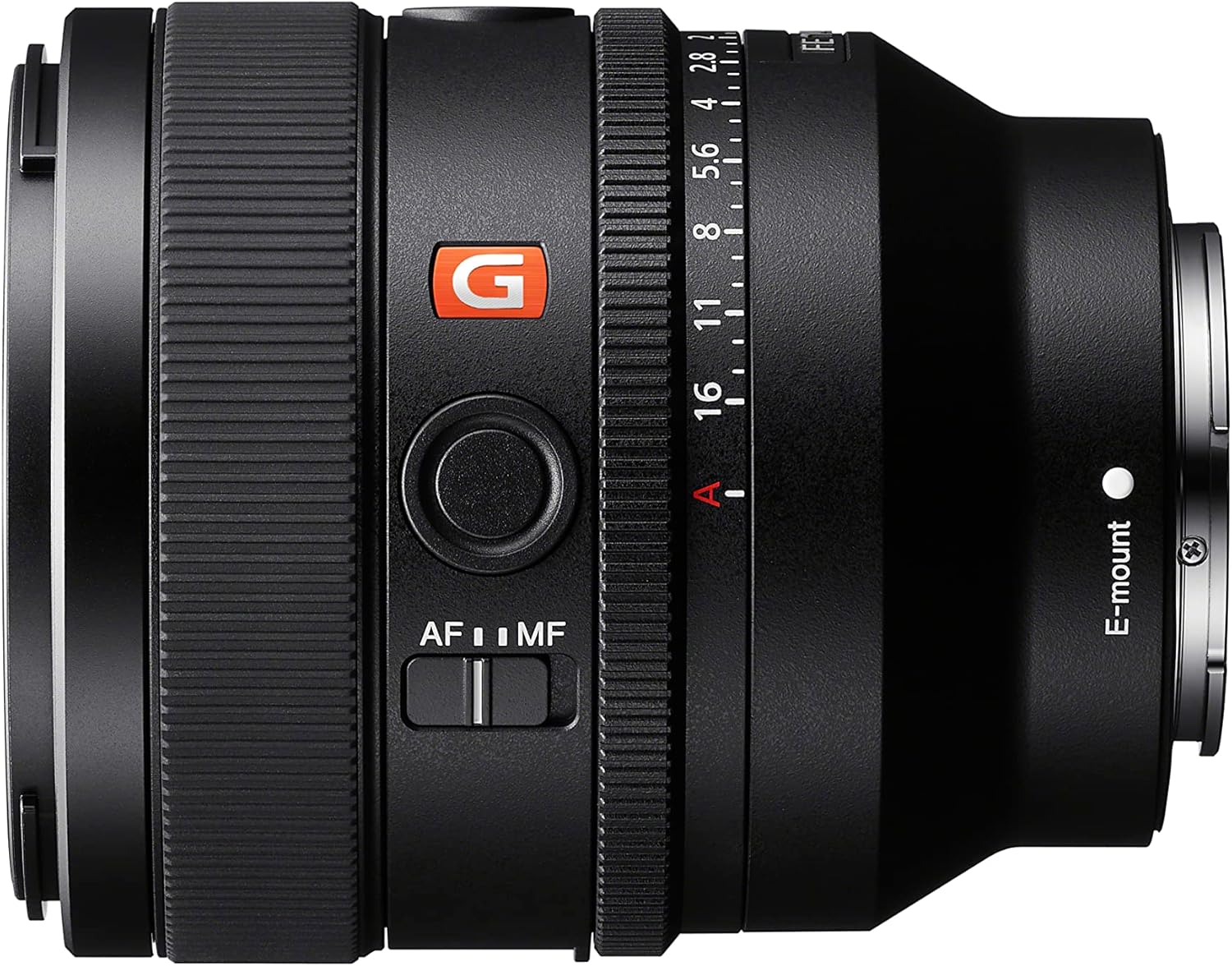
The Sony 50mm f/1.4 GM goes on the camera when I leave and comes off maybe 10% of the time. I've written a whole post about why I shoot almost exclusively with this focal length — the short version is that it matches how I see and the f/1.4 aperture is genuinely necessary in low light. This is the lens I reach for first, second, and usually last.
The Sony 20mm f/1.8 G goes in the bag. It comes out for wide environmental shots, for tight interior spaces where the 50mm can't back up far enough, and specifically for rainy nights where I want to include both the street-level reflections and whatever sky light remains. It's a useful second lens precisely because it's so different from the 50mm — I don't carry a 35mm because it's close enough to the 50mm that I'd be making marginal choices rather than clearly distinct ones.
That's two lenses total. No zoom. I've tried adding a third lens and I never use it. The extra weight and the decision fatigue of having more options isn't worth it for the kind of shooting I do.
Rain Gear
A packable waterproof jacket that folds into its own pocket and weighs almost nothing. I bring this every night regardless of the forecast because Tokyo's weather is wrong often enough that not having it is a gamble I've lost too many times. The jacket does double duty — rain protection and warmth when it drops after midnight. Japan's summers are hot enough that you're wearing almost nothing at 9pm and cold enough at 3am that a jacket matters.
A small microfiber cloth in the jacket pocket. This is for the lens front element when it gets water on it — wipe and continue. I don't use a rain sleeve on the camera. The weather sealing handles what I encounter in normal Tokyo rain and the sleeve slows down the handling enough to miss moments. If it's a full downpour I duck under an awning for a few minutes and let it pass. A light-to-moderate rain, which is the condition that actually produces the best rain photography, is fine with just the cloth.
A small towel — the quick-dry kind — for the body and my hands when I've been shooting in sustained rain and everything is wet. This is the item I added late and felt stupid for not having earlier. It weighs nothing. The difference between damp-and-managed and soaked-and-miserable at 1am is a towel.
Everything Else
Fresh socks in the bag, sealed in a zip-lock bag. This sounds absurd. It is not absurd. When you're six hours into a night shoot and you've walked through a flooded underpass in Shinjuku and your feet are wet, the ability to change into dry socks at a 7-Eleven bathroom is life-changing in the way that only someone who has walked four more hours in wet socks understands. I started doing this two years ago and will never stop. Pack the socks.
Food. Usually an onigiri or two, bought from whatever convenience store I pass in the first hour. A small bag of something caloric — nuts, a candy bar. Tokyo has 24-hour convenience stores on every other corner so running out of food is never a real risk, but eating before you're hungry means you're not making the decision to stop shooting in order to find food. The shooting time is finite. The convenience stores will be there when you're done.
A portable charger for the phone. The camera has its own battery situation handled; the phone is what I use for maps, for the weather forecast when I'm deciding whether to keep going, and for the rare occasion when I need to communicate. A dead phone at 3am in a neighborhood I'm not completely familiar with is the one logistical situation I want to avoid.
Cash. Japan remains more cash-dependent than most developed countries and a number of the places I end up at — small bars, ramen counters, convenience store items under ¥300 — are cash only or at least easier with cash. ¥5,000 is usually enough for a full night including a late meal and taxi home if I miss the last train.
What I Don't Carry
Tripod. I shoot handheld at night by choice — the mobility is worth more to me than the stability for the kind of photography I do. If you're shooting long exposures or architecture, different answer. For street work, a tripod is an anchor.
Flash. Never. The ambient light in Tokyo's main entertainment districts is sufficient and the artificial character of flash destroys the quality I'm looking for. Managing the existing light is the whole point.
More than two lenses. Covered above. Three lenses means you spend more time thinking about which lens to use and less time shooting with the one on the camera. The constraint is the point.
Want to shoot Tokyo nights with someone who knows the streets?
Book a Session in Tokyo →