
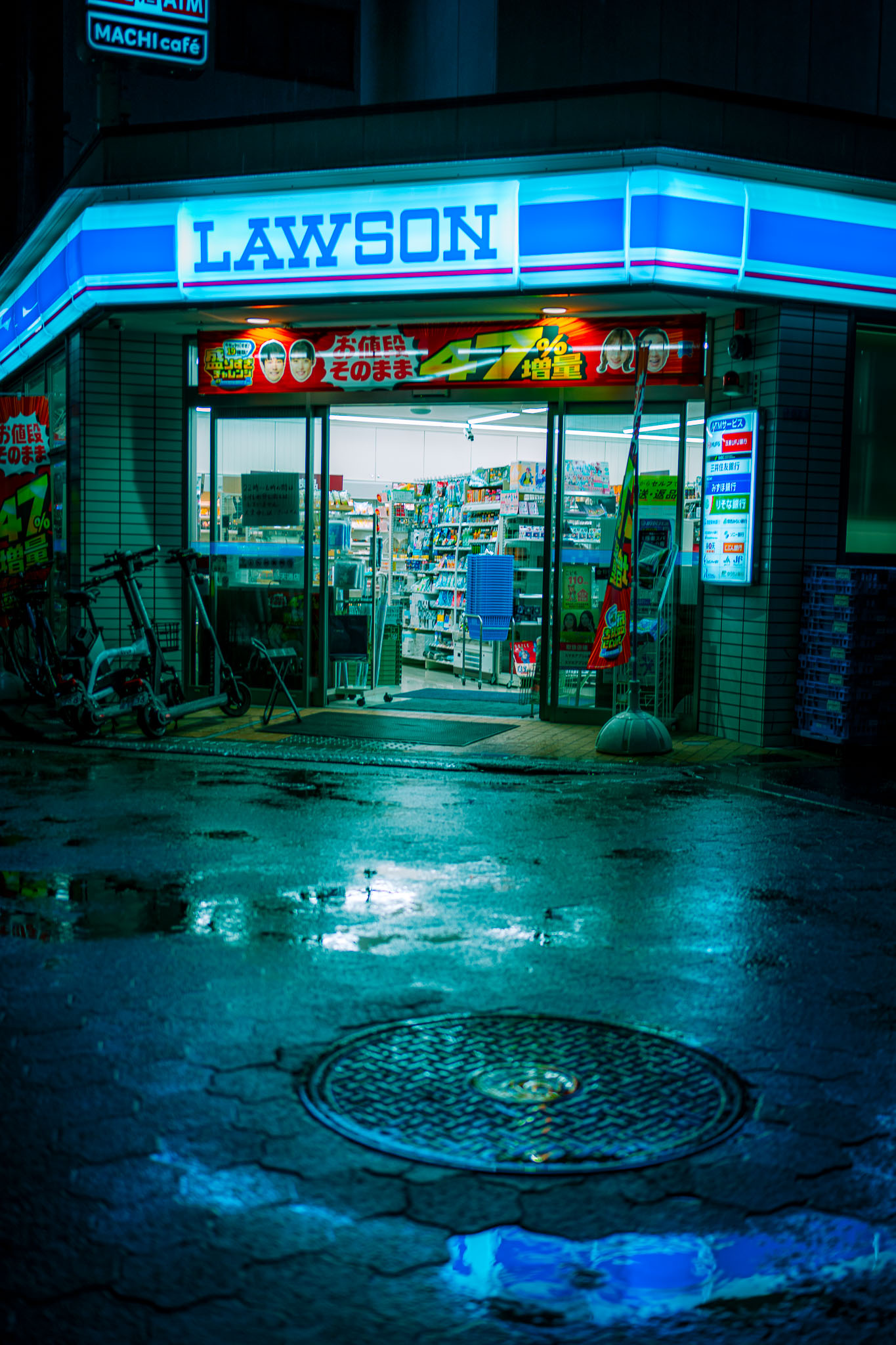
I've spent a lot of time in Japanese convenience stores at three in the morning, and not in the way that implies anything went wrong that night. I'm usually there because I've been shooting for four or five hours and I need to eat something and sit somewhere warm for twenty minutes, or because I need a coffee and there's a 7-Eleven on the corner, or because I want to see who else is in there at that hour. The answer to that last one is always interesting. The konbini at 3am is a cross-section of Tokyo that doesn't exist at any other time of day.
What a Convenience Store Actually Is in Japan
If you've only experienced convenience stores in North America or Europe, the Japanese version requires recalibration. A 7-Eleven or Lawson in Tokyo is not a last resort — it's a legitimate food option at any hour, with freshly made onigiri restocked multiple times a day, hot food under a lamp that's actually worth eating, decent drip coffee, and a food court section in the larger ones where you can sit down properly. The quality ceiling is higher than most fast food restaurants and the price floor is low enough that a full meal costs under ¥600.
Beyond the food, the konbini functions as a bank, a copy shop, a ticket vendor, a place to pay bills, and — at 3am — a waiting room for people who have nowhere else to be yet but aren't ready to go home. This last function is the interesting one.
Who's There
The 3am konbini population is specific and consistent enough that you start to recognize the categories after you've done this as many times as I have. There are the salary workers who missed the last train and are eating a convenience store dinner with the focused resignation of someone who knows this isn't the worst thing that's happened this week. There are the young people at the end of a night that didn't fully resolve — not quite ready to call it done, not quite ready to start going home, standing in front of the refrigerated drinks section for longer than any decision about beverages requires. There are the night shift workers from nearby businesses — convenience store employees from other locations, cleaning staff, security, delivery drivers — using the 3am lull between tasks.
And then there are the people who use the konbini the way I sometimes do: as a brief stop in an ongoing night, a place to regroup before the next thing or the walk home. Photographers, people coming off late-night photography walks. The light inside is flat and fluorescent and unflattering to everything, which somehow makes the people inside look more honest than they would anywhere else.
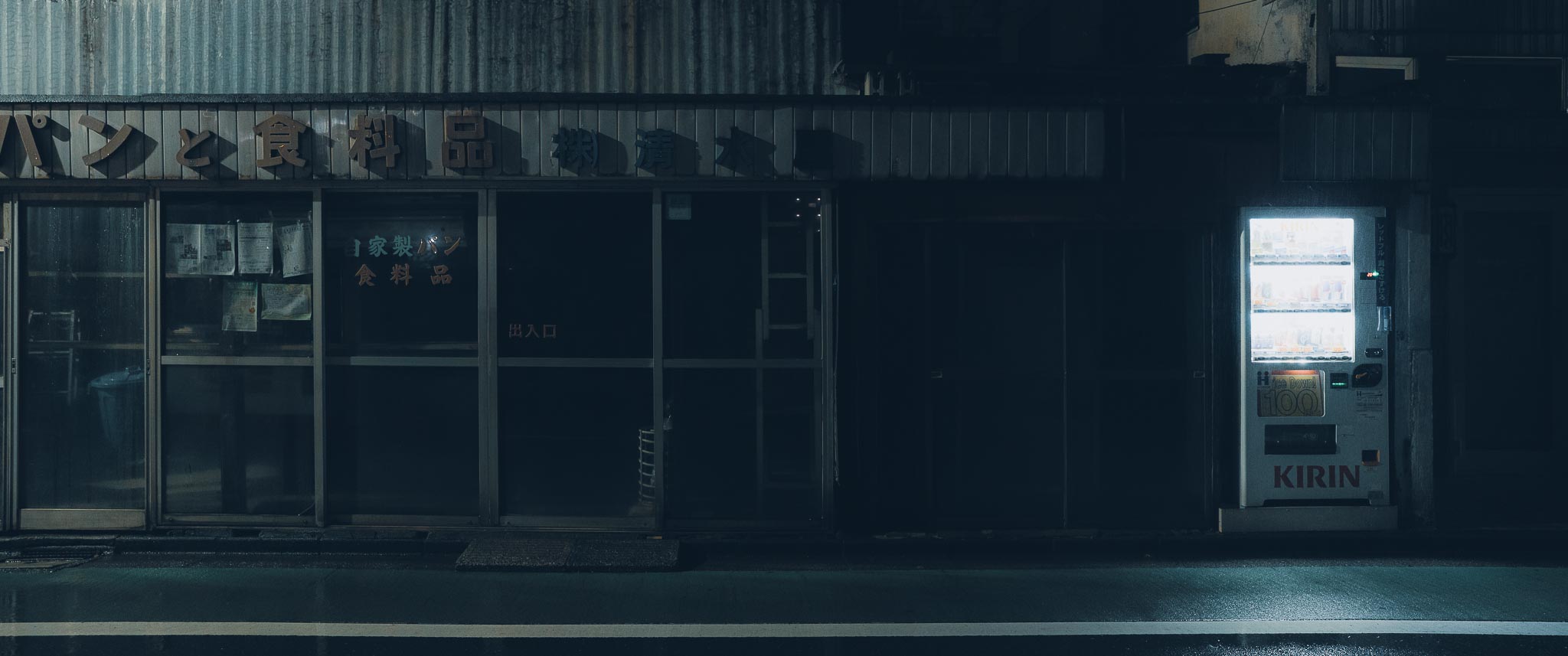
The Food at 3am
Onigiri is the obvious choice and the correct one. The triangle rice balls at any major chain — 7-Eleven, Lawson, FamilyMart — are standardized in a way that produces reliable results regardless of which one you're in. Tuna mayo is the safe call. The salmon ones are usually fine. The mentaiko (spicy cod roe) variety at Lawson is worth knowing about. Anything with chicken tends to be better than you expect.
The hot food section varies by store but in a larger Lawson or FamilyMart you can get karaage chicken, steamed nikuman buns, or corn dogs that have been rotating under a lamp for an indeterminate period of time but are still acceptable at 3am by any reasonable standard. The coffee from the machine — you press the button, they put the cup under, it grinds fresh — is genuinely good and costs around ¥100 for a small. There is no point in going to a coffee chain when the konbini is twenty steps away and the coffee is this good.
I have eaten a lot of family restaurant meals after midnight — Jonathan's, Denny's, Gusto — and I maintain that the unlimited drink bar and the booth seating make them worth the slightly higher price when you want to sit down properly. But when you don't want to sit down, when you want to eat standing up outside or walk while eating, the konbini is the answer. Japan is generally a country where eating while walking is considered poor form. At 3am in front of a convenience store, nobody is keeping score.
The Konbini as a Photography Subject
The fluorescent light that pours out of a convenience store onto the street at 3am is one of the more interesting light sources in late-night Tokyo. It's directional in a way that streetlights aren't — it comes from a defined rectangle and hits the pavement and the people standing near the entrance in a specific, hard-edged way. Someone standing in that light, especially if the street behind them is dark, has a quality that's somewhere between surveillance footage and a stage spotlight. It's not flattering light. It's revealing light.
The exterior of the konbini itself — the branded signage, the automatic doors, the small crowd near the entrance — reads as quintessentially Japanese in a way that the obvious landmarks don't. You can photograph Senso-ji and get a photograph of Senso-ji. You can photograph a 7-Eleven at 3am and get a photograph of how people actually live in this city. The difference matters.
Why It Tells You More Than the Landmarks
Japan is a country that's frequently photographed at its most visually spectacular — the temples, the cherry blossoms, the neon-saturated entertainment districts. All of that is real and worth seeing. But the konbini at 3am is also real, and it's the version of Japan that 125 million people actually move through on a daily basis. It's where the convenience and the social infrastructure and the late capitalism of the whole thing condense into a single fluorescent-lit room that's immaculately clean and fully stocked regardless of what time you walk in.
I find that specific combination — the accessibility, the cleanliness, the odd democracy of who's inside at any given hour — more interesting than most things I photograph in this city. The izakaya alleys of Akabane are more cinematic. The neon of Kabukichō is more dramatic. But the konbini at 3am is more honest. That's worth something.
Want to shoot Tokyo's streets — the real ones — with a local?
Book a Session in Tokyo →