
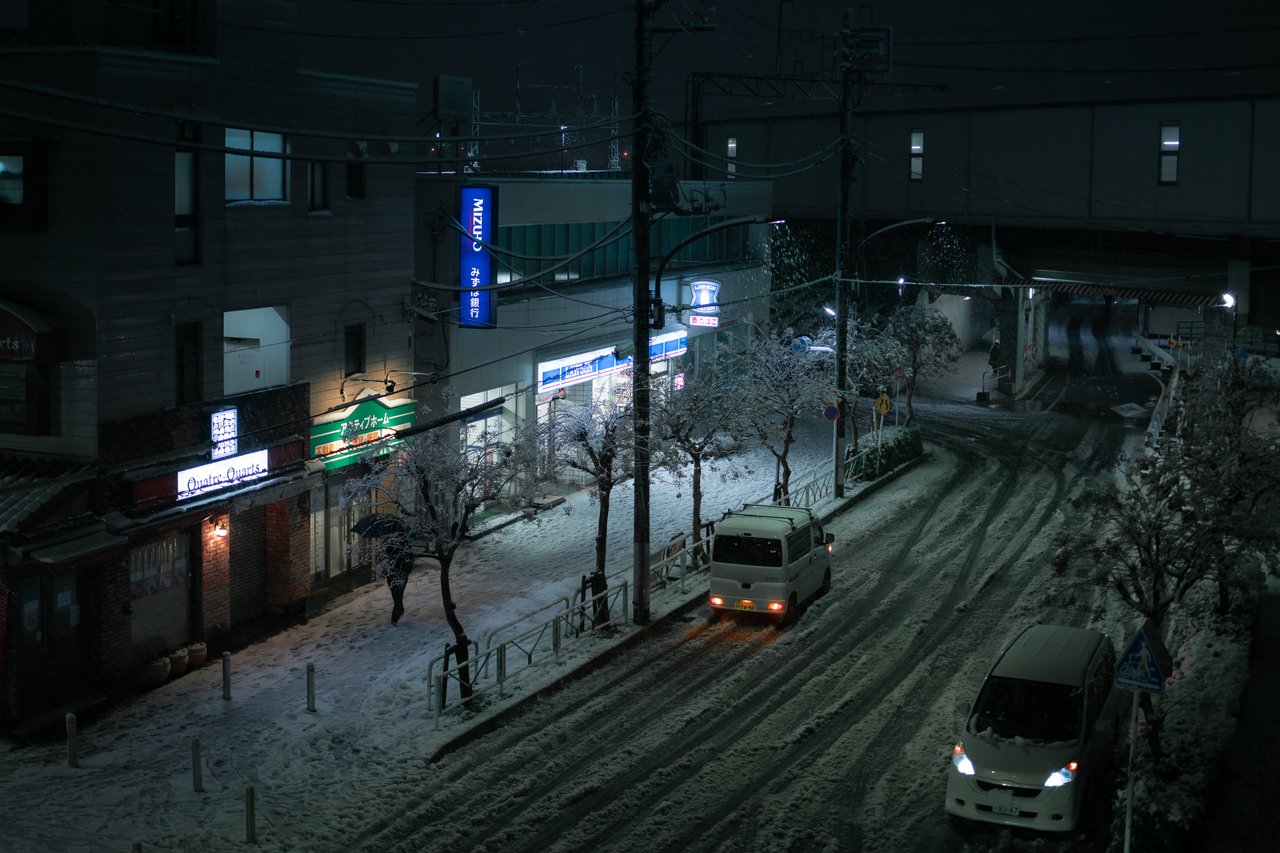
Tokyo snow photography is one of those subjects that only exists if you're in the right place at the right time. Tokyo gets real snow — enough to accumulate on the streets — maybe once or twice per winter, usually in January or February, and it melts within 24 hours. The window is narrow. But if you're there when it happens, and you go out immediately, the images you come back with are unlike anything else the city produces.
I'd been in Tokyo for almost two years before I saw real accumulation. It happened in January 2024. I went out at midnight and didn't come back until 5am. Here's everything I learned from that night and the shoots that followed.
When Does It Snow in Tokyo?
Tokyo's snow season runs roughly from late January through mid-February, though outlier events happen in December and March. The Japan Meteorological Agency typically forecasts snowfall 24–48 hours in advance, which gives you time to prepare. Average snowfall in Tokyo is less than 10cm in a typical event — enough to change the visual character of the city entirely, but not enough to stay for more than a day.
If you're planning a trip specifically for snow, target late January. It's not guaranteed — some winters see almost nothing — but the probability is highest in that window. 2024 was a good snow year. The shoots I got in January of that year are among the best I've made in the city.
Where to Go for Snow Photography in Tokyo
My instinct the first time was to go straight to Shinjuku, which is my default for night photography, and it didn't disappoint. Kabukichō in the snow is something else — neon signs reflecting off surfaces that are normally grey pavement, the streets emptier than usual, the whole visual register of the neighborhood shifted toward something cinematic. The main drag near Yasukuni-dori with snow falling through the light columns is a frame that earns itself.
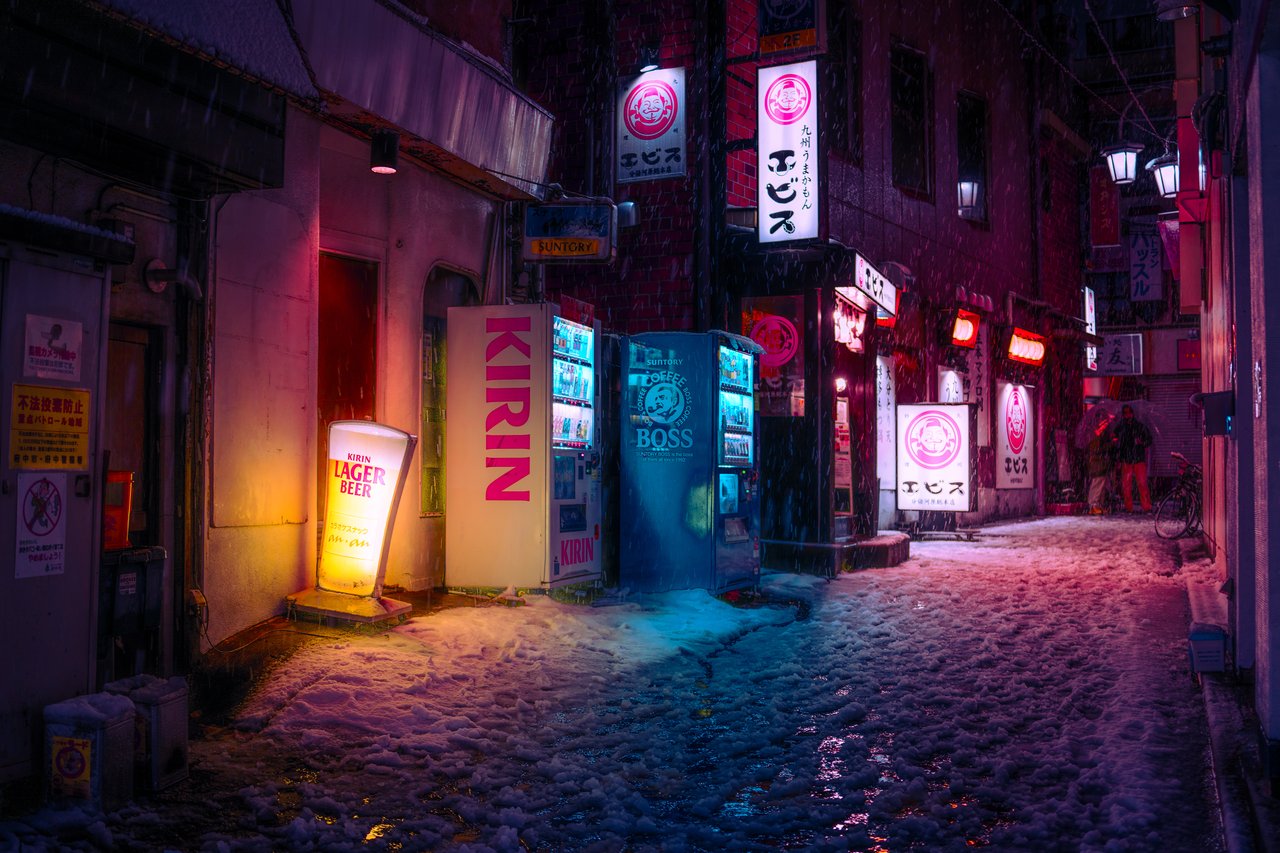
But the bigger surprise was smaller neighborhoods. Residential streets in Koenji, Nakano, and Kichijoji — places with character but without the neon density of Shinjuku — became suddenly dramatic with snow. Snow equalizes visual noise. It takes a street that's slightly chaotic and gives it a clean surface, a consistent tone, and the kind of stillness that's hard to find in central Tokyo at any other time.
Parks are worth visiting for obvious reasons — snow settles on surfaces without competing elements, and the compositions tend to be cleaner. Most of the major parks close after dark, but smaller neighborhood parks are accessible and usually empty at night during a snowfall. I've had entire parks to myself at 2am in the snow. That doesn't happen often in this city.
How to Photograph Snow in Tokyo: Camera Settings
Snow is harder to expose correctly than most subjects. The camera's metering system reads all that white as potential overexposure and pulls back, which gives you grey slush instead of white snow. The fix is exposure compensation: push it up +1 to +1.5 stops from what the meter suggests and check your histogram after each shot. The right side should be pushed fairly bright — snow should look white, not grey.
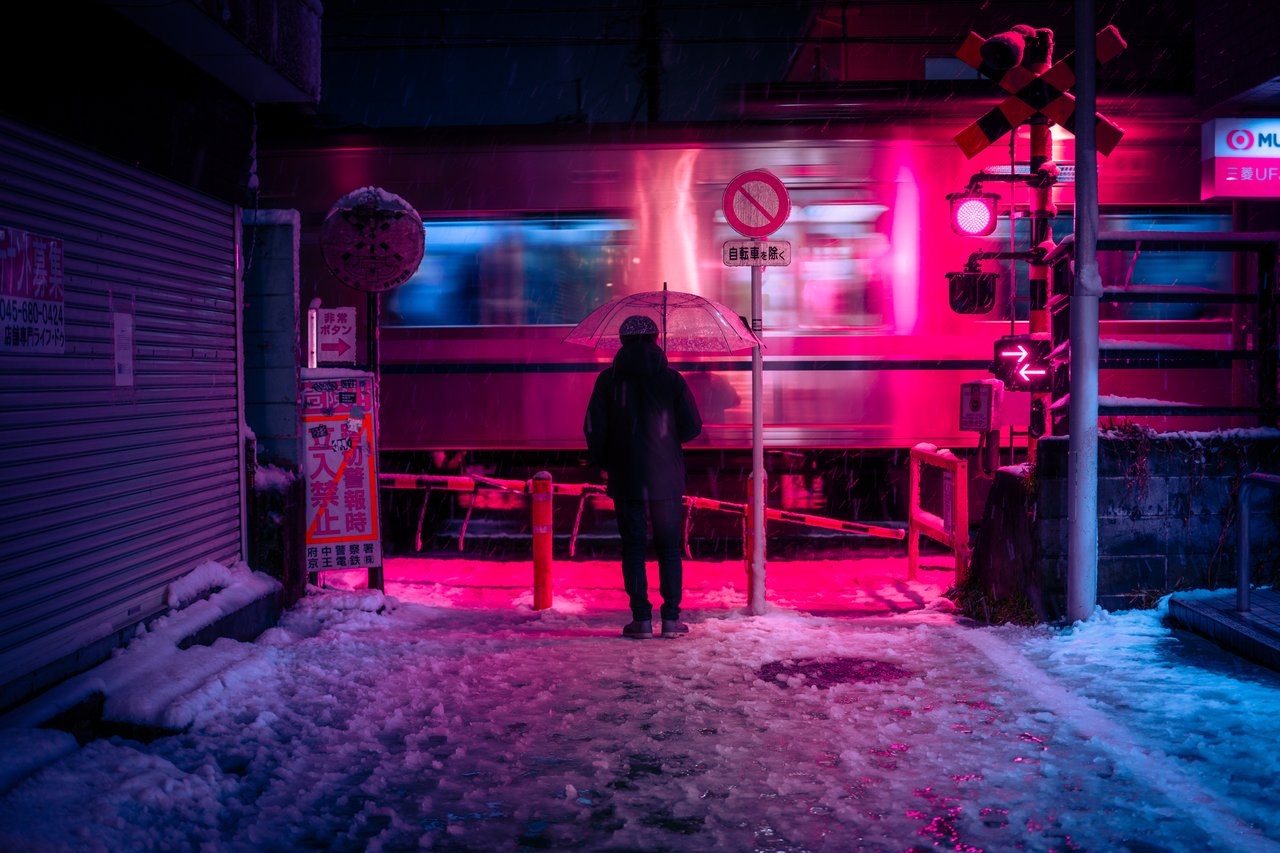
For Tokyo snow photography specifically, the combination of artificial light and snow is where the work gets interesting. Tokyo's neon and streetlights are already excellent photographic material on a normal night. Snow amplifies all of it — surfaces that normally absorb light start reflecting it, and every light source gains a radius it doesn't have on dry nights. Neon on wet snow produces a color quality that's difficult to replicate any other way.
I shot the 2024 snow sessions on the Sony A7R IV with the 50mm f/1.4 GM. Fast aperture matters in snow — you're shooting in mixed light at night, and f/1.4 gives you flexibility on ISO without losing shadow detail. The 50mm focal length compresses the scene just enough that falling snowflakes don't dominate the frame the way they can on a wider lens.
The Visual Logic of Snow in the City
Snow changes Tokyo in ways that are hard to explain until you see it. The city is already quiet by most standards, but snow makes it quieter. The sound changes — footsteps are muffled, traffic slows, the background hum drops. The light changes — every surface becomes partially reflective, shadows soften, and the contrast that makes Tokyo night photography work is still there but filtered through something that makes it less harsh.
The streets also empty. Not completely, but enough that you start seeing compositions that are impossible on a normal Friday night. A single figure at a distance on an empty street covered in snow, neon in the background, is an image that requires both the snow and the emptiness. You can't manufacture either one.
Preparing for a Snow Shoot in Tokyo
The practical side matters. Tokyo in the snow is cold — typically between 0°C and 5°C during a snowfall event — and you're likely to be outside for several hours. Layers are more important than a single heavy coat, because you'll be moving between being active and standing still waiting for a frame.
The subway runs normally in light snow. Heavier accumulation can cause delays on surface lines, but the underground network is reliable. If you're heading out at midnight during a snowfall, plan to be out until morning — cabs are scarce and train service starts at 5am.
Protect your gear. The A7R IV is weather-sealed and I've shot in heavy rain and snow without problems, but condensation on lenses when you move from cold outside to warm inside is a real issue. Give the camera time to adjust, and keep lens caps on when you're not shooting. A rain sleeve is worth carrying even if the camera is weather-sealed — more for peace of mind than strict necessity.
The Window Is Short — Go Immediately
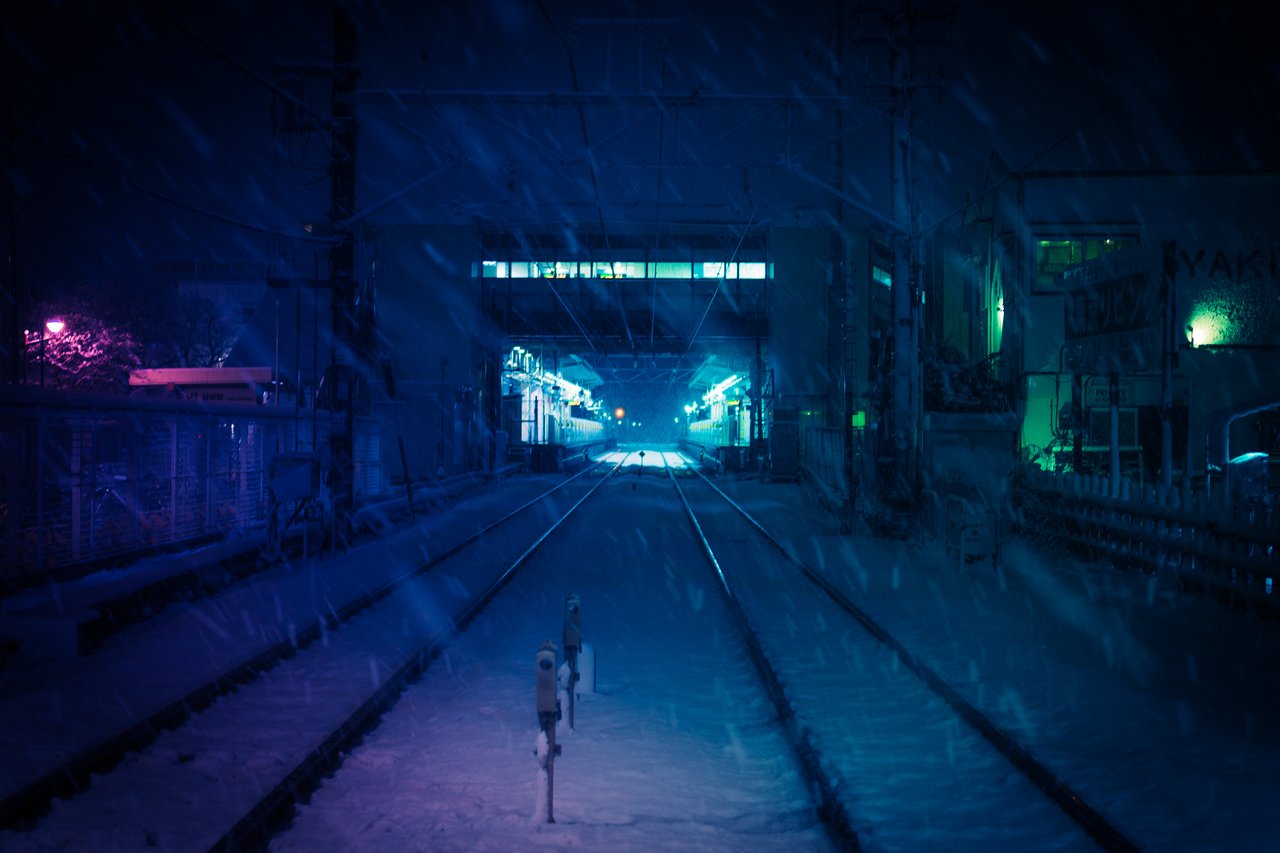
This is the most important thing. Tokyo snow melts fast. The city doesn't have the infrastructure for it — no snowplows, no road salt — so everything moves slowly and looks chaotic in a distinctly Japanese way. But by the afternoon the day after, most accumulation is gone. The streets are wet. The magic is over.
When it snows, go out immediately. Don't wait for better conditions, a more reasonable hour, or the morning light. The conditions at midnight during active snowfall are almost always better than what you'll find the next morning after it's partially melted. I've made the mistake of waiting once. I won't make it again.
The Tokyo snow photography window is narrow. If you're there when it opens, use it.
Planning a winter trip to Tokyo?
Book a Session in Tokyo →