
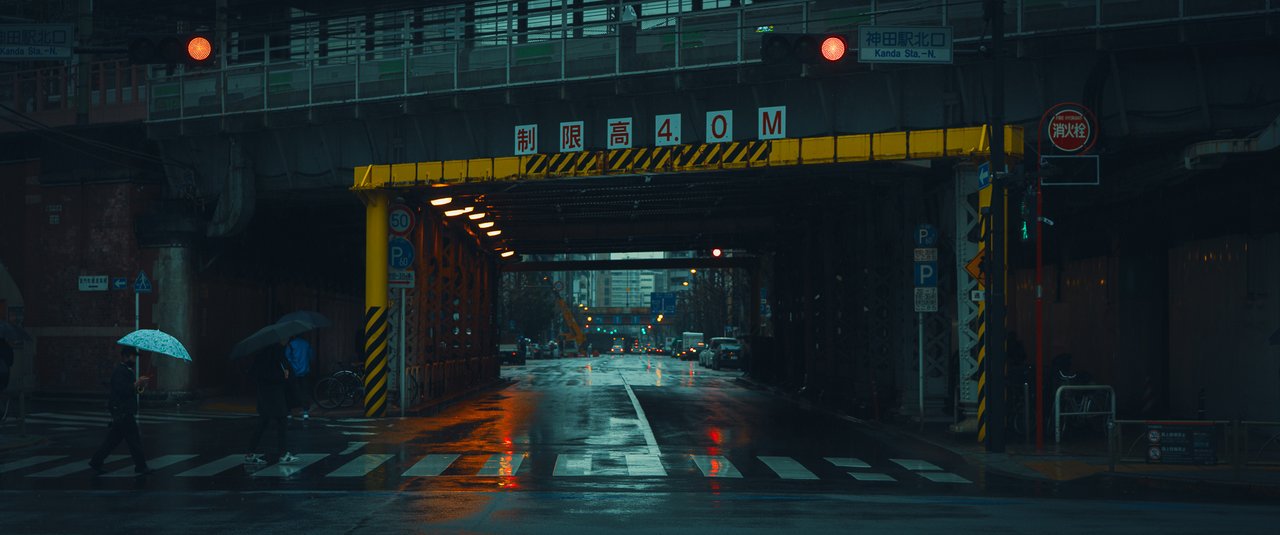
Ochanomizu is one of those Tokyo neighbourhoods that somehow stays off the photography radar despite being central, visually interesting, and easy to reach. It sits between Akihabara and Suidōbashi on the Chūō line — ten minutes from Shinjuku, five from Akihabara — and it has a character entirely its own. Guitar shops, universities, the Kanda River cutting below elevated rail tracks, and streets that haven't been redesigned to attract tourism. If you've been shooting Shinjuku and Shibuya and want something that doesn't look like either of them, Ochanomizu is a reliable answer.
The name, for context, means "tea water" — a reference to a historical story about a shogun's tea being brewed with water from the area. The name stuck. The neighbourhood moved on. What's there now is more interesting than the etymology.
Getting to Ochanomizu
JR Ochanomizu Station is on the Chūō-Sōbu line, with direct trains from Shinjuku (about 12 minutes) and Akihabara (2 minutes). Tokyo Metro's Marunouchi line also stops at Ochanomizu Station, connecting directly from Tokyo Station and Shinjuku. There's no need for a transfer from most central locations — it's straightforward to reach, which makes the fact that it's overlooked slightly puzzling.
The neighbourhood is compact enough to explore on foot. Most of what's worth seeing is within a 15-minute walk of the station. The area splits roughly into two zones: the guitar and instrument district to the south and east, and the Kanda River corridor to the north and west. Both are worth your time, and they're different enough that they don't feel like the same walk.
The Guitar District: Japan's Music Equipment Centre
Ochanomizu is Japan's largest concentration of music equipment shops — guitars, drums, keyboards, brass instruments, vintage gear, specialist repair shops. The streets around the station, particularly Meiji-dori heading south toward the Ochanomizu Bridge area, are lined with these shops in a density you don't find anywhere else in Japan. Fujiya Camera, widely considered one of the best used camera shops in Tokyo, is also in this neighbourhood.
I don't play guitar. I still find this district worth walking through. The shops are photogenic in a way that doesn't depend on neon or nighttime — handwritten price tags, guitars hanging in lit windows, signage that's been there for decades without being redesigned for Instagram. The kind of material that rewards a slower, more observational approach to shooting. A 50mm lens and patience produces interesting frames here that you couldn't manufacture in a more polished neighbourhood.
The district is active during the day and mostly closed by evening, so this is one part of Tokyo where daytime shooting makes sense. Late afternoon light catches the shop windows well. On weekends the streets have a slightly different energy — students, musicians, gear hunters — which adds human interest to the architectural material.
The Kanda River and the Rail Viaduct
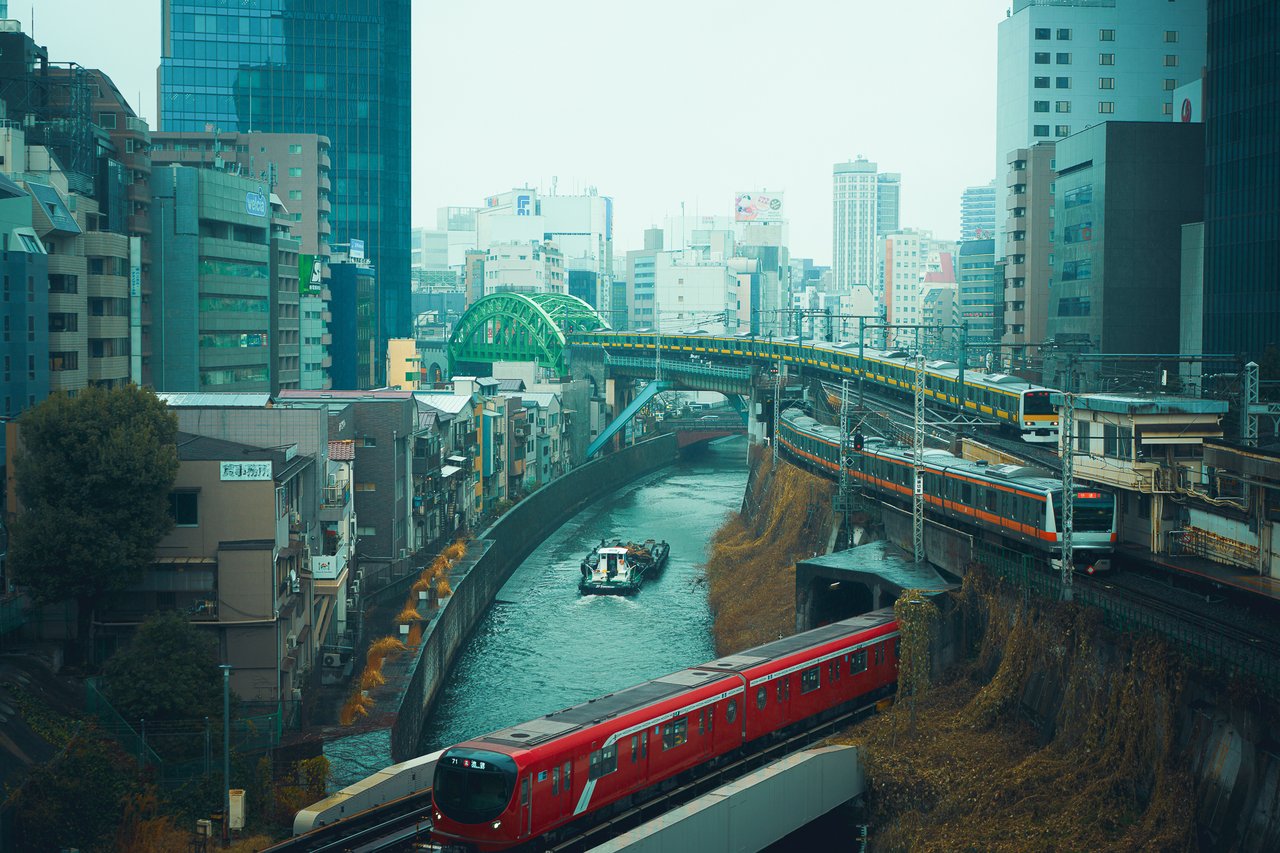
The most visually distinctive feature of Ochanomizu is the Kanda River as it runs through the neighbourhood, with the elevated Chūō line tracks running alongside it. From the bridges crossing the river — particularly Hijiribashi and Shōhei bridge — you get a layered view of tracks, river, and buildings rising behind them that's unusual in Tokyo. Most of the city is read at street level, flat. Ochanomizu gives you elevation, depth, and a compression of elements that works well photographically.
The river walk between the two bridges is worth doing slowly. The light changes throughout the day — early morning gives you soft diffused light on the water, late afternoon throws hard shadows from the viaduct structure across the riverbanks, and at dusk the artificial light from the tracks and surrounding buildings starts to fill in. Each of these conditions produces different images. I've shot this stretch at different times of day and the morning version and the evening version look like different locations.
At night the viaduct is lit and the river reflects it. It's not as dramatic as Shinjuku or Shibuya at night, but that's part of what makes it worth shooting — it has an industrial, quieter quality that those neighbourhoods don't. Less noise, more structure.
The Wider Neighbourhood: What Else Is Here
Ochanomizu sits adjacent to Jimbocho, Tokyo's used book district — a neighbourhood of secondhand bookshops, antiquarian dealers, and small publishing houses that has its own photographic interest. The two neighbourhoods are a short walk apart and complement each other. A half-day route from Ochanomizu station through the guitar district, down to the river, and then east into Jimbocho covers a lot of visual ground without feeling rushed.
Akihabara is 5 minutes by train and a useful contrast. If you're shooting Akihabara's electronics and anime density, Ochanomizu's quieter, more craft-oriented streets are a useful counterpoint in the same trip. The visual register is completely different — Akihabara is noise and neon, Ochanomizu is signage and structure — and having both in the same day gives you a broader picture of what central Tokyo actually contains.
There are several universities in the area, including Tokyo Medical and Dental University and Nihon University. This gives the neighbourhood a younger daytime population and a range of small cafes and food options that are priced for students rather than tourists. Worth knowing if you're spending a few hours there.
Why Ochanomizu Gets Overlooked — and Why That's an Advantage
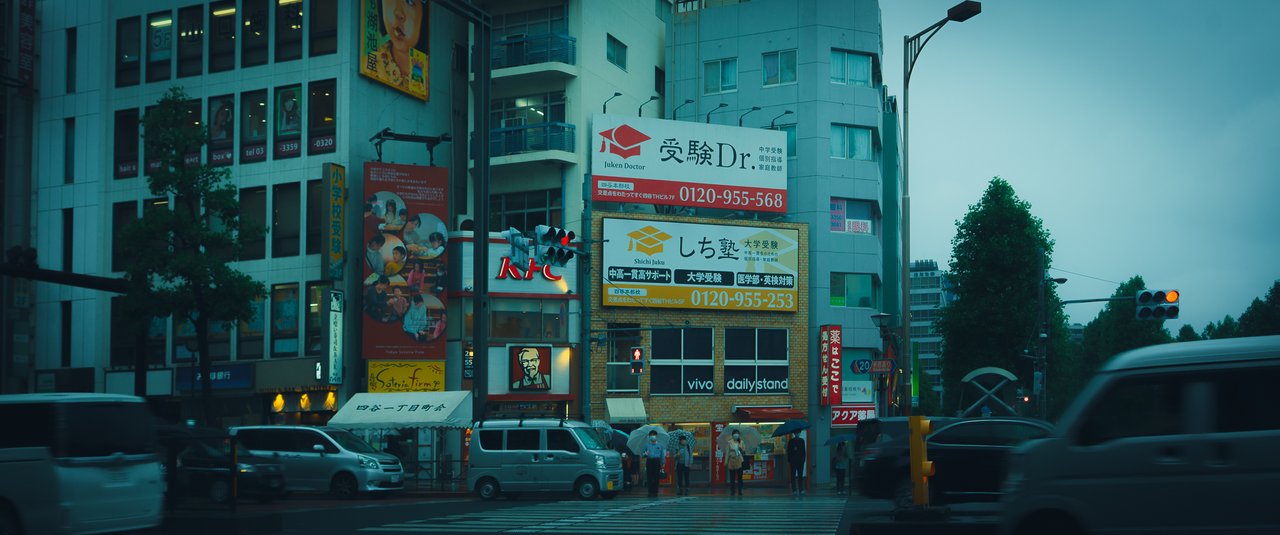
There are no major tourist attractions in Ochanomizu. No famous crossing, no temple in every guidebook, no specific "Ochanomizu shot" that circulates on photography accounts. This is exactly what makes it worth visiting. You're unlikely to see another photographer pointing a camera at the same thing you are.
In a city that's been photographed as extensively as Tokyo, that's increasingly rare. Shinjuku and Shibuya are saturated — there are thousands of photographers making the same frames in the same locations every week. The images that stand out from Tokyo photography are increasingly the ones made in neighbourhoods that aren't on the standard circuit. Ochanomizu, Koenji, Nakano, Kichijoji — these are places where you can still find material that doesn't look like someone else's work.
I've walked through Ochanomizu more than a dozen times. I've never seen a tour group. In this city, that's a recommendation in itself.
Best Time to Visit Ochanomizu for Photography
The guitar district is best during the day — shops are open, there's human activity, and the window displays work best in natural light. Late afternoon on a weekday is a good balance between activity and manageability — busy enough to have life in the frame, not crowded enough to be frustrating.
The Kanda River is worth visiting at multiple times. Morning for the light on the water, evening for the transition between daylight and artificial light on the viaduct, and night for the fully artificial version. Each of these produces different images, and none of them requires perfect conditions or a specific season.
Rain helps, as it does everywhere in Tokyo. The river walk in the rain has a particular atmosphere — the sound of water, reflections doubled, and the concrete structure of the viaduct going grey-green in the wet. Bring a bag cover and stay out.
Want to explore less-photographed Tokyo for your session?
Book a Session in Tokyo →