
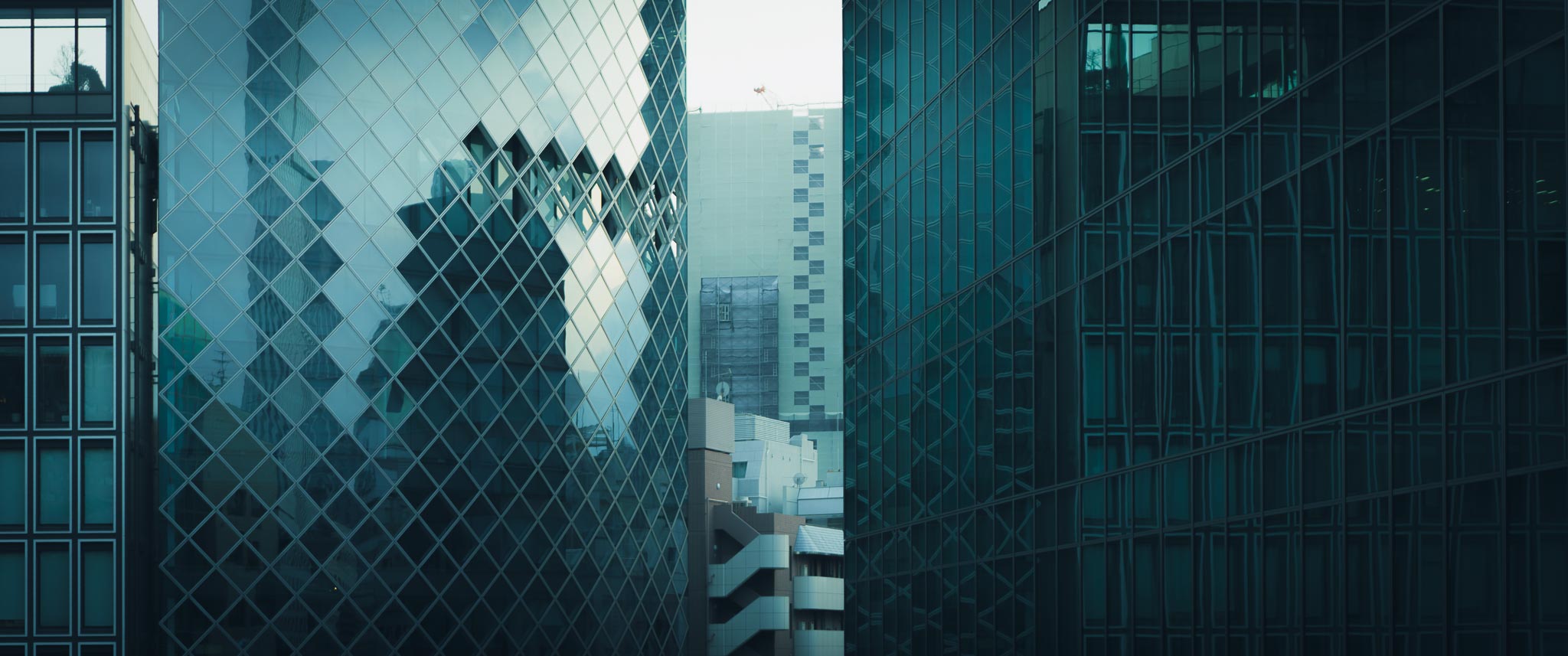
Akasaka is one of Tokyo's primary business districts — the kind of neighbourhood where the ground floors of glass towers contain the Tokyo offices of international corporations, and the lunch crowd moves between buildings in suits regardless of weather. It's not obviously a photography destination, which is most of what makes it interesting to shoot. Business districts have a visual logic that's different from entertainment districts, and Akasaka's particular version of that logic — compressed glass facades reflecting each other, wide streets that empty dramatically after 8pm, a Shinto shrine sitting improbably in the middle of it all — produces material you can't find in the more photographed parts of the city.
Getting to Akasaka
Akasaka Station is on the Tokyo Metro Chiyoda line, with direct trains from Shinjuku (about 15 minutes) and direct access from Kasumigaseki and Hibiya in the east. Akasaka-mitsuke Station, served by the Ginza and Marunouchi lines, is a short walk away and gives additional access routes. The neighbourhood is more central than it feels — it sits between Roppongi to the south and Nagatacho to the north, with the ARK Hills development and TBS broadcasting centre both nearby.
The Architecture: What Makes Akasaka Worth Shooting
The glass tower density in Akasaka is high enough that from certain street-level positions the buildings reflect each other in complex, layered ways. A single facade becomes a compressed display of every other building in its sightline — angles and patterns multiplied into something that reads as abstract rather than architectural. This is not accidental photography; it requires walking slowly and paying attention to where the reflections align. But when they do, the frames have a geometric quality that's difficult to find in the more chaotic visual environments of Shinjuku or Shibuya.
The best time for this kind of shooting is overcast daylight — direct sun creates harsh shadows and blown-out reflections, but diffuse light lets the facades work at full complexity. Early morning, before the foot traffic builds, gives you empty streets to compose in without managing pedestrians.
Hie Shrine: The Unexpected Centre of Akasaka
Hie Shrine sits on a hill in the middle of Akasaka, surrounded by corporate towers, and it has been there since the Edo period — which means it predates everything around it by several centuries. The shrine is dedicated to the god of the mountain and is associated with protection from evil and safe childbirth. It is also, unexpectedly, associated with frogs.
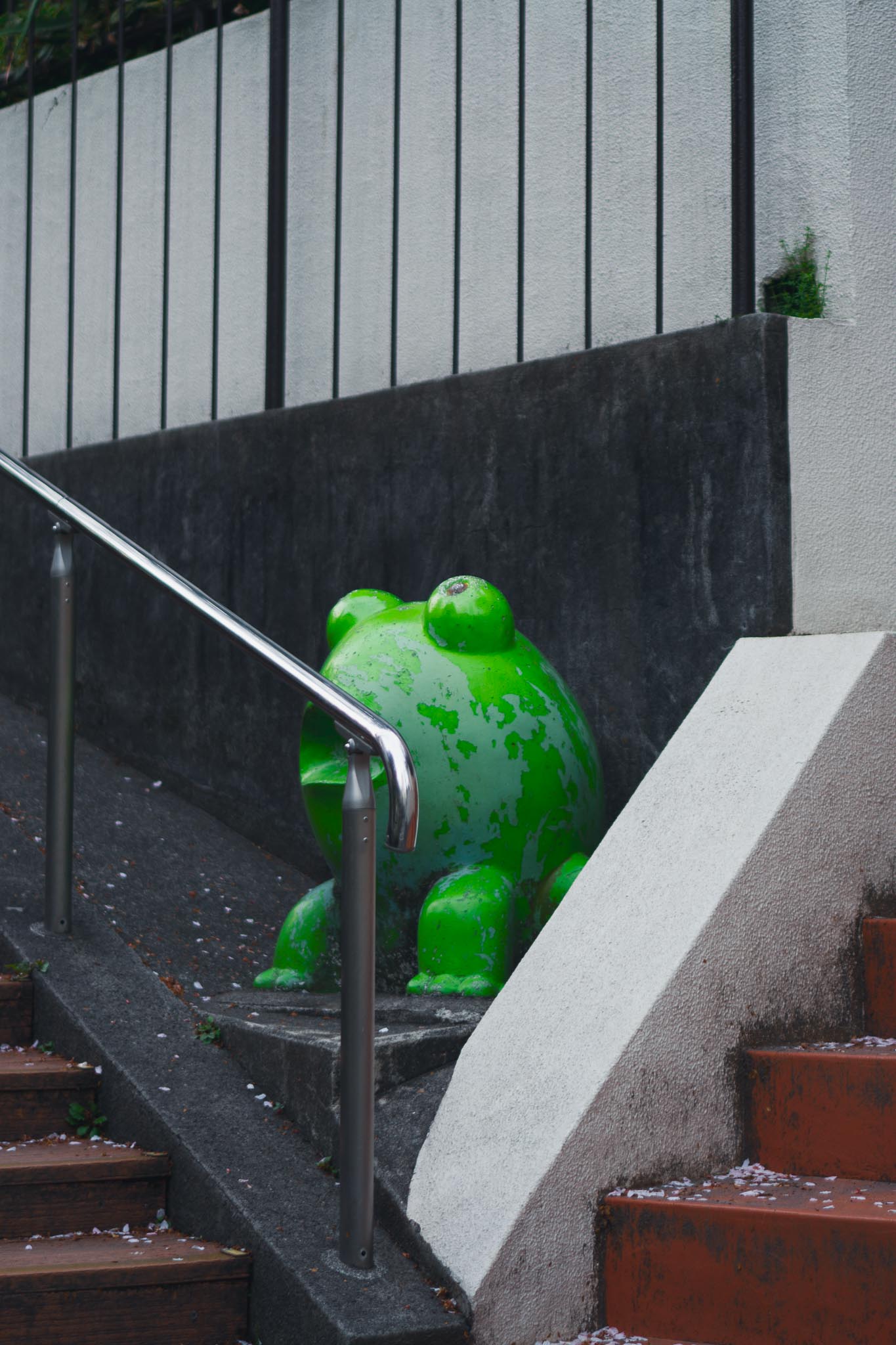
The Japanese word for frog — kaeru — is a homophone for "to return" or "to come back," which makes frogs auspicious at a shrine dedicated to safe returns and protection. As a result, frog imagery is scattered throughout the Hie Shrine precinct: stone frogs, ceramic frogs, carved frogs, and — the detail that stops you cold when you come across it — a large, peeling green fibreglass frog sitting on a set of stairs off to the side of the main approach, looking like it arrived from a completely different world. It has been there long enough to be weathered. Nobody has repainted it.
The contrast between that frog and the glass towers visible behind it is the best single image Akasaka offers. The shrine's famous torii tunnel — a series of vermilion gates running up the hillside — is the more frequently photographed element, but the frog is the stranger and more honest picture of what this neighbourhood actually is: an old city that the new city was built around, and the old city is still there if you look for it.
After Dark: The Business District Empties Out
Akasaka after 8pm has a different character from most Tokyo districts at that hour. The corporate population doesn't disappear — they relocate to the bars and restaurants in the neighbourhood, many of which operate at a price point that reflects the surrounding real estate. This is not an izakaya neighbourhood in the Akabane sense. The drinking here happens in smaller numbers, at higher prices, in places that don't need exterior signage because their clientele already knows where they are.
The streets between the bars clear out faster than comparable areas in Shinjuku or Roppongi. By 11pm, stretches of Akasaka that were busy two hours earlier are empty enough to shoot in without managing crowds. The wide corporate streets, with their controlled lighting and absence of the visual noise that characterises the entertainment districts, become something approaching a clean slate. The reflections in the glass facades at night — lit from within, dark outside — are different from the daytime version and worth the return trip.
Akasaka vs Roppongi
The comparison is natural since the two neighbourhoods are adjacent. Roppongi has the international nightlife reputation — louder, more tourist-facing, with the concentration of clubs and large bars that draws a specific crowd on weekend nights. The photography in Roppongi at night tends to be about energy and excess. Akasaka is quieter, more expensive, and more local in the sense that the people there at 11pm on a Wednesday are mostly Tokyo professionals rather than visitors to the city. For photography, Roppongi offers more obvious spectacle. Akasaka offers more architectural interest and significantly fewer people competing for the same frames.
The Roppongi Hills complex — technically in Roppongi but close to the Akasaka boundary — is worth treating as a separate zone from both. The terrace views from Mori Tower cover a substantial portion of the Tokyo skyline and operate on different photographic logic from street-level work in either neighbourhood.
When to Visit
For the architectural work, overcast weekday mornings before 9am. The streets are clean, the facades are fully complex in diffuse light, and you're unlikely to have other photographers competing for the same positions.
For the evening version — the emptying streets, the lit facades against dark sky, the remaining corporate crowd in the bars — weekday evenings from 8pm to midnight. The shrine is worth revisiting at night: the torii tunnel is lit and quiet, and the transition from illuminated traditional architecture to the glass towers behind it is more visible in the dark than during the day.
The frog is there at any hour. It isn't going anywhere.
Want portraits in Tokyo's less-photographed districts?
Book a Session in Tokyo →