
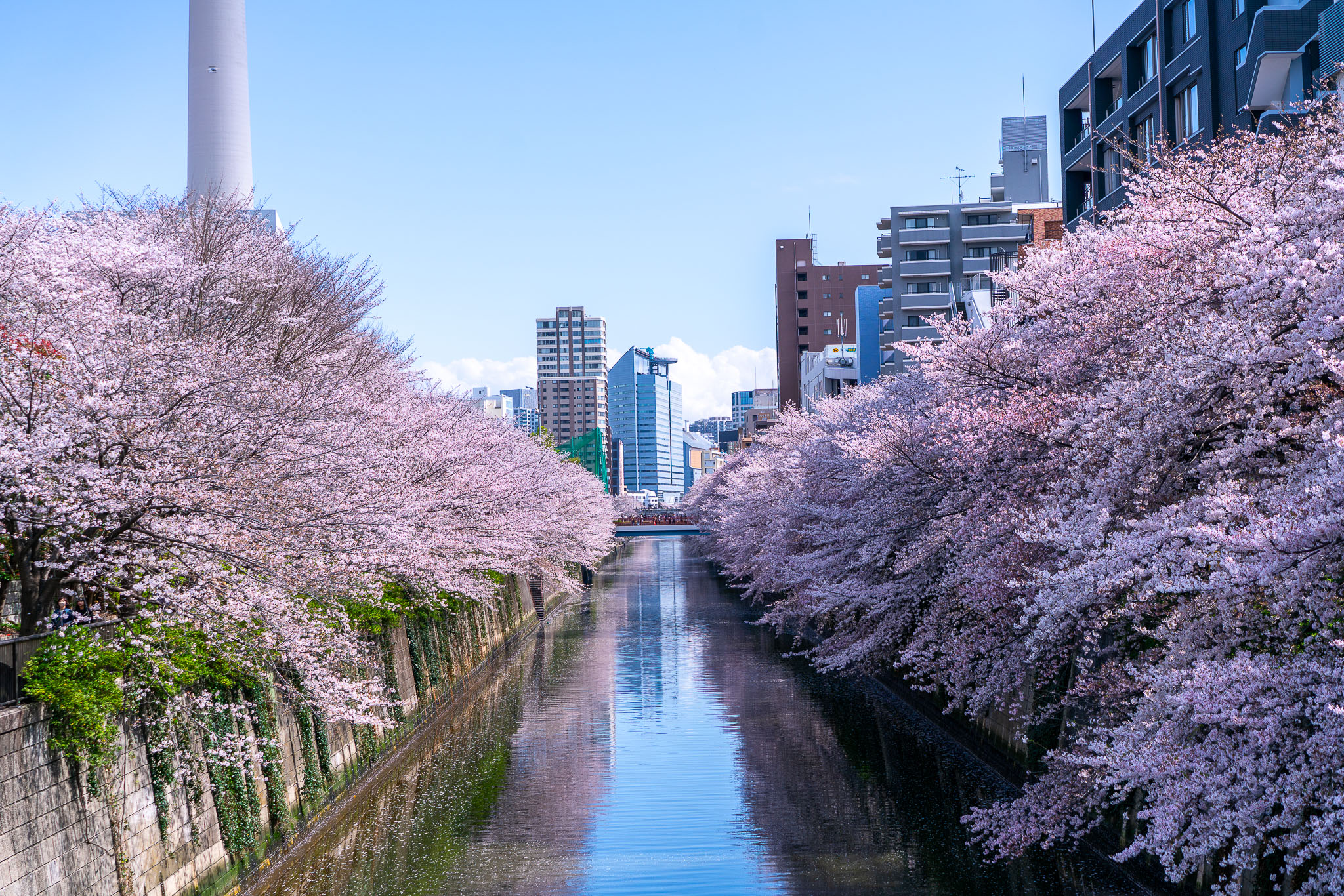
The Meguro River during sakura season is one of those images that represents Tokyo in April. If you've seen a photo of cherry blossoms tunneling over a narrow canal with the city rising behind it, it was probably here. The picture is real. The canal is genuinely beautiful. The problem is that everyone else knows this, and on peak bloom weekend the path along the river becomes one of the most densely packed stretches of pavement in the city. You can still make good images — but you have to work around the crowd, or go somewhere else entirely.
I've shot the Meguro River several times. I've also spent the last few sakura seasons finding spots that aren't in every travel blog. Here's both.
Meguro River: How to Actually Shoot It
The canal runs roughly 3.8km from Nakameguro station down toward Meguro station. The most photographed stretch is between Nakameguro and Ikejiri-Ohashi, where the trees are oldest and the canopy is densest. This is genuinely one of the better sakura spots in Tokyo — the overhanging branches create a tunnel that's hard to replicate anywhere else in the city, and the water reflection doubles everything. It earns its reputation.
For photography, timing is everything. Peak bloom on a weekend afternoon is essentially unusable — too many people, too much visual noise, no clean lines anywhere in the frame. Early morning, 6 to 7am, before the food stalls open and before the crowds arrive, is when the canal looks closest to what you've seen in photos. The reflection on the water is best when the wind is low. Both of those conditions are most likely to coexist at dawn. Come back in the evening for yozakura — the canal lights up the trees from below and the night version is worth a separate visit.
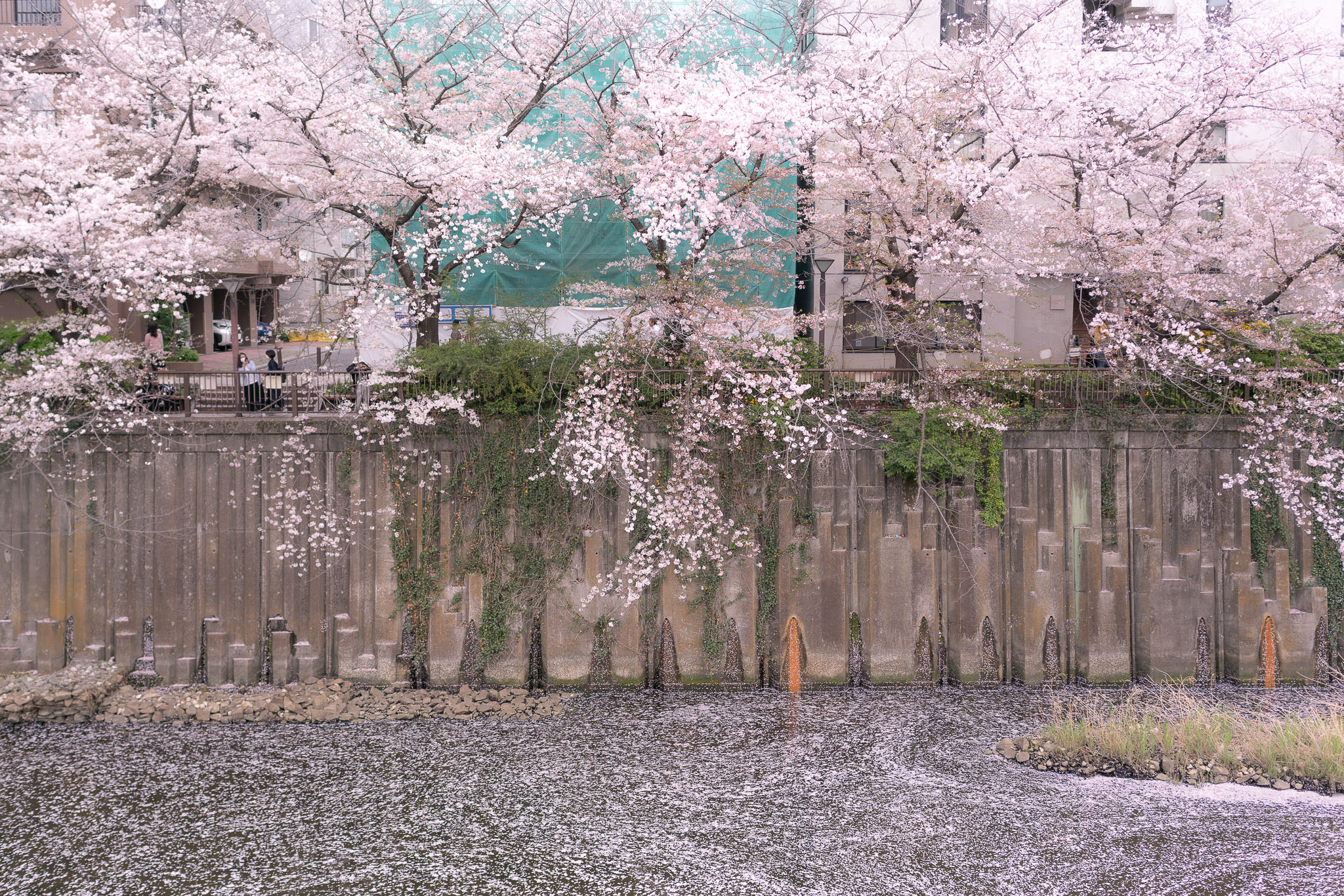
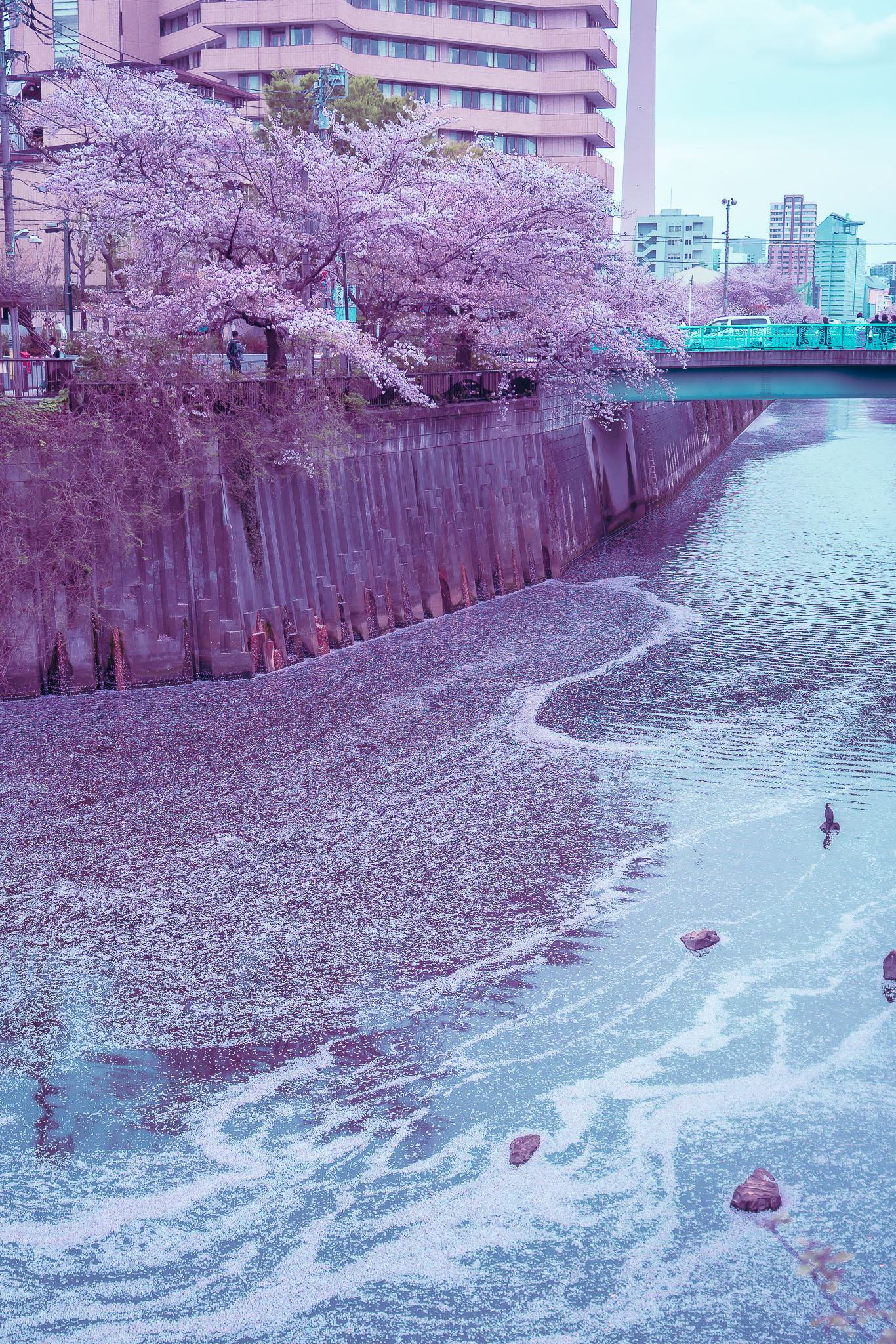
The other thing most people miss is the petals. A few days after peak bloom, fallen petals collect on the water surface and form a drifting layer of white across the canal. This is called hanafubuki — flower blizzard — and photographically it's more interesting than full bloom. The trees are past their peak but the water looks extraordinary, particularly on a still morning when the layer sits undisturbed.
Zenpukuji Park, Suginami
About 20 minutes from Shinjuku on the Marunouchi line, Zenpukuji Park has two small ponds ringed by mature sakura trees and almost none of the infrastructure that makes famous spots miserable during peak season. No food stall corridor. No festival crowds. On a weekday afternoon it runs at maybe a quarter of the density you'd find at Ueno. The ponds are calm enough that the water reflections actually work — unlike the river at Meguro, where weekend boat traffic chops the surface before 9am. The park is a local spot that operates like one.
Senzokuike Park, Ota Ward
Senzokuike Park sits around a larger lake in Ota Ward, farther south than most tourists go. The main draw for photography is a weeping sakura variety near the lake path — different from the Somei Yoshino you see everywhere, with branches that hang almost to the ground and bloom slightly later than the standard trees. If you've shot peak bloom and you're looking for a second week of material, this extends the season. The lake itself has good reflection potential if you're there in the morning before wind picks up.
Kuhonbutsu Joshinji Temple, Jiyugaoka
Kuhonbutsu is a working temple in Jiyugaoka with several very old sakura trees in the grounds. You can walk through freely. The combination of the old wooden structures and the blossoms is a different visual register from canal photography — less abstract pink canopy, more about the relationship between the trees and the architecture they've grown alongside for decades. It's also uncrowded in a way that most Tokyo sakura spots aren't, because it doesn't show up in the same round of travel recommendations. Jiyugaoka itself is worth the trip for the European-style streets and the patisseries, so it fits into a longer day easily.
Nogawa Park, Chofu
Nogawa Park is a large park in Chofu, out west on the Keio line, that gets overlooked because it doesn't have a famous name attached to it. The sakura density along the Nogawa river path is high, the trees are mature, and on a weekday it has room to breathe. If you've spent the morning at Meguro at dawn and you want an afternoon contrast — somewhere to actually sit under the trees rather than navigate through crowds — this is the practical answer. The western suburbs aren't glamorous, but they're where you find parks that still function as parks during sakura season.
Shakujii Park, Nerima
Shakujii Park in Nerima has two large ponds and sakura trees dense enough along the water that on a still morning the reflection doubles the canopy. It's a 30-minute ride from central Tokyo and the photography conditions are better than most spots — room to set up, angles that don't put hundreds of people between you and the trees, and a quieter atmosphere that lets you think about the frame rather than just navigate around people. It's a local park for local people during sakura season, which is exactly what makes it work.
What All of This Means
Sakura season in Tokyo lasts roughly two weeks, with peak bloom usually landing in late March to early April depending on the year. The window for fallen-petal photography is another few days after that. The crowds peak hardest on weekends during full bloom. If you're planning around photography, weekday mornings are the consistent answer — not because the spots are less beautiful on weekends, but because you can actually see them.
The Meguro canal is worth doing once, early in the morning, ideally just past peak bloom when the petals are on the water. Everything else on this list is worth doing because you'll be the only photographer there.
Want portraits against Tokyo's sakura season backdrop?
Book a Session in Tokyo →