
Wabi-sabi is a Japanese aesthetic idea built around imperfection, impermanence, and incompleteness — the beauty in something that shows its age, its wear, the marks of time passing rather than a surface that's been engineered to look eternally new. It comes out of two separate older concepts, wabi (a kind of rustic, unadorned simplicity) and sabi (the beauty that comes with age and use), that merged over centuries into a single sensibility running through tea ceremony, pottery, garden design, and a lot of traditional Japanese art. A cracked bowl repaired with visible gold seams. A garden that looks slightly overgrown on purpose. A wooden building left to weather rather than repainted every year.
None of that describes Tokyo at first glance. The city I photograph most is the opposite of quiet and unadorned — dense neon, hard reflections, maximalist signage stacked six stories high. But wabi-sabi isn't actually about aesthetics in the decorative sense. It's about what you choose to find beautiful, and once you start looking for it, it's underneath almost everything I shoot.
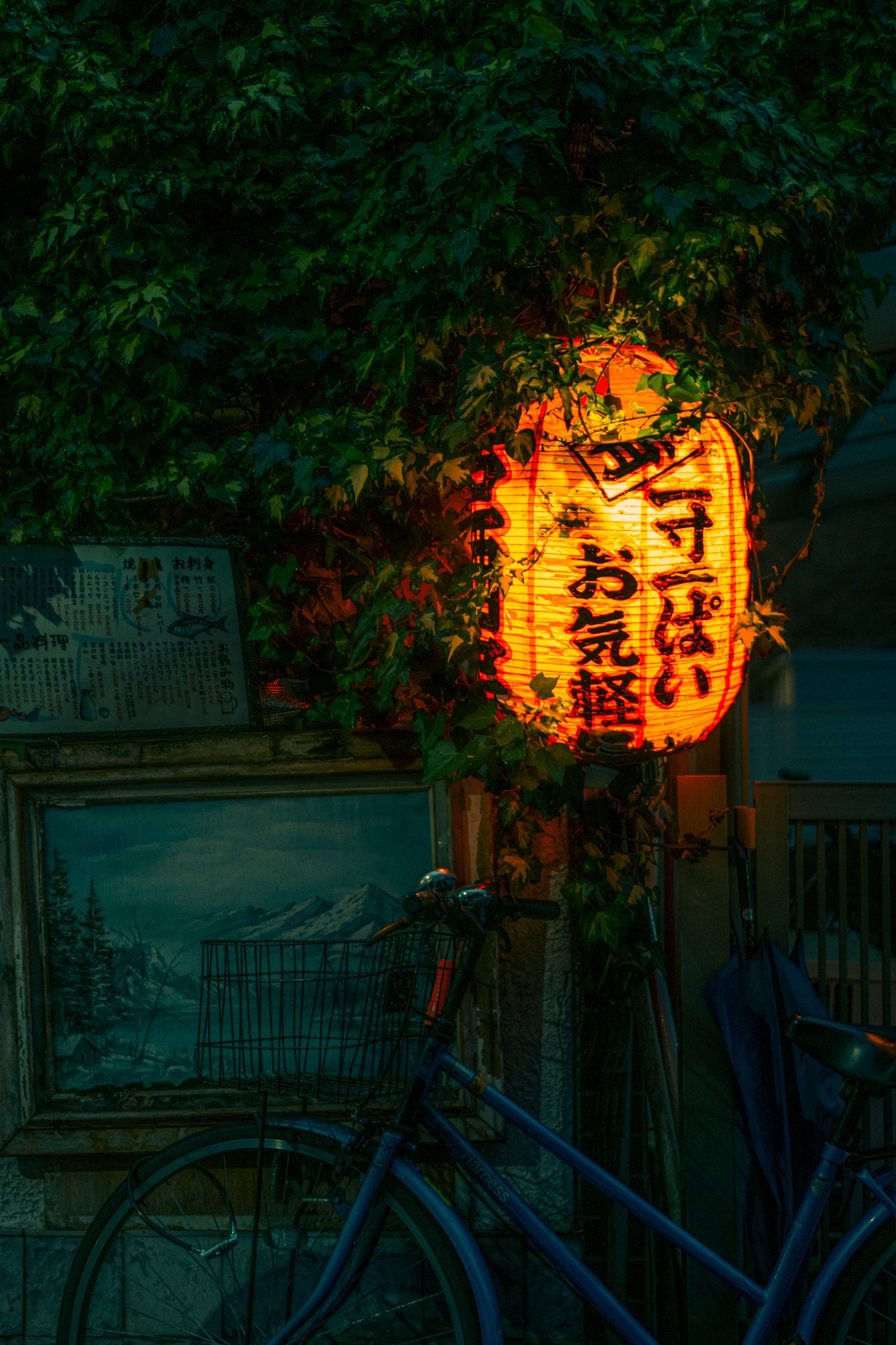
The Lantern With the Ivy Growing Over It
I found an old izakaya lantern a while back, half-swallowed by a vine that had clearly been growing over it for years — nobody had trimmed it back, nobody had replaced the lantern, the whole thing had just been left to happen. That's about as literal a wabi-sabi image as I've shot: something man-made, aging, being slowly reclaimed by something natural, and nobody treating that as a problem to fix. A newer, cleaner sign next door would photograph fine. It wouldn't photograph like this.
Most of what draws me to a frame has some version of that quality — a rusted pipe running across an alley wall, a hand-painted sign that's been touched up so many times the layers show, a shuttered shop with a poster peeling at the corner. I'm not looking for decay for its own sake. I'm looking for evidence that something has been used, weathered, lived with, rather than staged.
The Alley Over the Landmark
This is also why I'll walk past the cleaned-up, tourist-facing version of a neighbourhood to shoot the backstreet nobody photographs. Two women in traditional dress walking away from camera down a narrow lane, lit by a single pink lantern, buildings that haven't been renovated in decades pressing in on both sides — there's nothing polished about that frame, and that's exactly the point. A restored, pristine version of the same street would be objectively "nicer" and considerably less interesting.

Wabi-sabi also shows up in what I choose not to fix in post. I don't smooth out every imperfection in a frame — a slightly blown highlight from a neon sign, a puddle that isn't perfectly still, motion blur from someone walking through the shot. Some amount of that stays, because a photograph that's been polished into total technical perfection starts to lose the thing that made the scene worth shooting in the first place.
Impermanence, Not Just Imperfection
The other half of wabi-sabi — impermanence — is maybe the bigger influence on how I shoot at all. A specific quality of blue hour lasts about fifteen minutes. A particular neon sign gets replaced or switched off within a year or two, and the shot I got of it stops being reproducible. A rainy street reflection exists for the length of the rain and not a minute longer. None of what I photograph stays the same for long, and I've made peace with that being the actual subject rather than a limitation to fight. Mount Fuji visible through the haze on a clear evening isn't a shot you can plan for reliably — you either catch the window or you don't, and next week the haze might not clear at all.
Why This Matters More Than the Neon
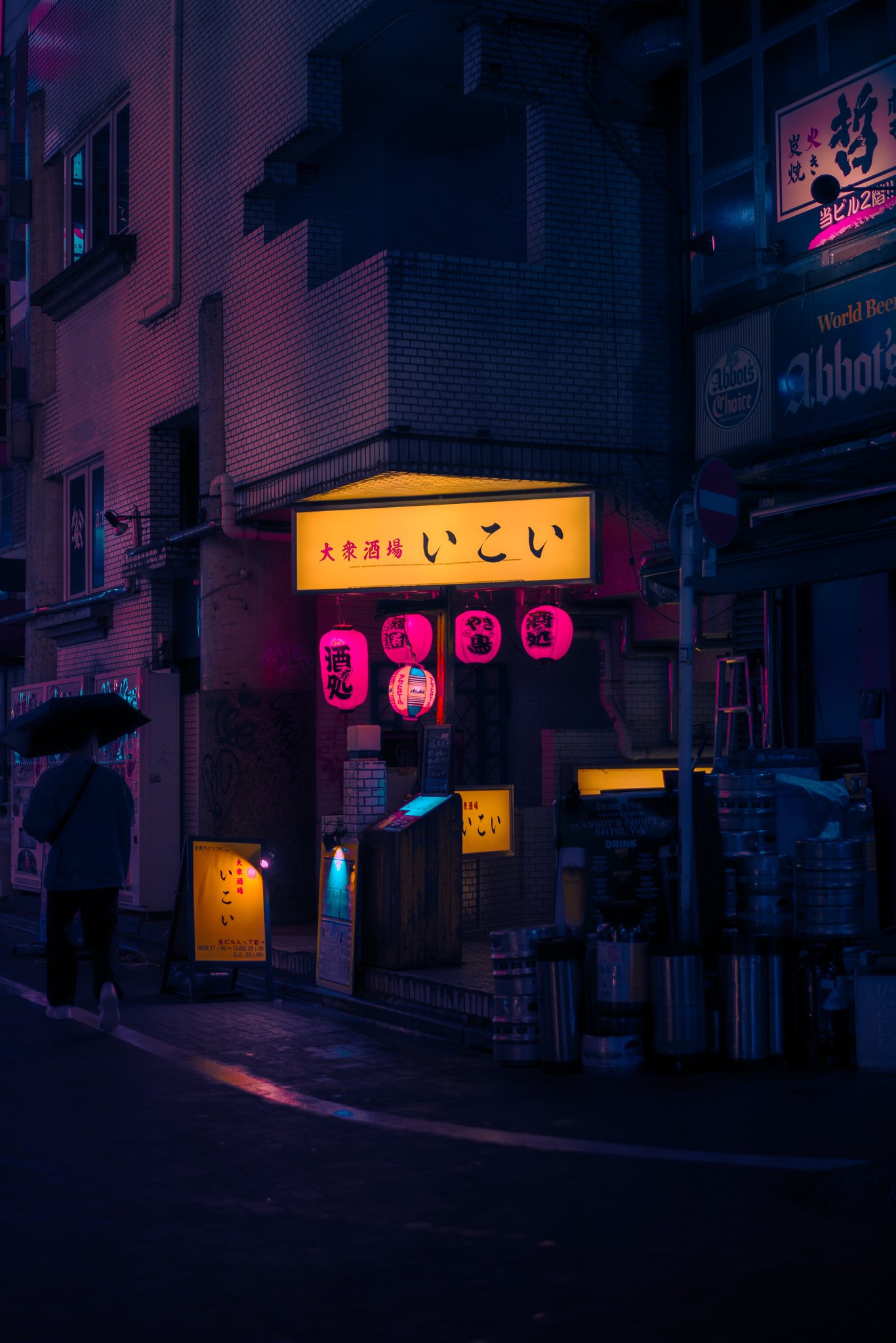
People assume the cyberpunk aesthetic and the wabi-sabi sensibility are opposites — one maximalist and synthetic, one minimal and natural. I don't think they are. Both are about finding beauty in something that isn't trying to be perfect. Neon signage rusting at the edges, an old shop that's never been renovated, a puddle reflection that only exists because the pavement is cracked enough to hold water — Tokyo's night photography and wabi-sabi are working the same idea from two different directions. Once you notice that, it changes what you point the camera at.
Want photos that find the imperfect, unrepeatable version of a night in Tokyo?
Book a Night Session in Tokyo →