
Daikoku Futo Parking Area has been the de facto JDM meetup spot in the greater Tokyo area for as long as anyone can remember. On a Friday or Saturday night, the lot fills with the kind of machines that don't come out in daylight — widebody R35s, stanced Supras, NSXs on air suspension, the occasional FD RX-7 that's somehow still alive and running. It's been this way for decades. The police also know it's been this way for decades, which is why they show up regularly to move everyone on. Three cop cars at the entrance that night, a slow procession of cars filtering back out toward the Bay Bridge. I joined the procession.
Someone in the group mentioned Umi Hotaru. I'd heard of it — the service area sitting on an artificial island in the middle of Tokyo Bay, right at the midpoint of the Aqua-Line where the elevated bridge transitions into the undersea tunnel. I'd driven past the Aqua-Line entrance dozens of times without ever actually going. I said sure.
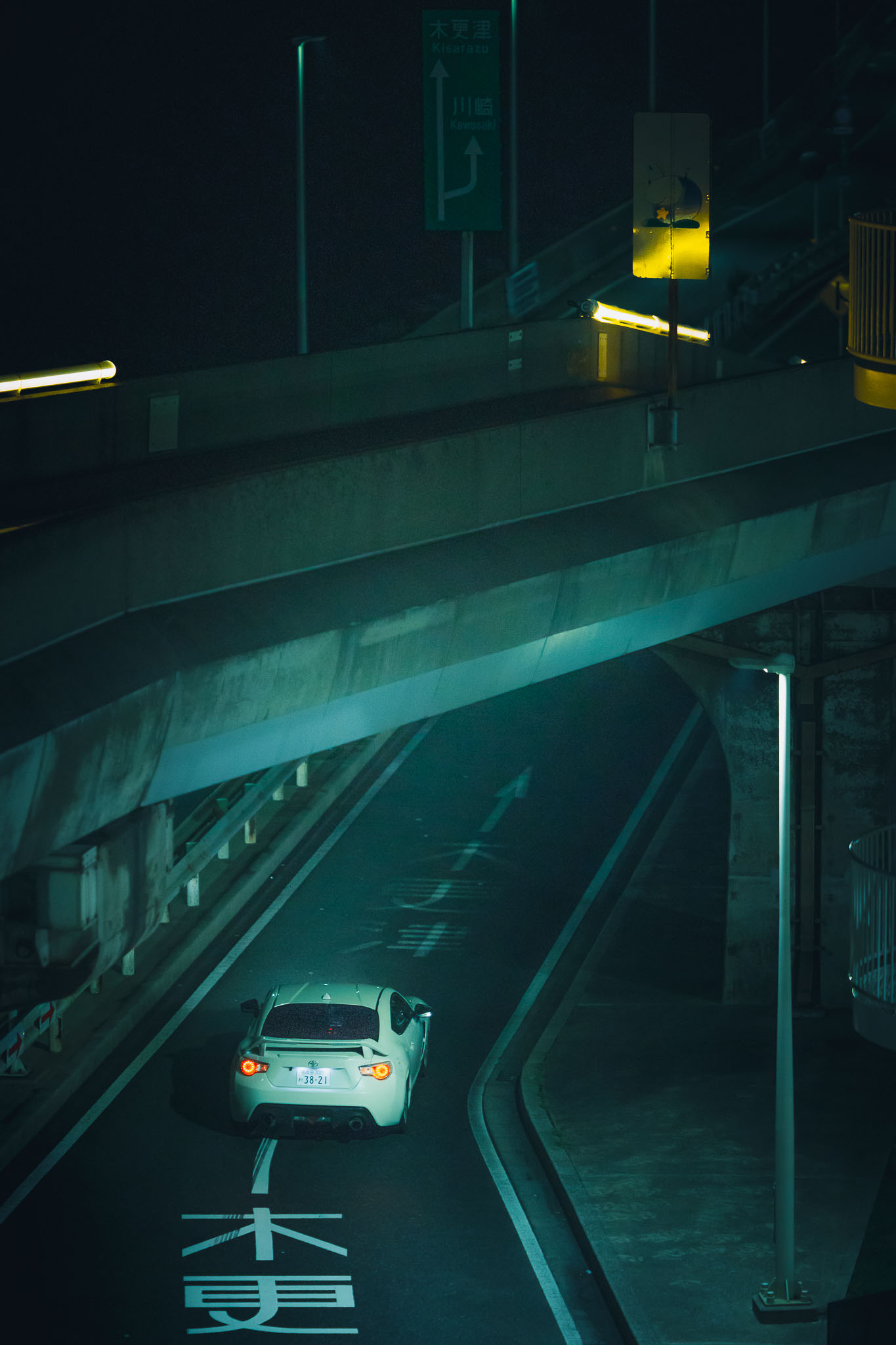
The Aqua-Line at night is the right amount of strange. You're on an elevated highway over open water, the city behind you, nothing ahead but darkness and the faint outline of the Chiba shore. Then the bridge becomes a tunnel and you're underground, under the ocean, which doesn't stop feeling unusual no matter how many times you do it. About ten kilometers out from Kawasaki, there's an exit. Umi Hotaru.
The Place
It looks like something from a game. A multi-storey platform sitting in the middle of the bay, lit up at night like a ship that decided to stop moving. The parking structure wraps around the lower levels, partially exposed to the sea air, and the light quality there is specific — cool, flat, the kind that makes chrome look right and everything else look cinematic. Above it is a shopping area, a food floor, a viewing deck with stairs to platforms looking out over Tokyo on one side and Chiba on the other. It's technically a highway service area. It doesn't feel like one.
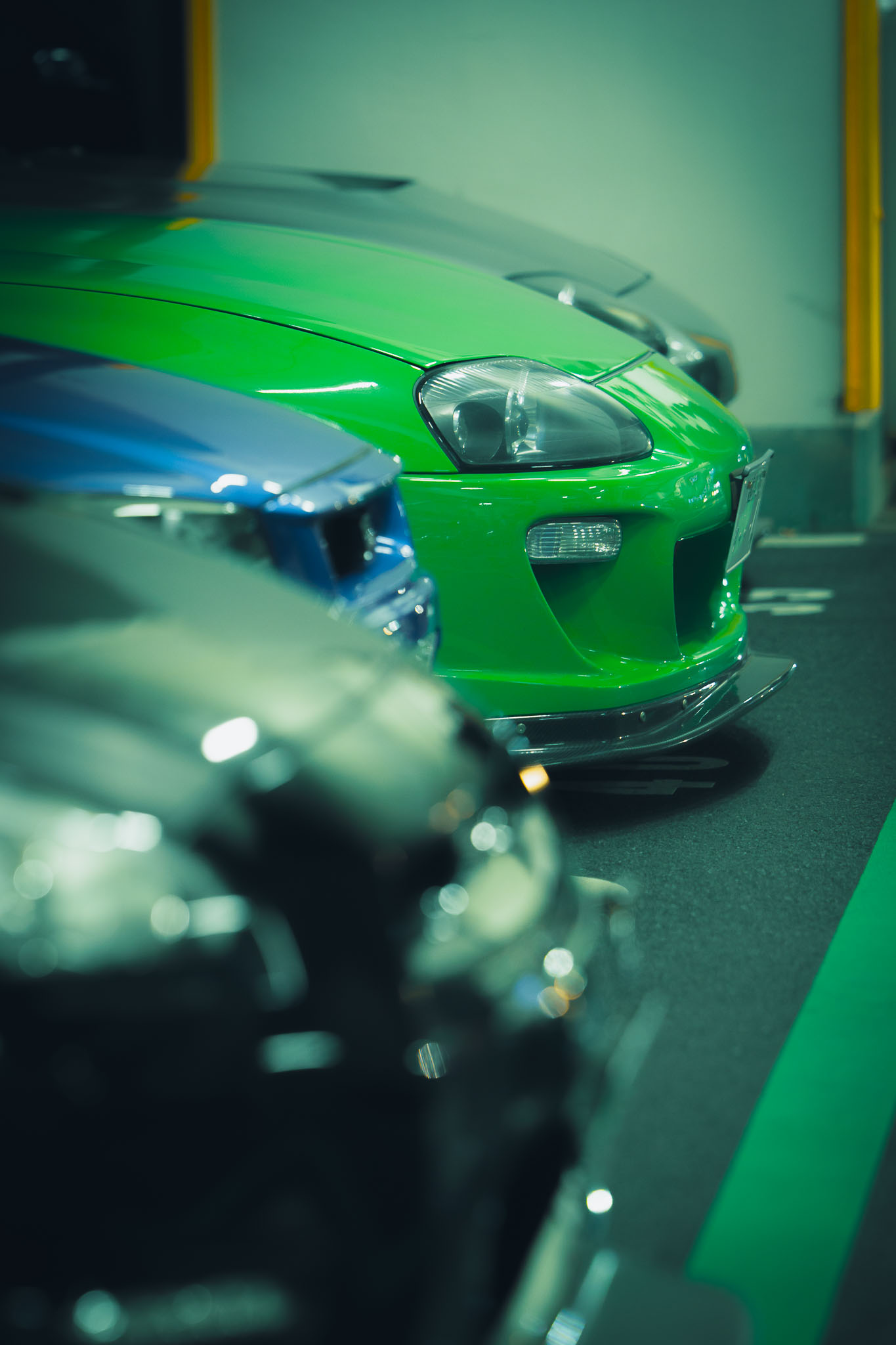
By the time I arrived, there were already around forty cars spread across the lower level. Nobody had organized this — people had just migrated here from Daikoku or wherever they'd been, word spreading fast through group chats. The composition was a dense cross-section of 90s and early 2000s Japanese performance cars in various states of modification. A green A80 Supra beside a blue R32, a row of modified sedans beyond that, and somewhere in the middle of all of it, enough exhaust fumes to explain why the ventilation design here is the way it is.
The Cars
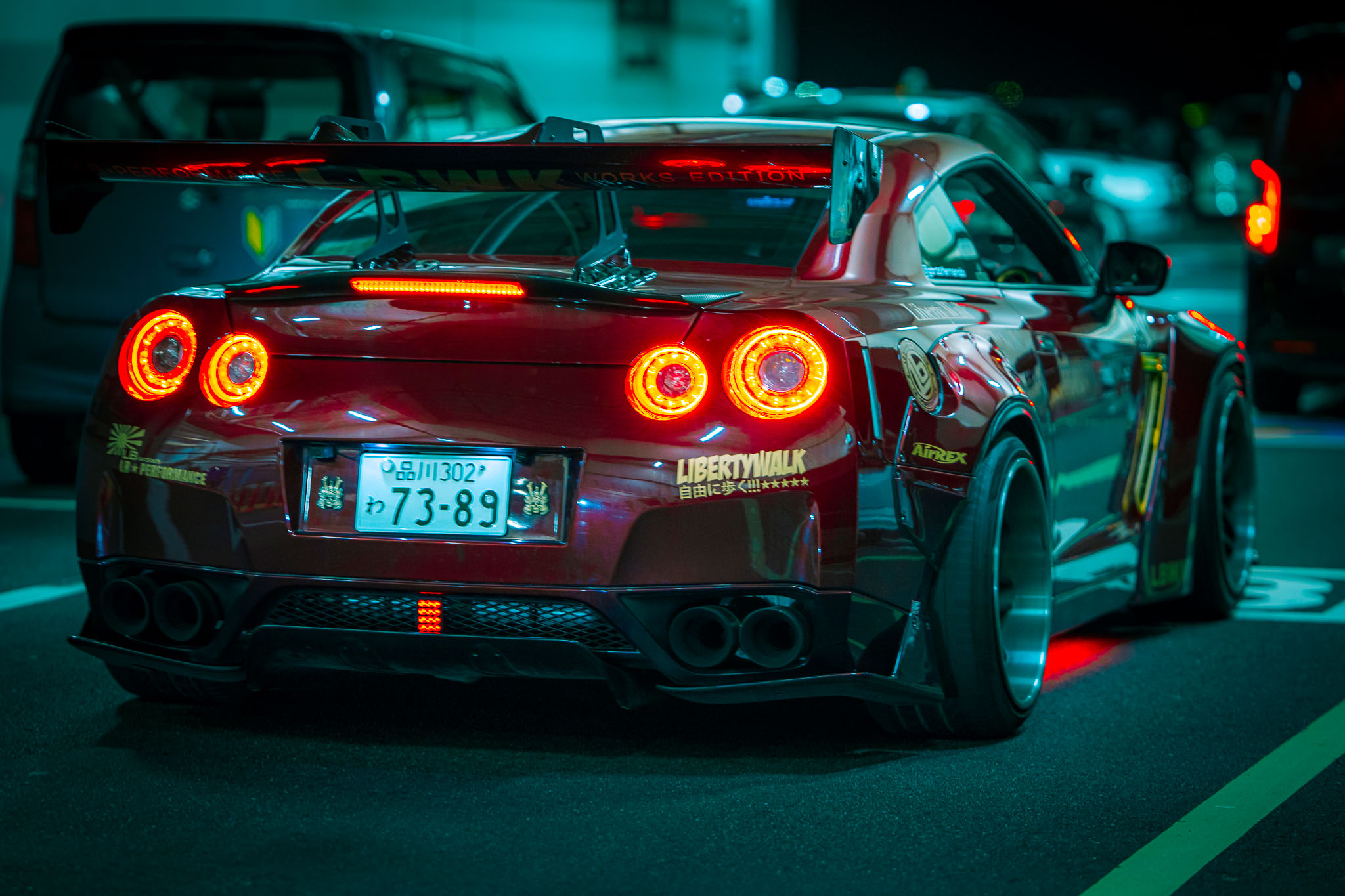
A Liberty Walk R35 GT-R was parked near the entrance. Maroon, wider than it should legally be, brake lights burning orange-red into the garage floor. The widebody kit adds somewhere between 40 and 80mm per side depending on the spec, and the whole thing sits so low the front splitter is nearly touching the painted parking lines. LW kits are divisive — purists hate them, everyone else circles the car twice. I circled it twice.
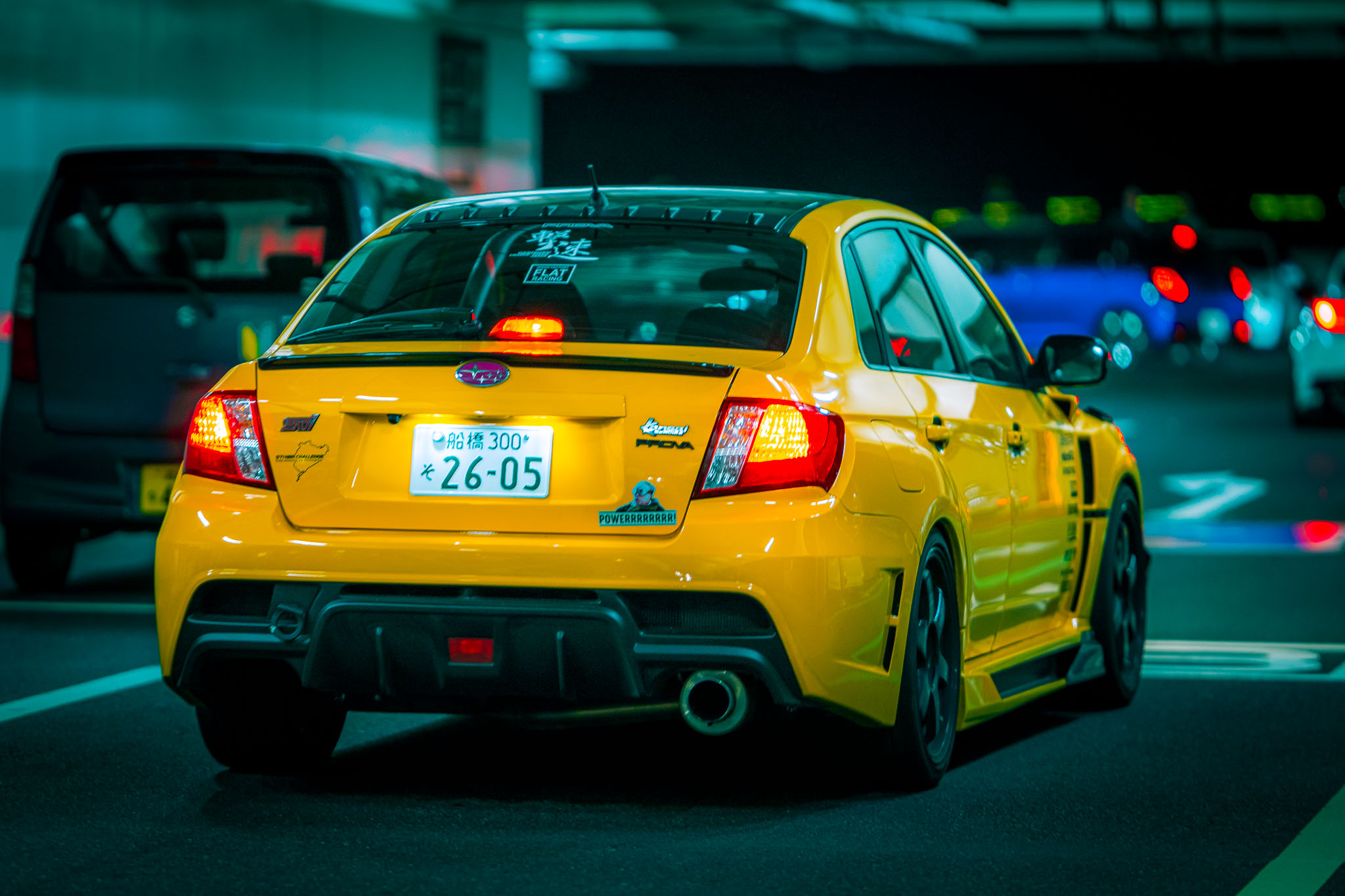
The yellow WRX STI had a Funabashi plate and PROVA livery and a rear windscreen sticker that said "POWERRRRRRR" — as many Rs as the font would allow — alongside modifications that made the sticker choice funnier rather than less so. Four-pot Brembo fronts, aggressive rear diffuser, a drop that looked like a proper track setup. Whoever built this car knew exactly what they were doing and also decided to put that sticker on it. The JDM scene gets this right. You can spend real money on a build and still have a ridiculous sticker and nobody treats it as a contradiction.
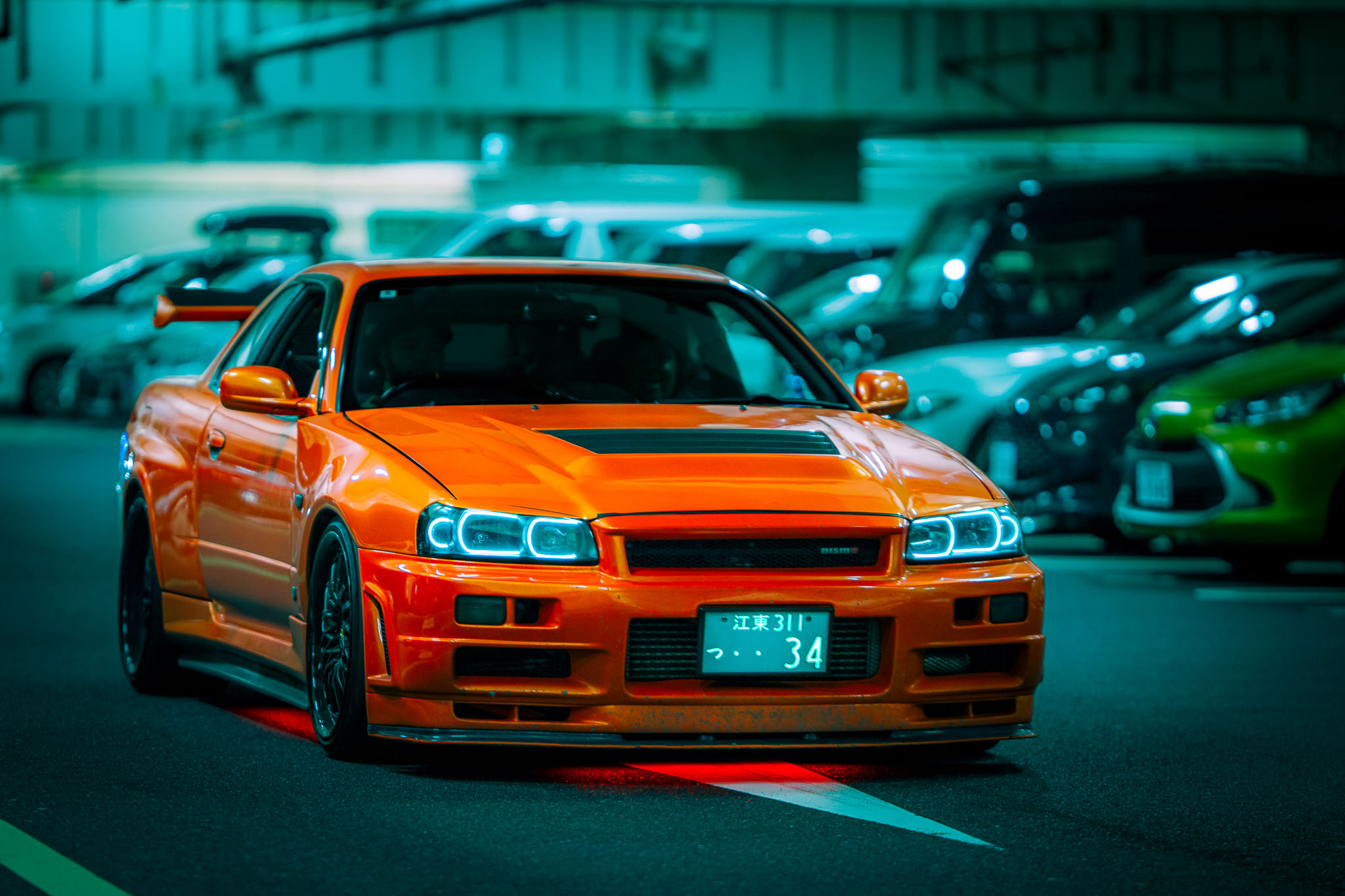
The car that kept pulling me back was the orange R34 GT-R. Koto plate, NISMO badges, white LED rings where the standard headlights used to be. It was sitting under the teal cast of the garage lighting, which did things for the orange that daylight wouldn't. The R34 GT-R is one of those cars where the real thing is better than the reputation, which is saying something given the reputation. The proportions are right in a way that photos don't fully convey — low, planted, like it's already moving when it's standing still. This one had been maintained and lightly modified rather than heavily built, which is increasingly the harder thing to find at these meets.
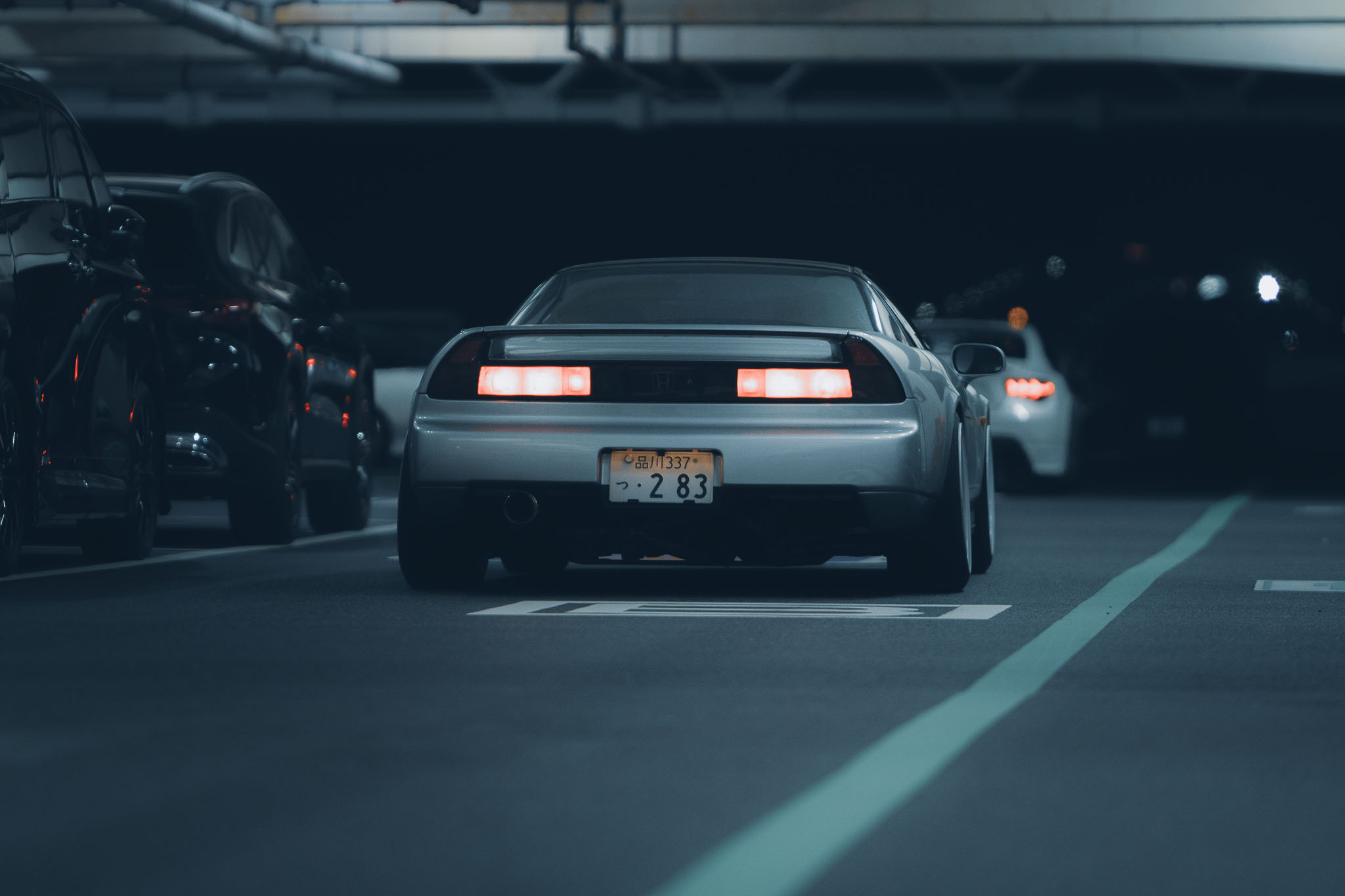
The cleanest car there was the NSX. Silver NA1, Shinagawa plate, sitting properly low on what looked like a serious suspension setup with nothing else changed. No front splitter, no aero additions, nothing that wasn't there originally. Just the stock shape — which genuinely has not aged — on a chassis that someone had dialled in rather than decorated. The taillights and the single exhaust outlet and the way the rear end tapers: still one of the better designs Honda ever produced. I took more frames of it than anything else.
Two Hours in the Middle of the Bay
We stayed a couple of hours. Someone came back from inside with two cans of coffee from the vending machine and handed one over without being asked. Cars arrived and left in a steady cycle — people stopping on the way home from somewhere, doing one lap of the lot, deciding to stay or not. The viewing deck above looked out over Kawasaki and Yokohama, all that light sitting on the water. On a clear night you can see the outline of Mount Fuji to the west. It wasn't a clear night, but still.
Daikoku getting shut down is always a frustration in the moment. The cars are already there, the energy is right, and then it disperses before anything gets going. But it also pushes people to find somewhere else, and sometimes somewhere else is better. Umi Hotaru works as a car meet precisely because it isn't one — it's a service area that happens to have the right lighting, the right layout, and no one with the authority to move you on. Nobody performs here. Everyone's just there because the original plan fell through and this turned out fine.
Want to shoot Tokyo from behind a camera instead of a windshield?
Book a Session in Tokyo →