
I wasn't planning to write about this. I went to Game Center Mikado on a Wednesday afternoon with no agenda — Nintendo DS in one pocket, no camera bag, just a phone — and came out two hours later having photographed every machine I could find. That's not how my usual shoots go. This is a different kind of post.
Takadanobaba isn't a neighborhood most visitors go out of their way to find. Student area, cheap ramen, fast food chains. It's known mostly for being the real-world setting for Astro Boy, which is either interesting or not depending on how you feel about Osamu Tezuka. Oasis Plaza is a few minutes from the station, and ゲーセン ミカド is up one floor. Nothing on the exterior tells you what's inside.
The Room
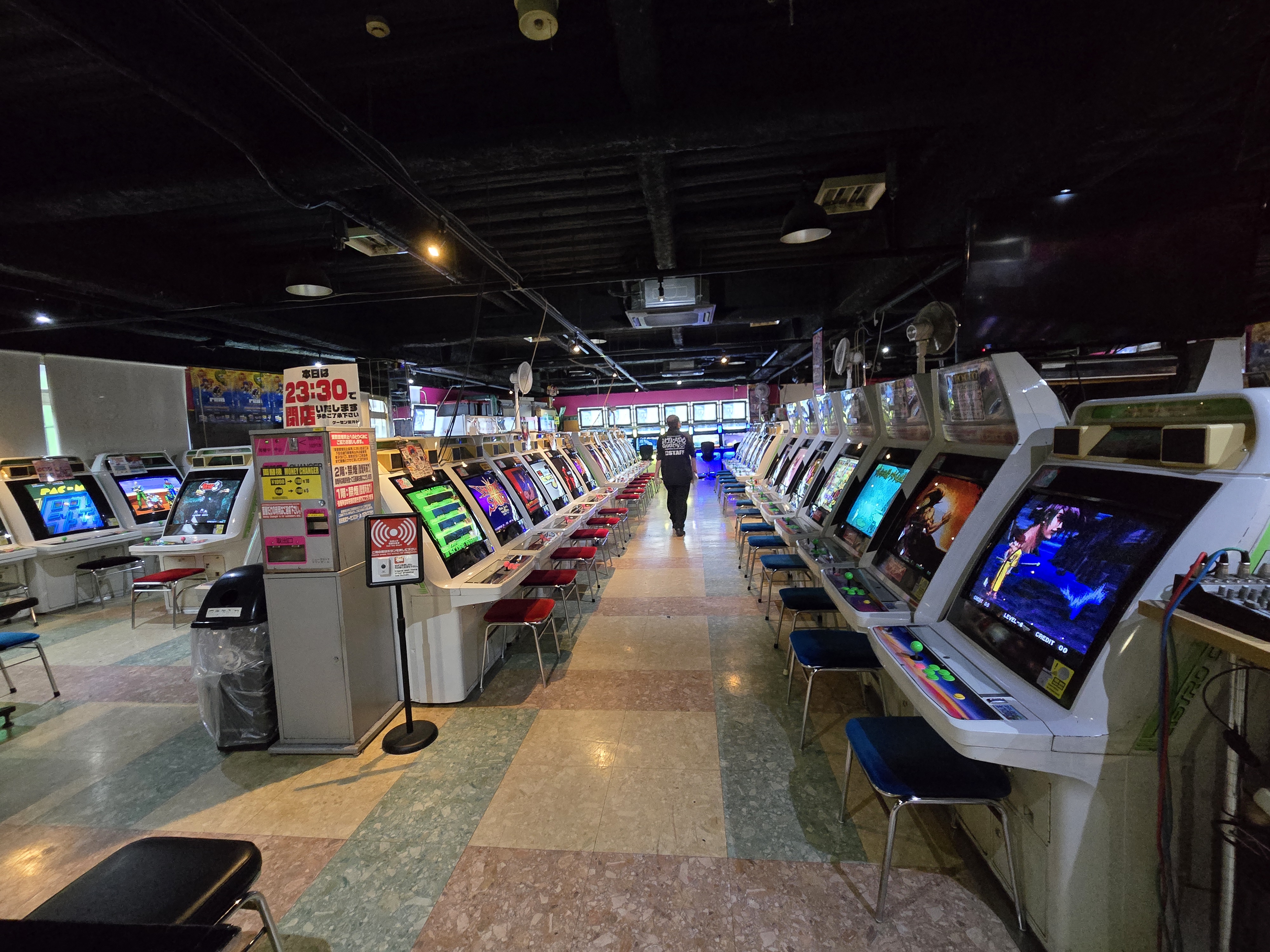
The elevator opens onto a yellow-and-green checkered floor that stretches further than it looks. A closing time sign near the entrance reads 23:30. Rows of arcade cabinets run down both sides of the room, all the way to the back wall. The ceiling is low, exposed ductwork, industrial bulbs. Maybe a dozen people scattered through when I arrived, each at their own machine, each playing something specific, none of them looking up.
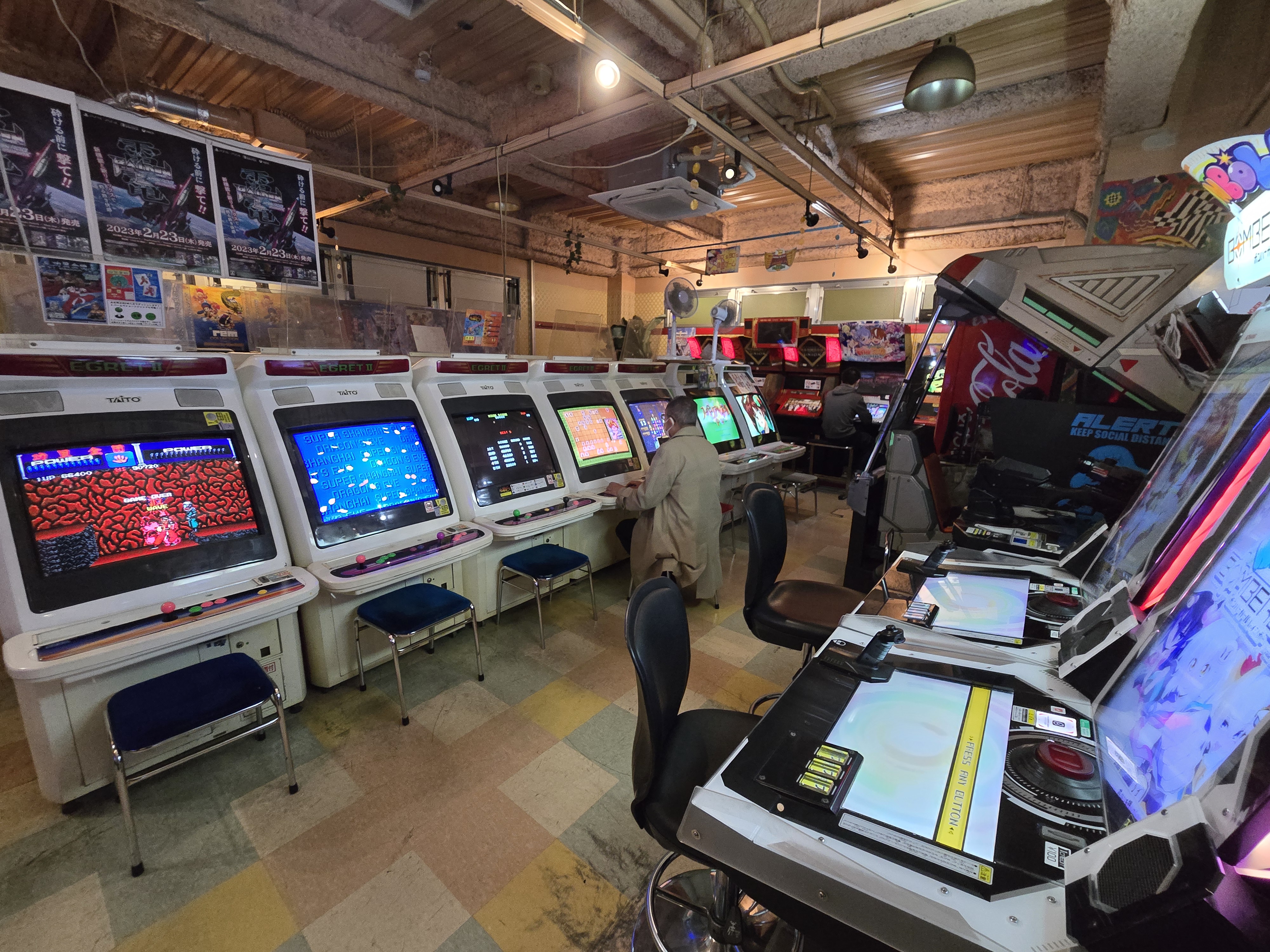
This is, without serious argument, the best retro arcade in Tokyo. Possibly in Japan. Everything works and everything gets played — it's not a museum — but it operates more like one than any game center I've been to in four years here. The machines are maintained, not just stored. There's a difference.
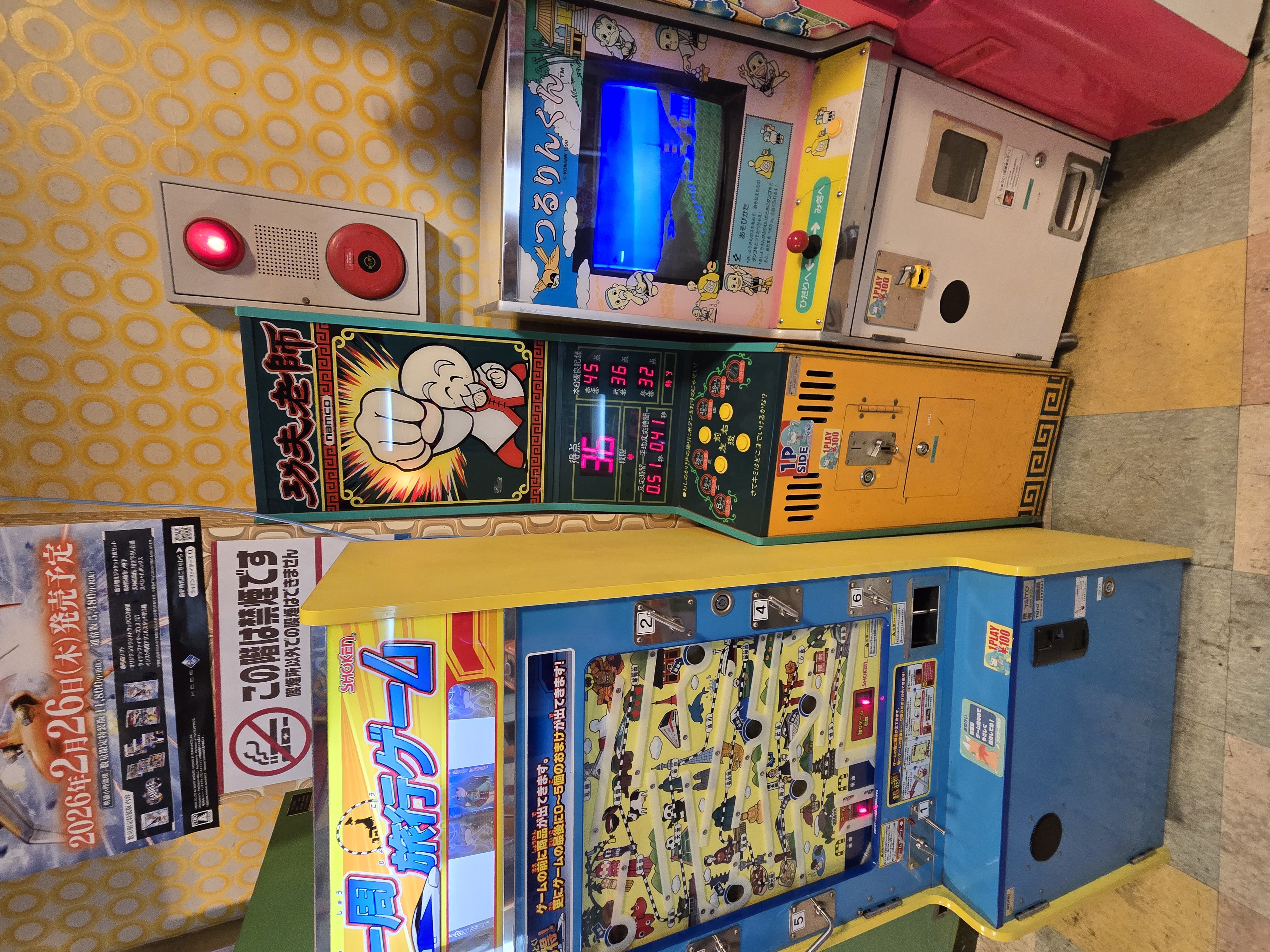
At the far end, some of the oldest cabinets in the collection sit against the wall — cocktail units and uprights from the early-to-mid '80s, still running. The checkered floor visible underneath them is original to the venue. The combination of the yellow polka-dot pattern and the aging cabinet art is the most striking visual in the room.
The Konami Music Section
Konami's arcade music game lineup from the late '90s through the mid-2000s — beatmania, Guitar Freaks, Pop'n Music, Drummania, Dance Dance Revolution — was one of the most successful arcade ecosystems ever built. Most of those machines are gone. The hardware aged out, parts became unavailable, operators replaced the cabinets with crane games. Mikado didn't do that.
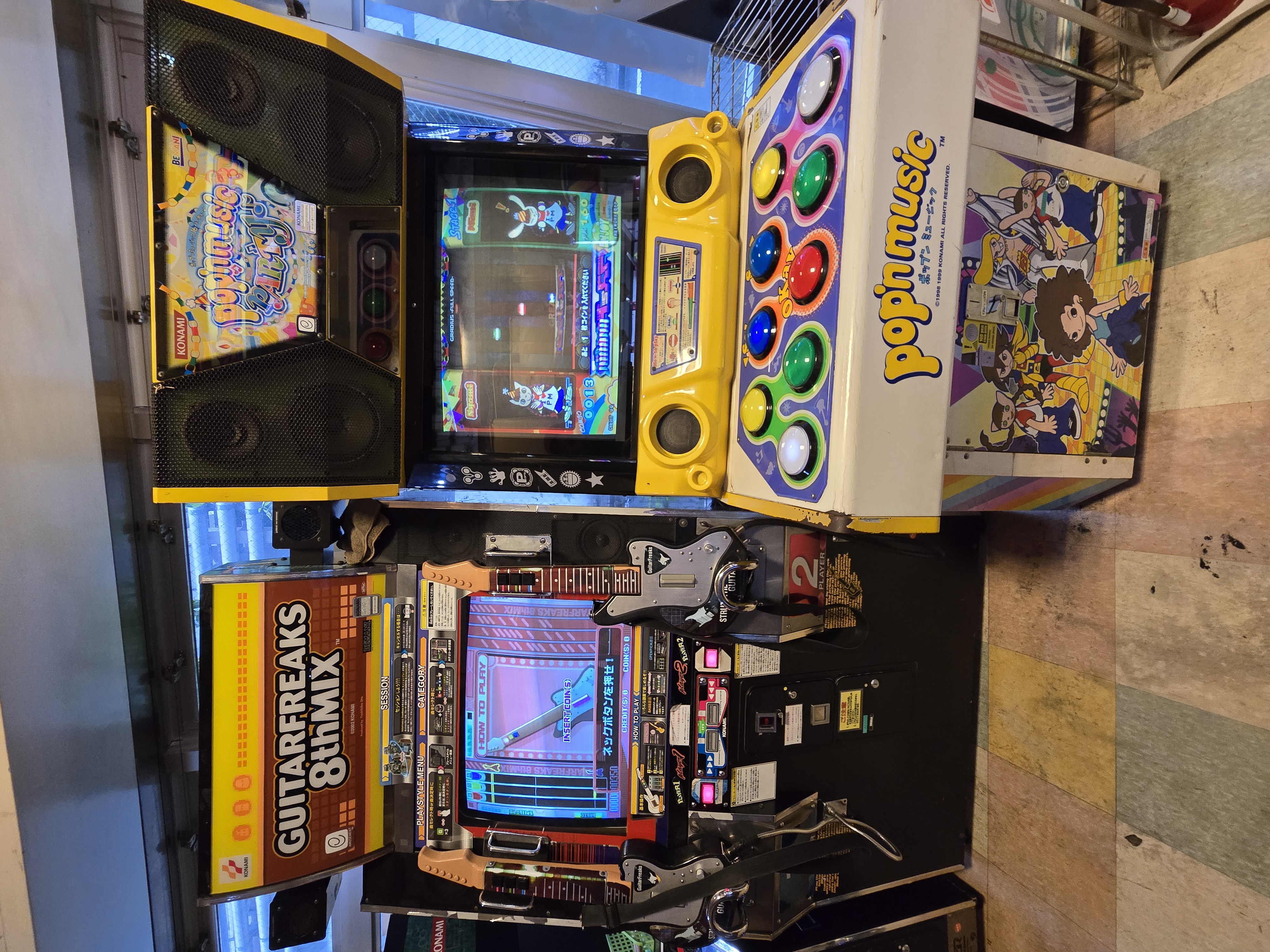
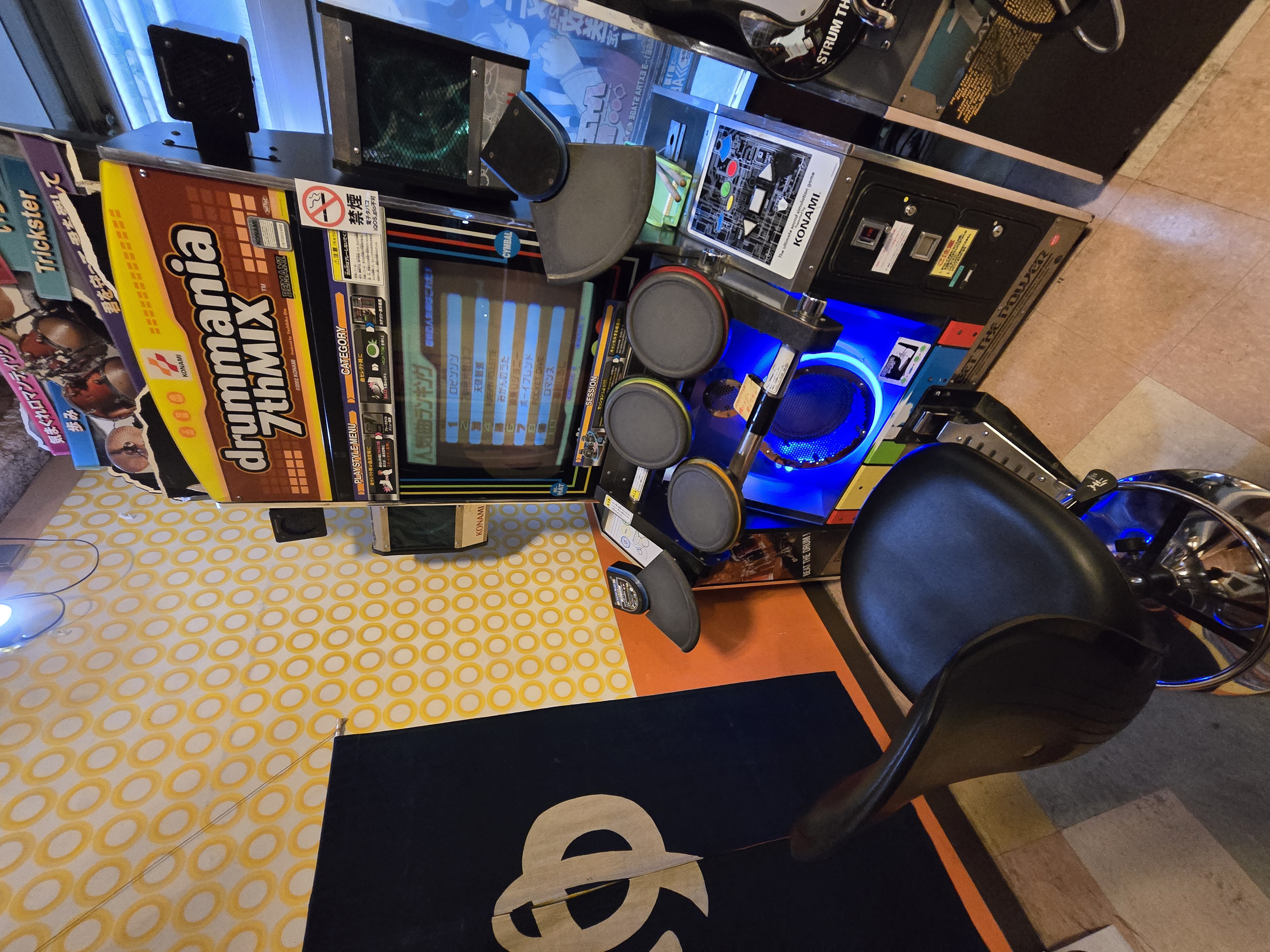
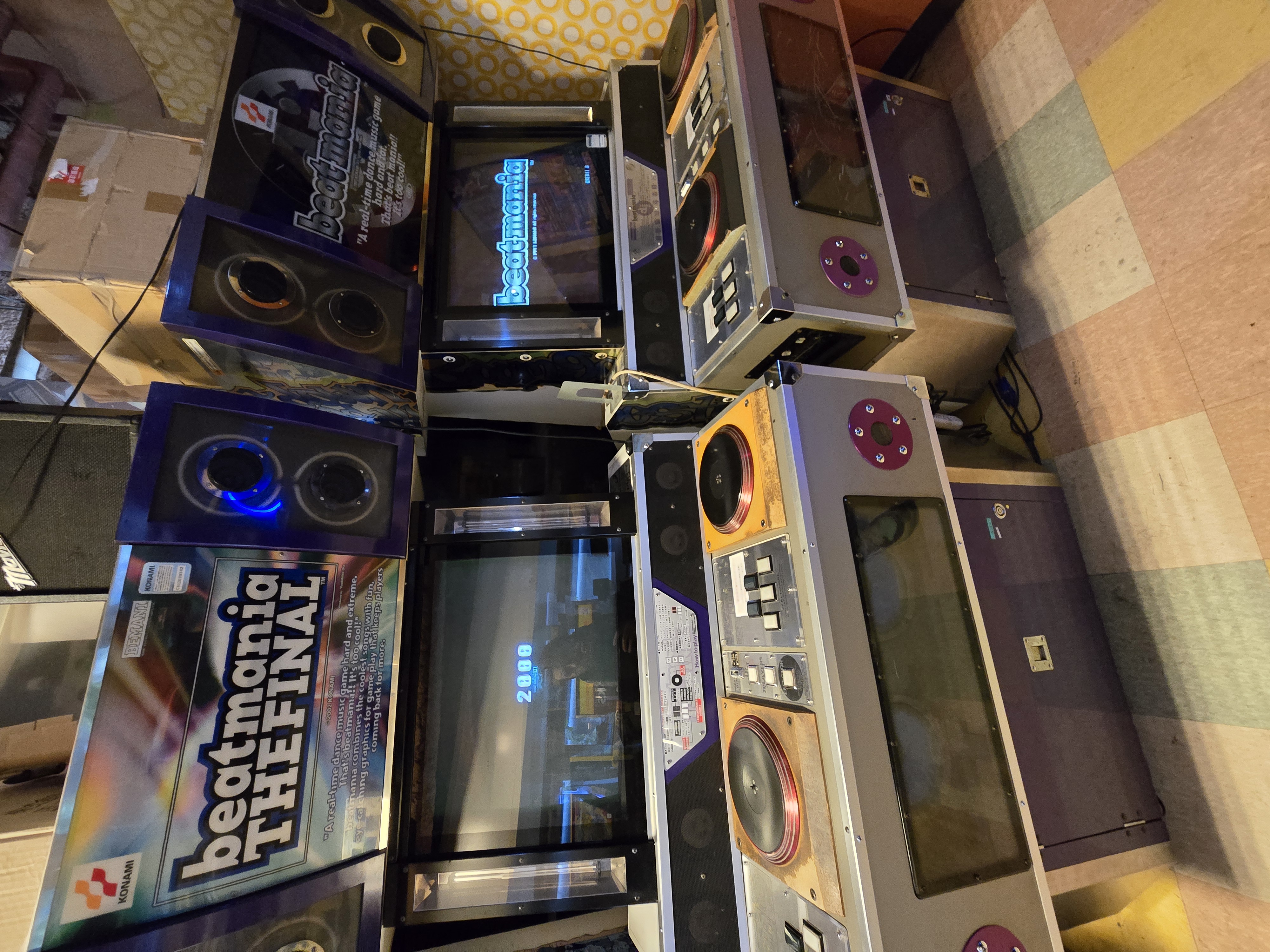
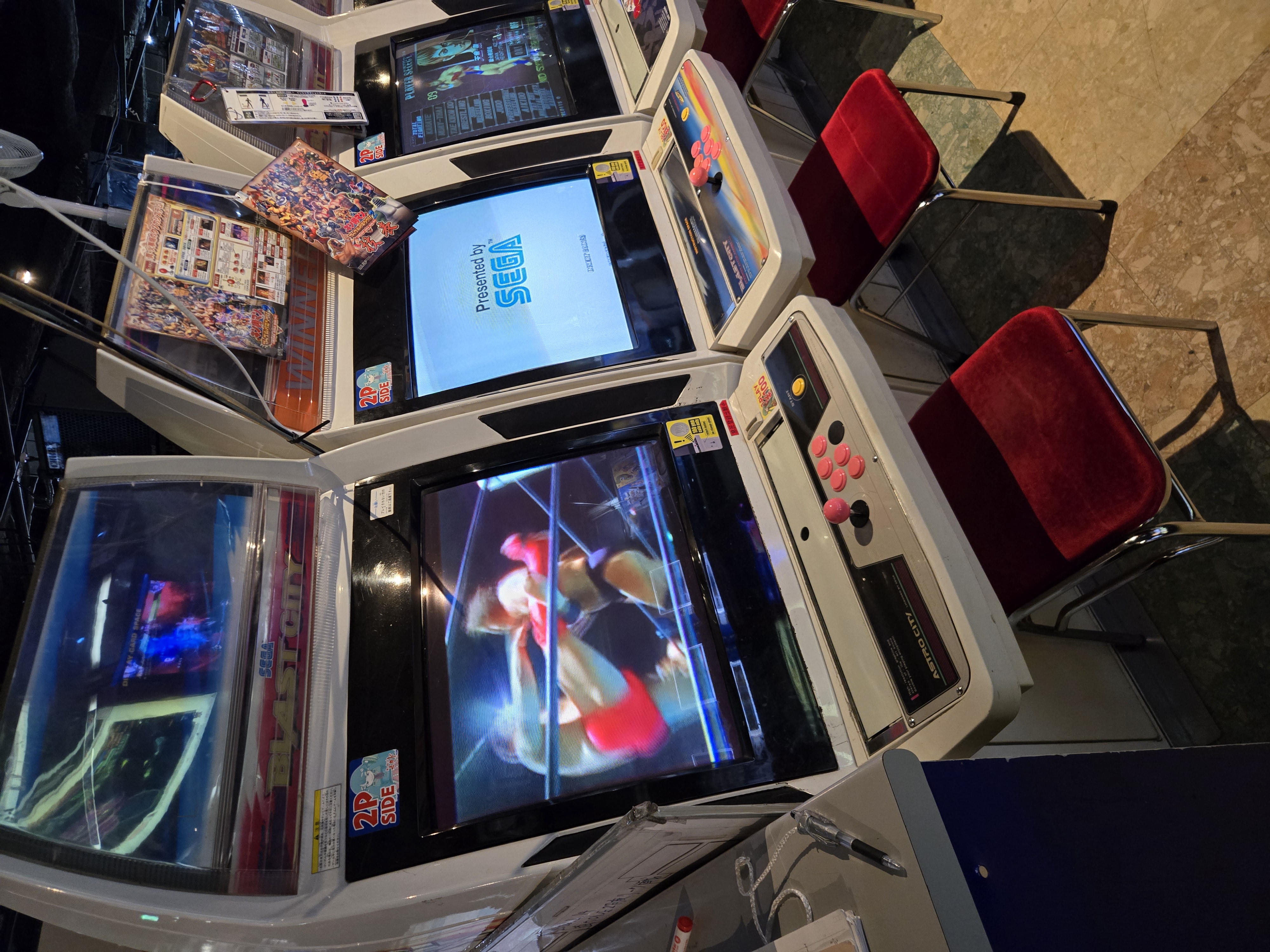
Pop'n Music. Guitar Freaks 8th Mix. Drummania 7th Mix, with its actual drum pads, the kind you hit. Beatmania THE FINAL — not the current IIDX but the original 5-key beatmania, specifically THE FINAL, Konami's announced last entry before they killed the series in 2002. There are maybe ten arcades left in the country running this hardware. Mikado has multiple units.
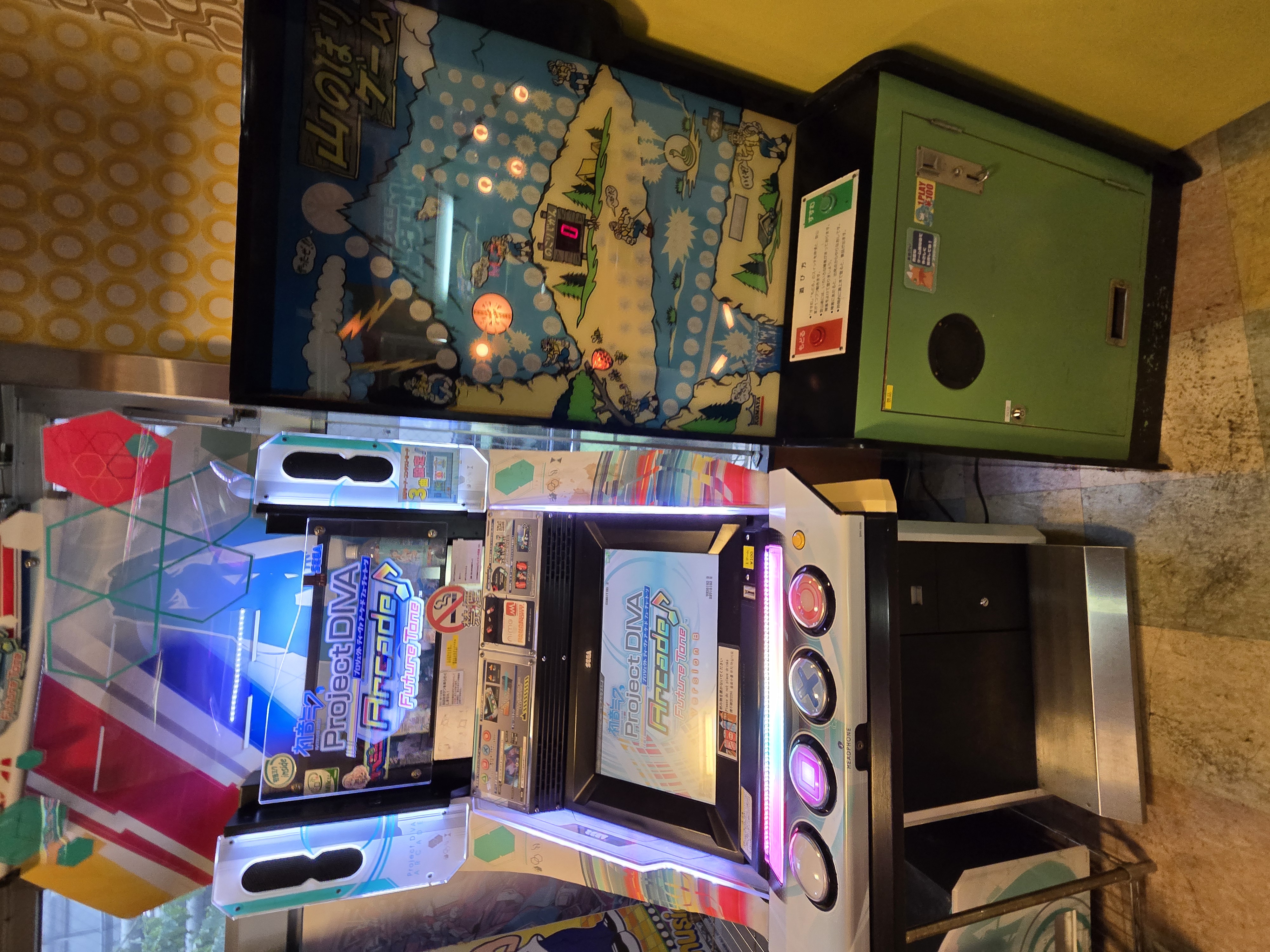
Project Diva Arcade Future Tone is here too, representing the Sega rhythm game side. A different era, a different audience, but the same logic: Mikado keeps things running after everyone else stops.
The Sega Section
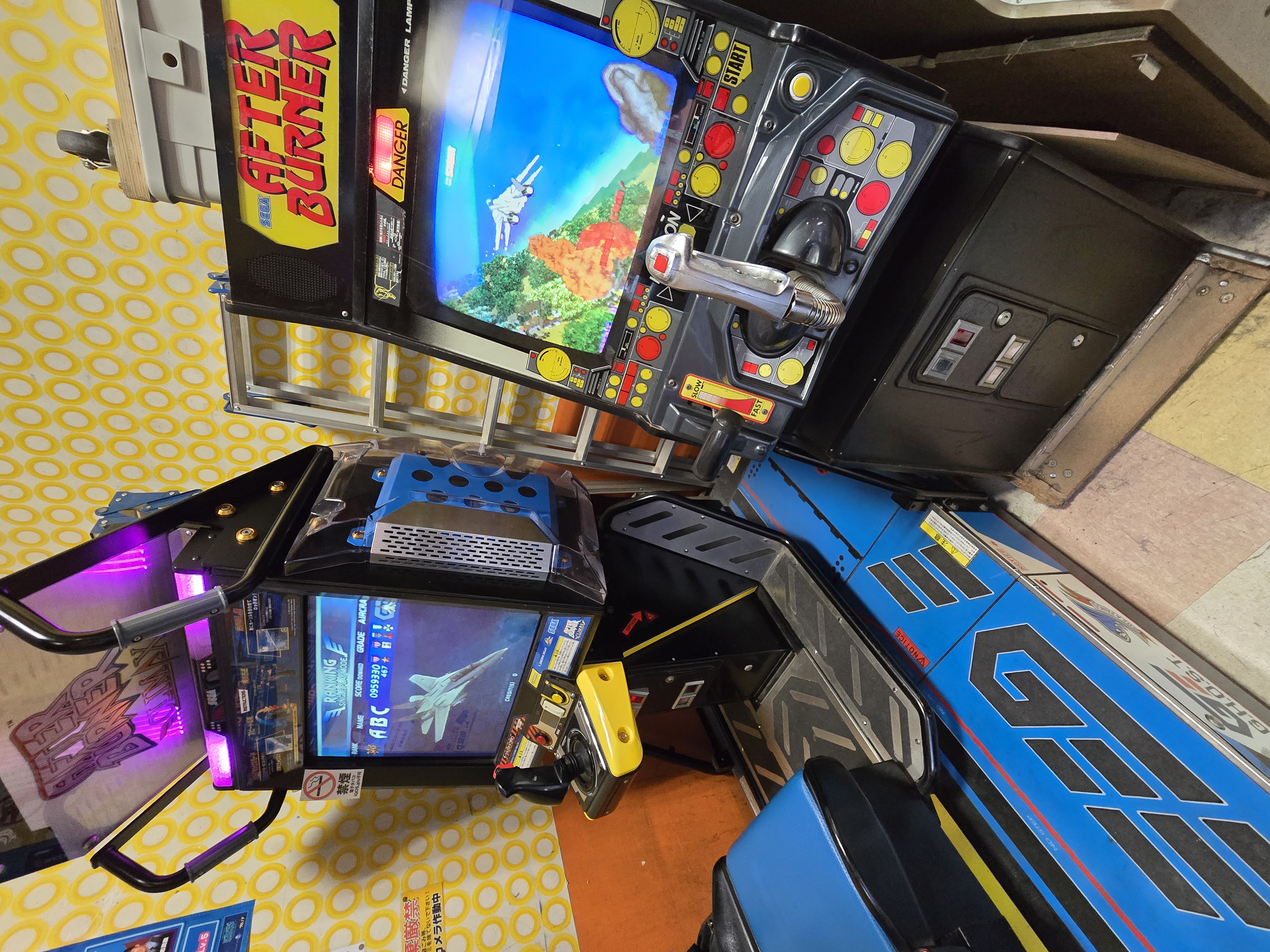
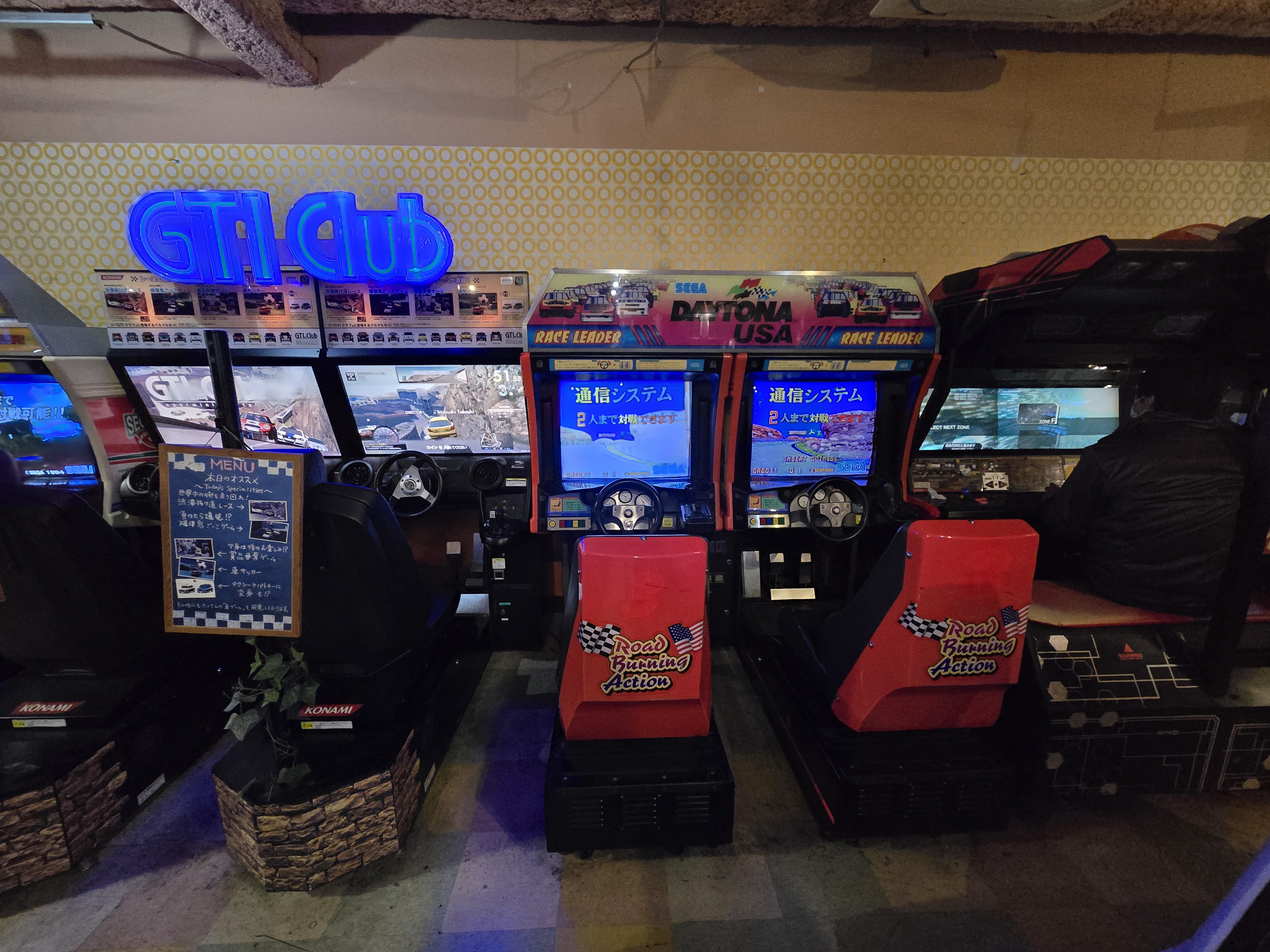
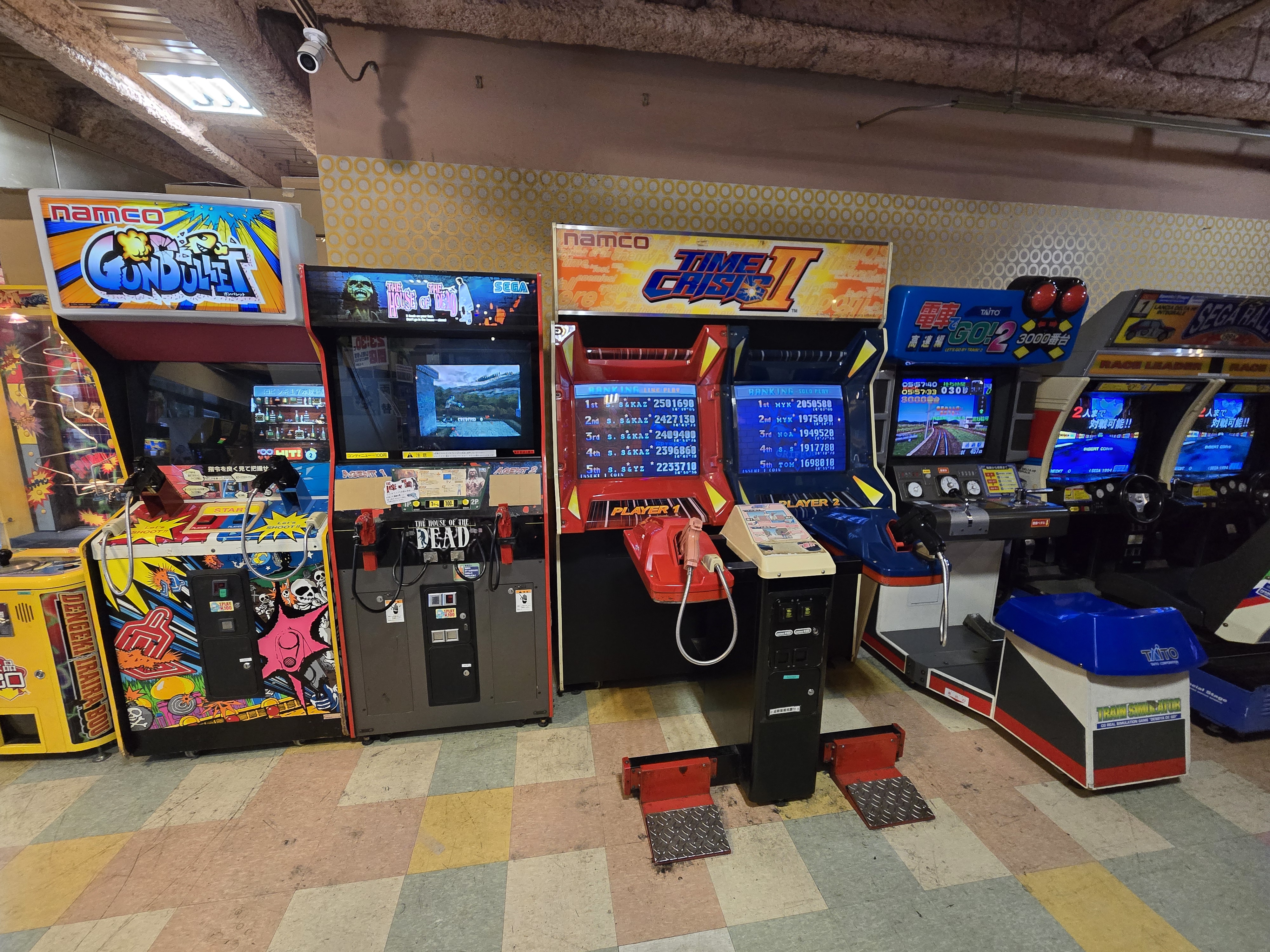
After Burner — the full sit-down cabinet with the flight stick, the one that physically moved on some versions. Daytona USA, linked for head-to-head. GTI Club. The Real Chase II. Namco's Gondole. House of the Dead, the light gun version. All of it here, all of it working.
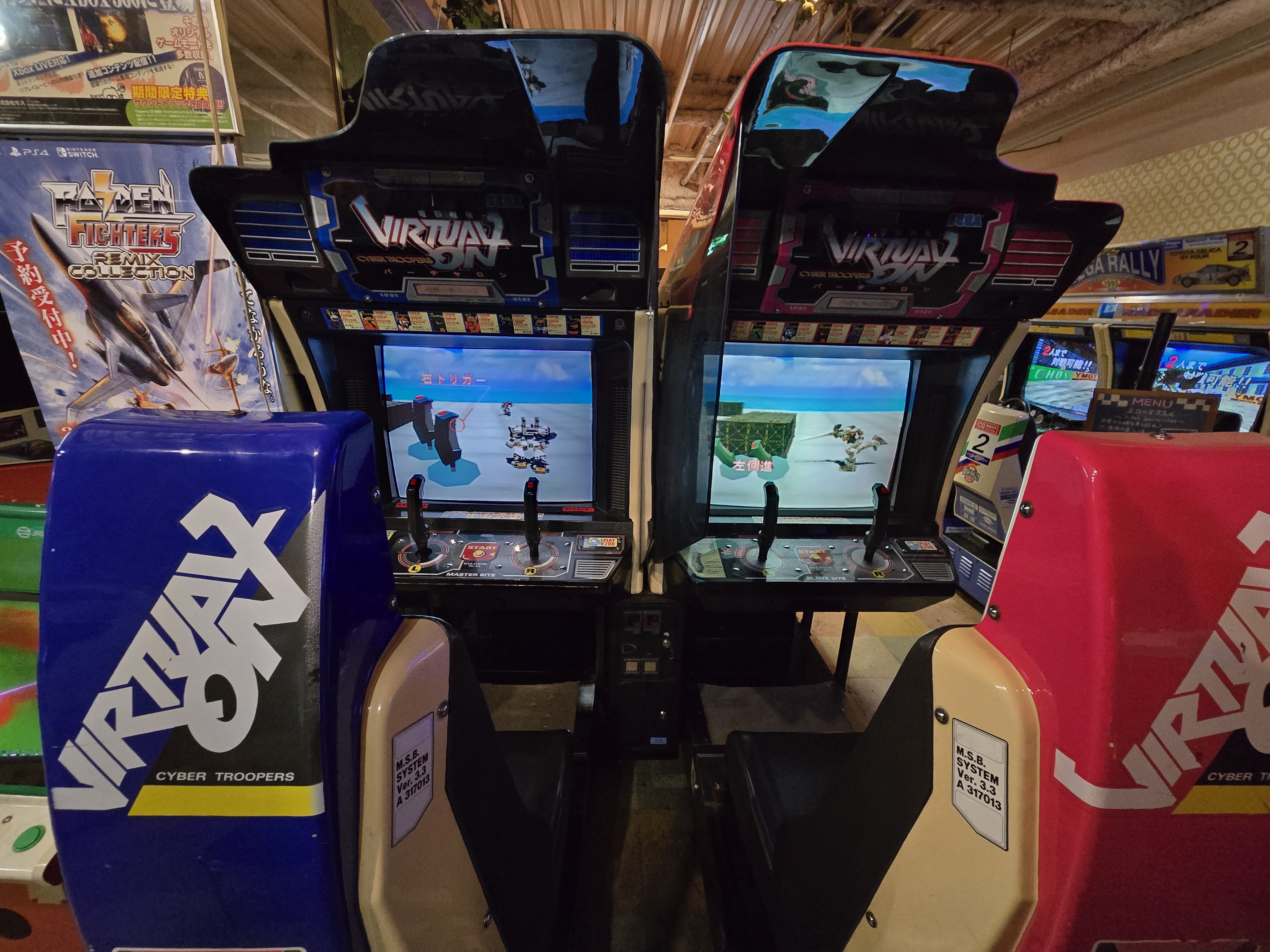
Virtual On: Cyber Troopers is the one I kept coming back to. Sega's 1995 mecha fighter required twin-stick controllers that no home version could replicate. The arcade cabinet is the only correct way to play it. Mikado has two linked units, head-to-head, both functional. While I was there, someone was actually playing — focused, practiced, clearly not their first time. Watching it run is a specific kind of time travel.
The Cockpit Machines
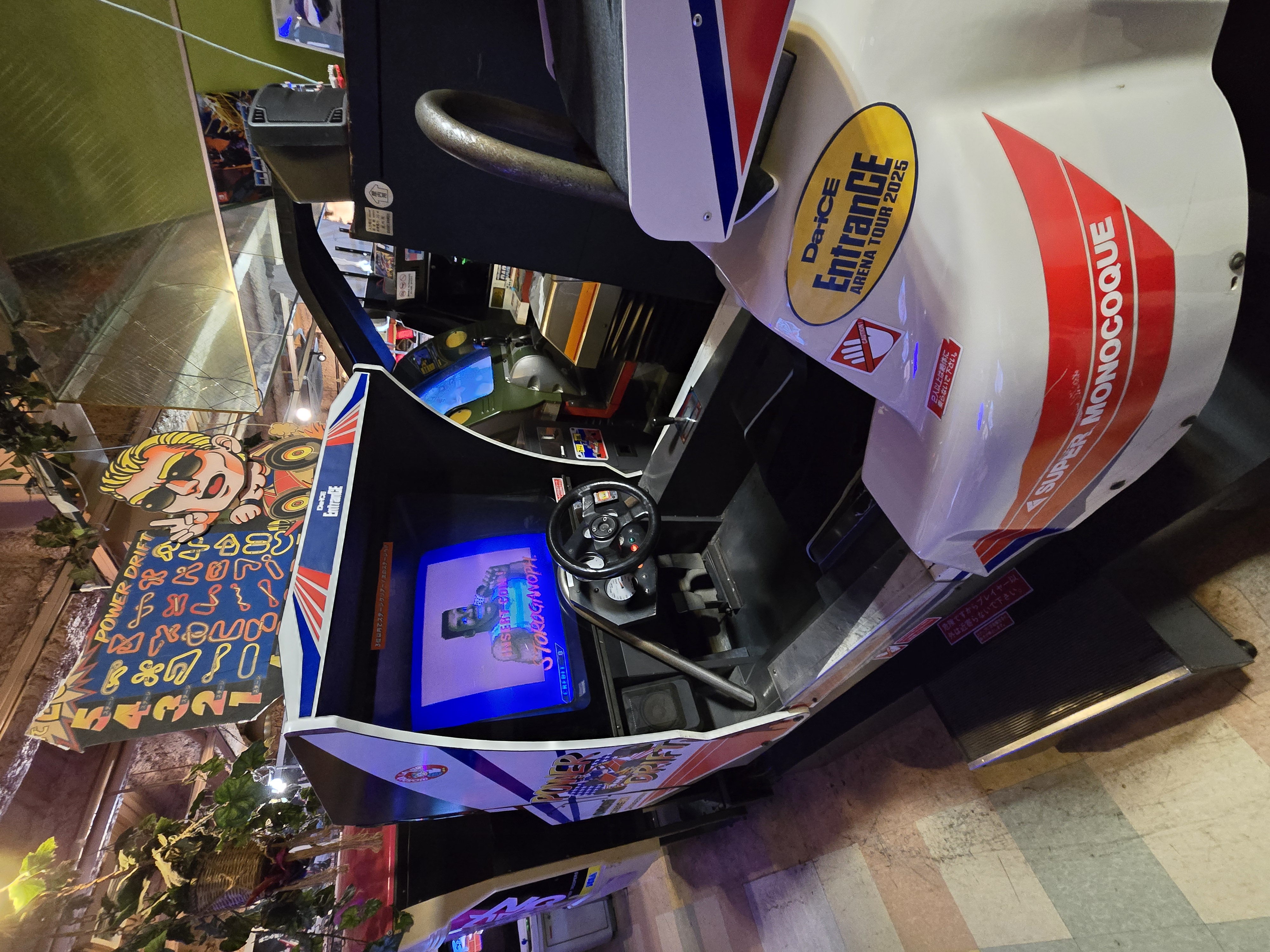
The F1 monocoque simulator is the one you climb into sideways. A full cockpit housing, steering wheel at chest height, screen at face level. It's from a different era of cabinet design — when manufacturers were competing on physical presence as much as the game itself. Mikado has it, and it works.
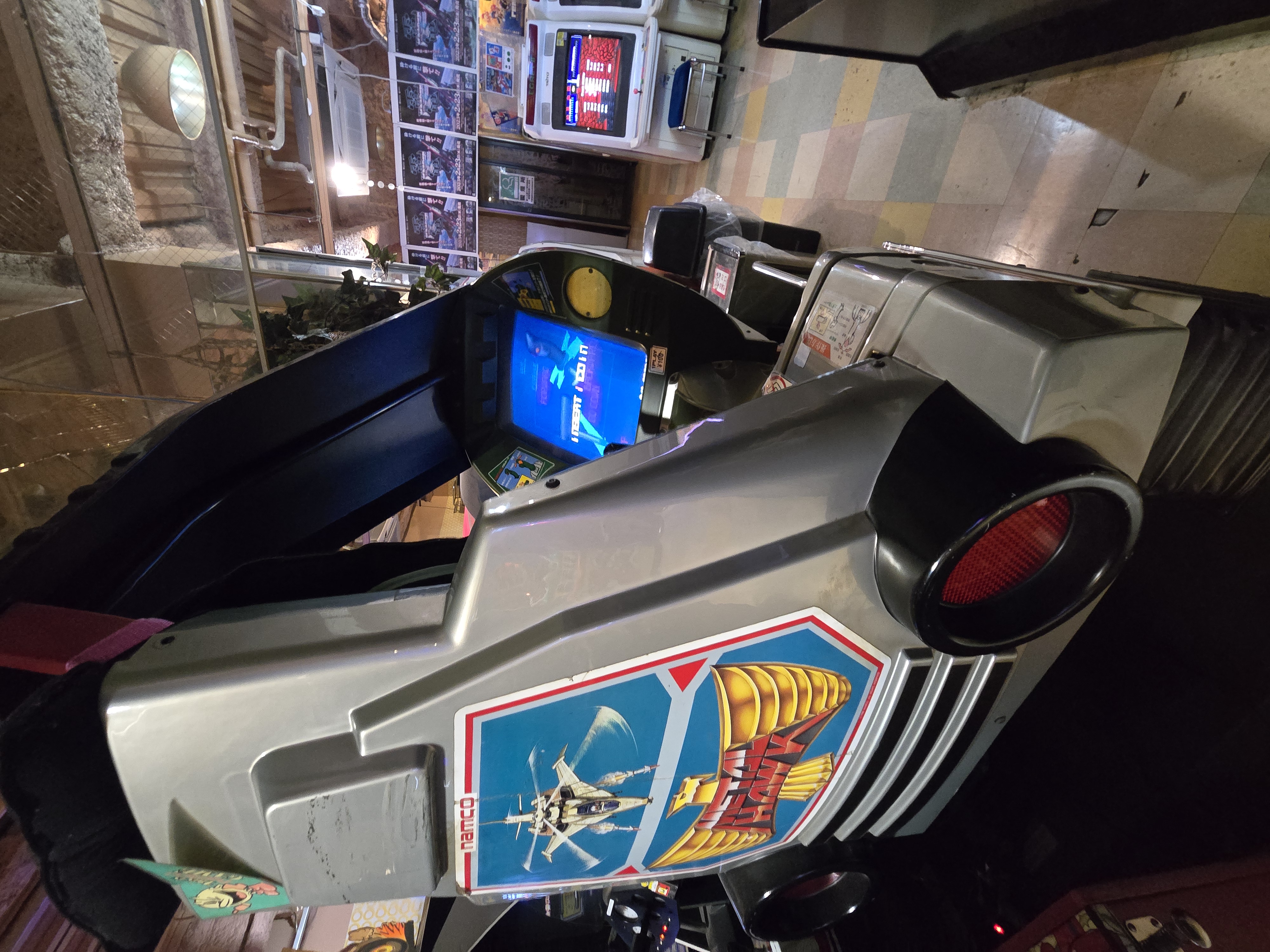
The Namco StarBlade cockpit is tucked toward the back — silver molded plastic shell, red lamp on the top, screen embedded below eye level. It looks like the nose of a fighter jet was grafted onto an arcade frame. 1992. Still working. The cabinet design was Namco at peak physical cabinet ambition, and nothing built since has matched it for presence.
The Darius, the Custom Machine
Darius is back there somewhere, past the main floor. Mikado commissioned a custom cabinet with the venue's blue elephant logo printed on the side — their own branded version of the hardware, which tells you most of what you need to know about the relationship between this place and the games it maintains.
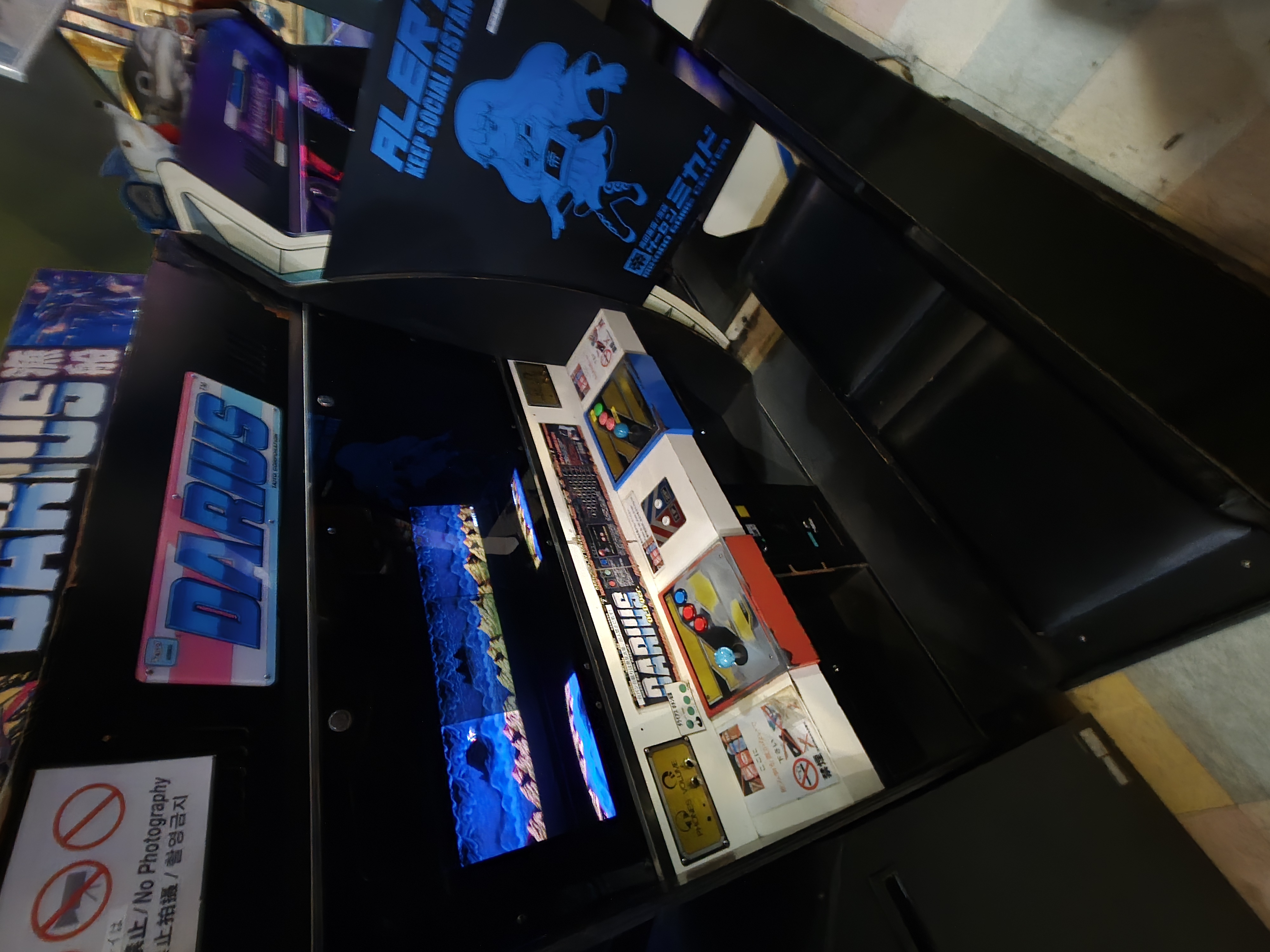
There is apparently a No Photography sign near the Darius machines. I found it after taking the photo.
Everything Else
There are prize redemption machines. Catchinger-style claw machines. Taiko no Tatsujin, the drum game, with the actual taiko drums — the worn leather drum heads showing years of being hit by strangers.
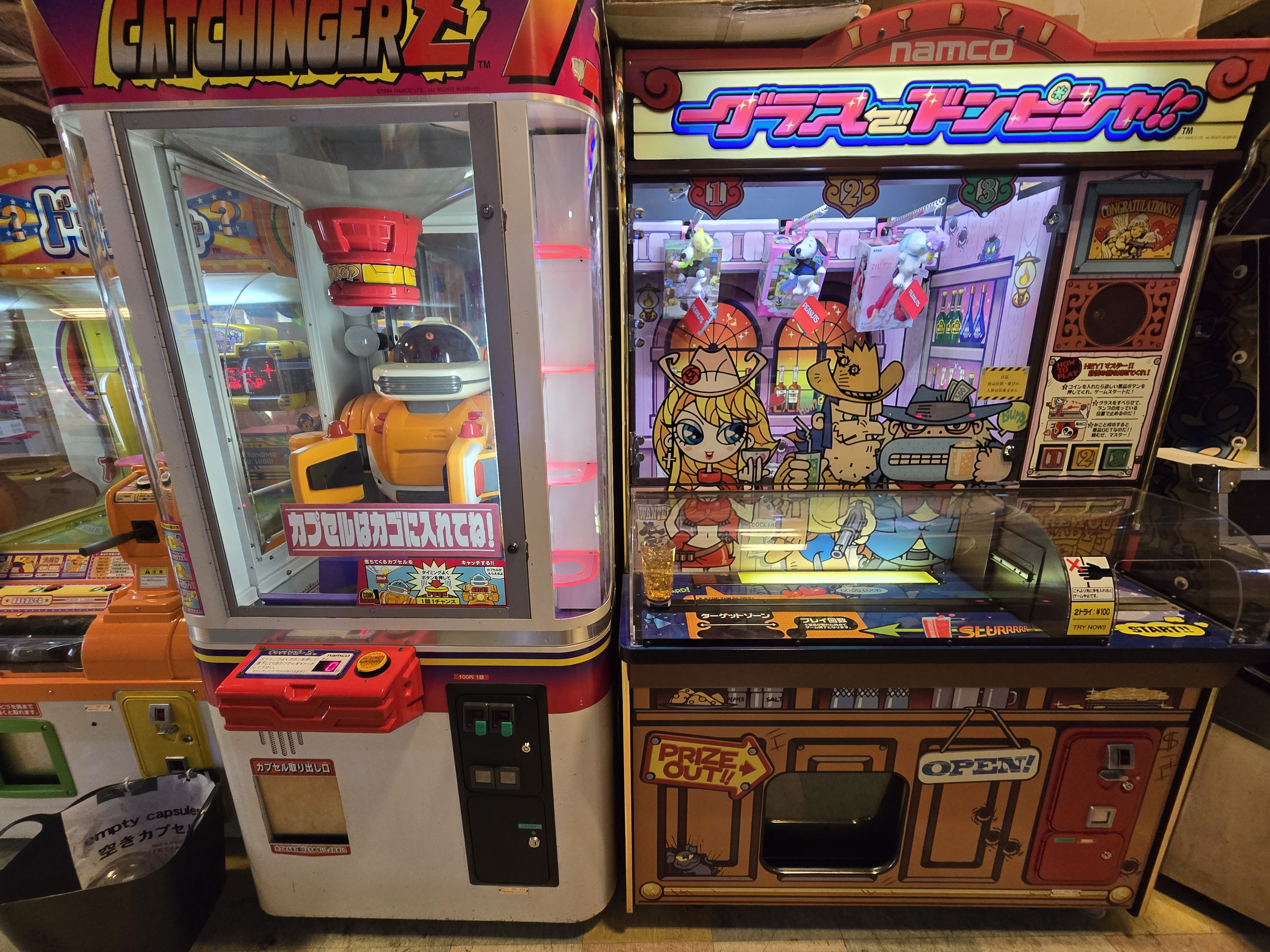
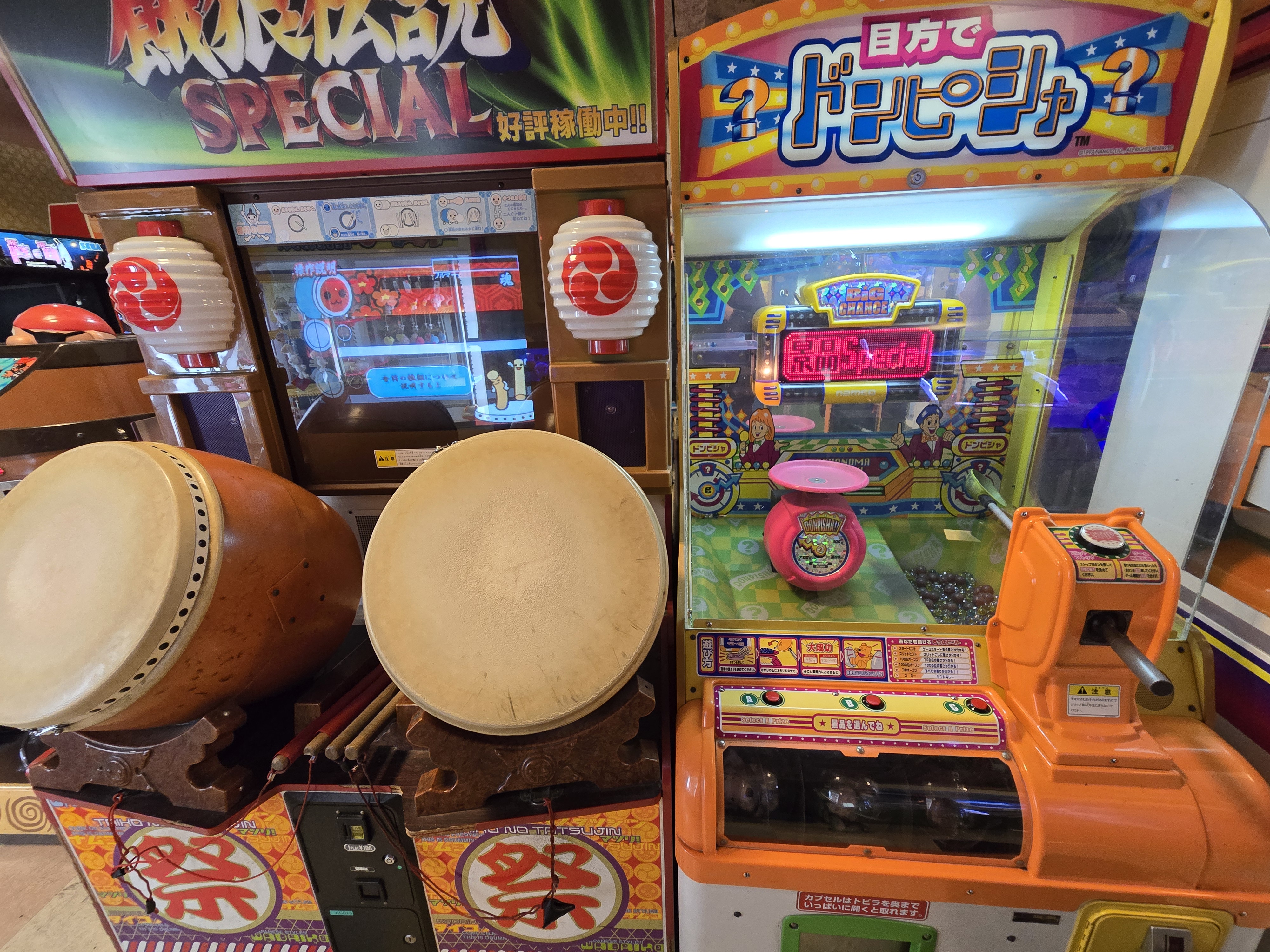
The crane game and prize machine section is small and incidental. This is not what most game centers look like in 2026. Most game centers in 2026 are almost entirely crane games because crane games have better economics than skill-based play. Mikado has a few in a corner and the rest is the actual archive.
The Merchandise
Near the entrance, Mikado sells its own branded clothing. T-shirts, caps, hoodies — all with the venue's branding, displayed in front of a wall of psychedelic pop-art illustration that is a completely different visual register from the rest of the building. The wall is worth photographing on its own.
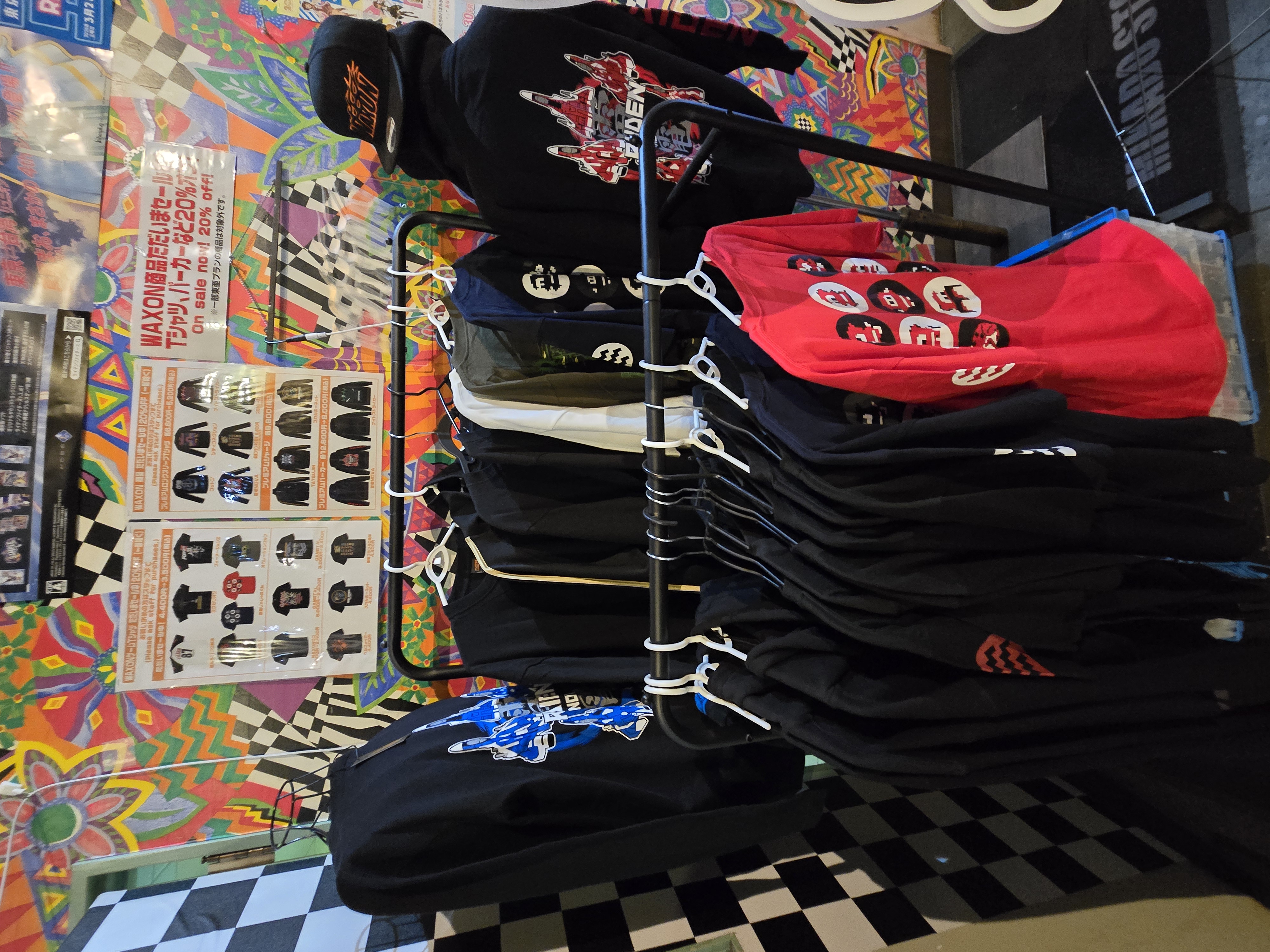
A game center with fans who buy the branded clothing is doing something right. Mikado has a following — YouTube channel, competitive events, people who travel to Takadanobaba specifically for the venue. The merchandise exists because the demand is there.
Why It Matters
Mikado has been in Takadanobaba since 2003. In the years since, the Japanese arcade industry contracted significantly — the economics that made game centers viable in the '90s stopped working when home hardware caught up and exceeded what a public machine could offer. Most operators responded by pivoting to crane games, which have a simpler, more reliable revenue model. Mikado didn't.
What they did instead is preserve what nobody else kept. If you care about what arcades were during the window when they were genuinely more capable than anything you could play at home — the late '80s through early 2000s — this is where that history exists in working condition, maintained by people who understand what they have.
I went there to play some games on a day off. I photographed the whole thing with my phone. If you're in Tokyo and this sounds like it's for you, take the Chuo or Tozai line to Takadanobaba, walk to Oasis Plaza, go up one floor. The 23:30 closing sign near the entrance is not a warning. It's a promise that the place will be open until then.
Shooting Tokyo and want a guide who actually knows where to go?
Book a Session in Tokyo →