
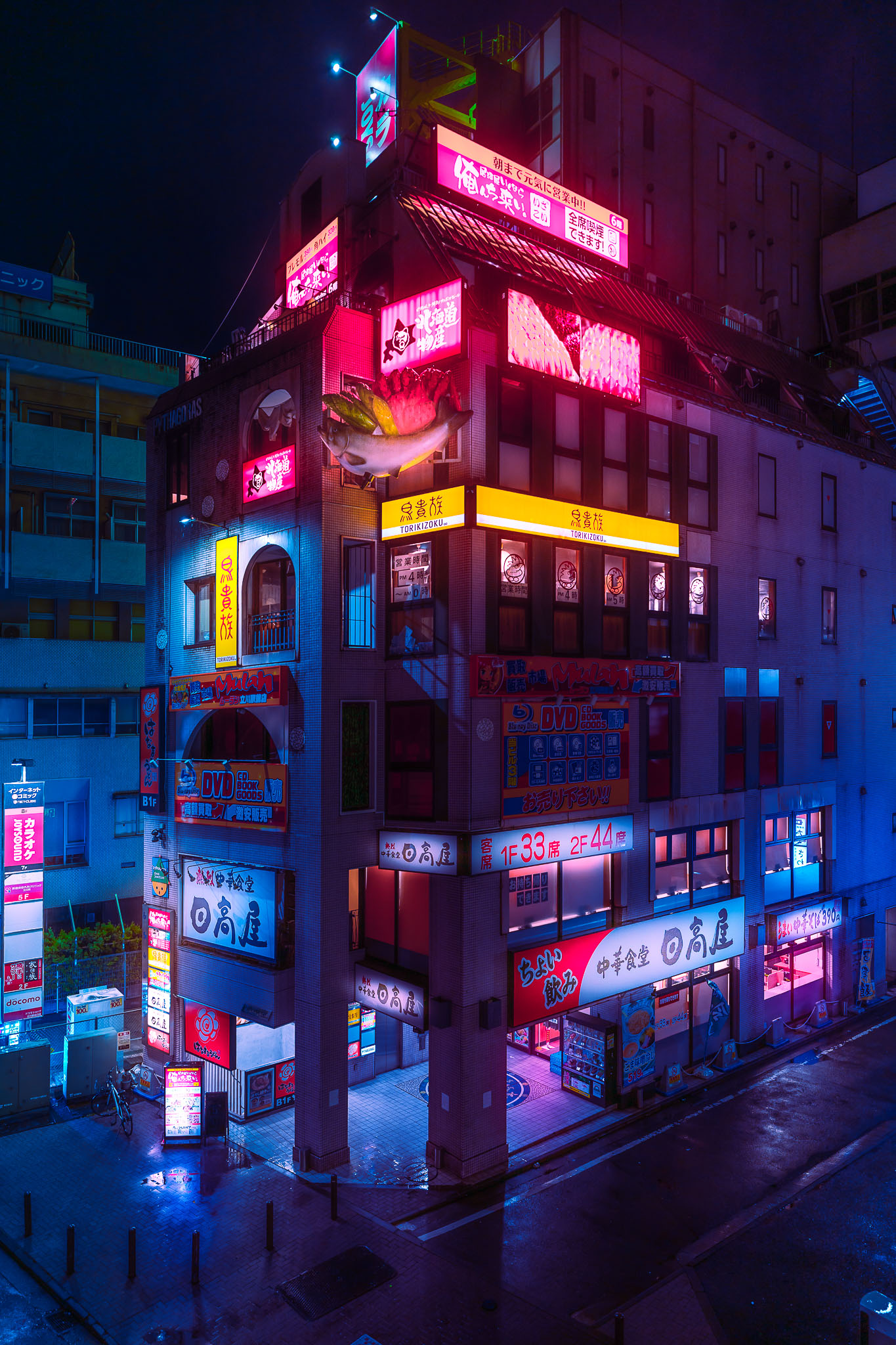
Tachikawa sits further out than most of the neighbourhoods I write about — a good 40 minutes west of Shinjuku on the Chuo line, well past Kichijoji, out where Tokyo starts thinning into the Tama area. Most visitors never get out this far, and most of what's written about it treats it as a shopping destination: IKEA, the outlet mall, the wide pedestrian decks. All true. None of it explains why it's worth bringing a camera.
The explanation is underneath the shopping. Tachikawa was a US air base from the end of the war until 1977, and the runway's footprint didn't disappear when the base closed — it became a national park, wide government-planned boulevards, and a downtown built with more breathing room than almost anywhere else this close to central Tokyo. Then, a few streets over, you get pockets of exactly the cramped neon density you'd expect from anywhere else in the city. Both versions of Tachikawa are real and they sit on top of each other.
Space Where Other Neighbourhoods Don't Have It
The station's north exit opens onto a covered pedestrian deck that runs for blocks — wide enough for a truck to turn around on, empty enough at night that a single security light or an escalator well becomes the whole photograph. Compare that to Shinjuku or Shibuya, where you're fighting for a clean sightline against foot traffic and signage stacked six deep, and Tachikawa's decks feel almost eerie. Concrete pillars, long sightlines, rain-slicked pavement doing most of the compositional work because there's nothing else competing for it.
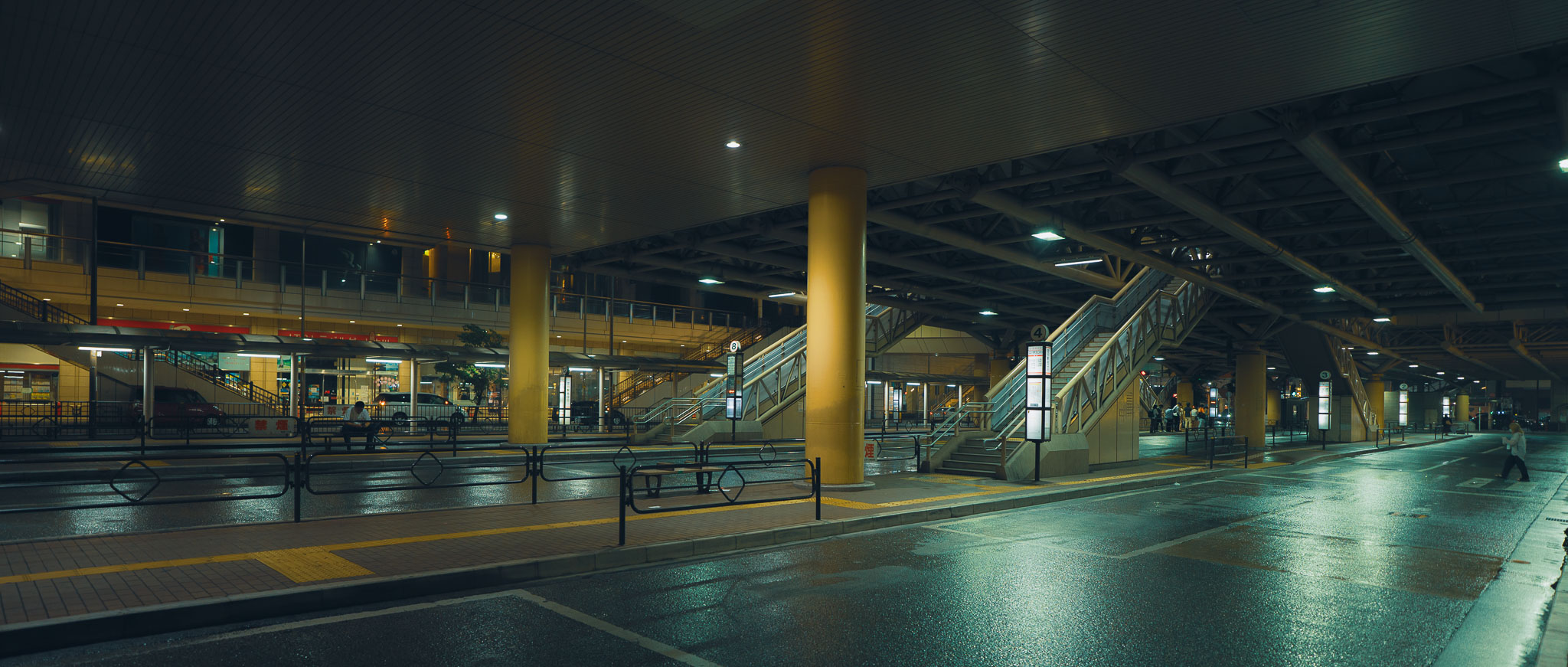
That openness is a direct legacy of the base. Postwar redevelopment plans for the runway land favored wide, straight roads and generous setbacks — the opposite of how most of Tokyo grew up organically around train stations built decades earlier. You feel the difference physically before you understand why it's there.
The Backstreets Don't Know About Any of That
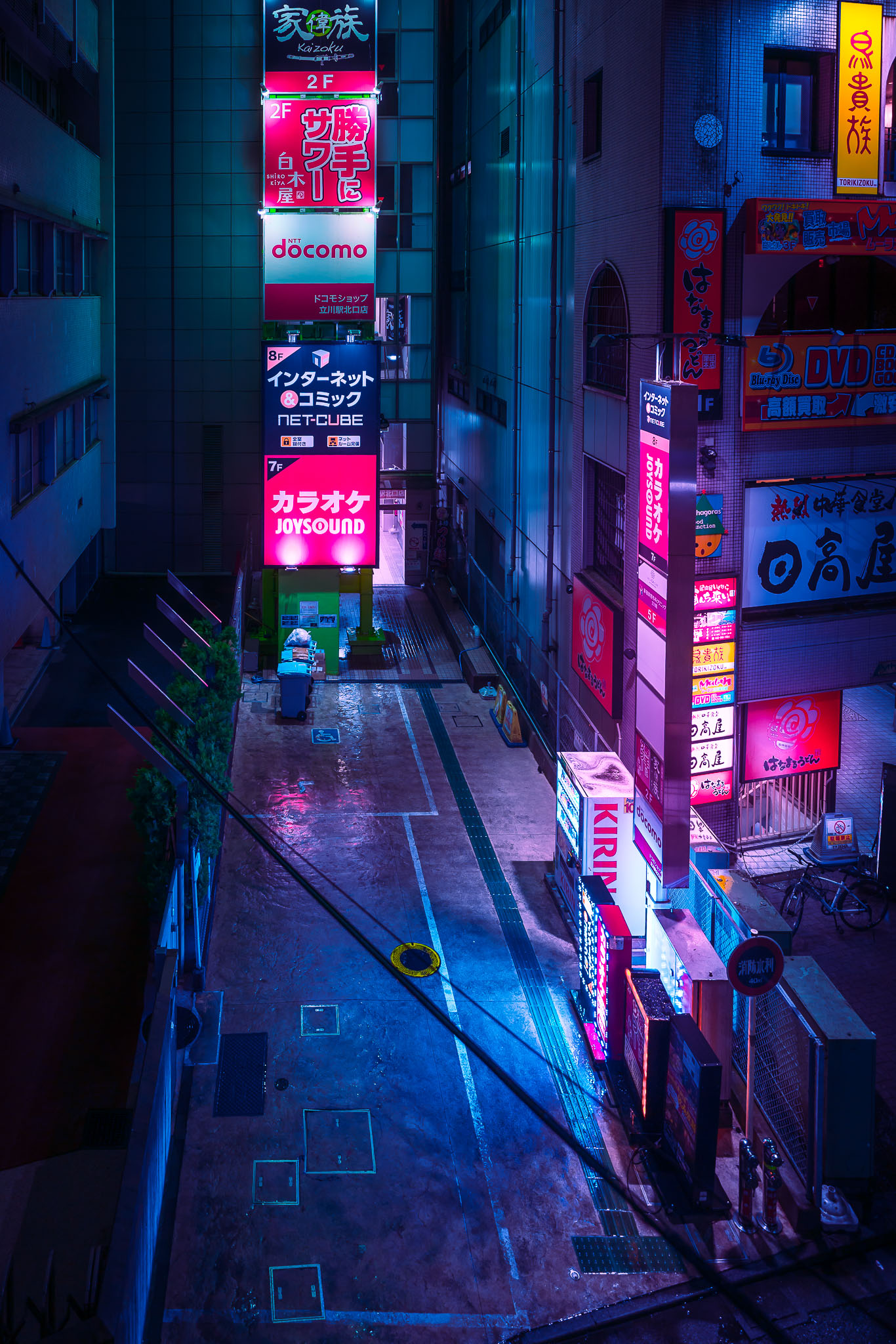
Walk two minutes off the deck and Tachikawa reverts to a normal Japanese entertainment district — narrow, vertically stacked, lit by whatever the ground floor is selling. A tower of signage over one alley stacks a docomo shop, a JOYSOUND karaoke branch, and a manga cafe called Net-Cube, with "Tachikawa Station North Exit" printed right on the sign in case the location was ever in doubt. The wet pavement below turns all of it into a second, softer copy of itself.
A few blocks over, a Toyota Dyna delivery truck idles in an alley barely wider than its mirrors, headlights on, engine running, the driver checking something on his phone before the next drop. NOVA English conversation school signage stacks above him next to a beauty salon and a pharmacy sign — completely unremarkable Japanese commercial signage that happens to be lit red and blue and reflecting off wet asphalt in a way that reads as considerably more dramatic than a delivery run actually is. This is most of what night photography in Japan comes down to: ordinary logistics, extraordinary light.
Why Tachikawa
It won't be the neighbourhood you photograph on a first trip to Tokyo, and it doesn't need to be — it rewards people who've already done Shinjuku and Shibuya and want to see what the city looks like once you get past the density everyone associates with it. The contrast is the whole point. Wide decks built on a decommissioned runway, then a hundred metres later, an alley so narrow a delivery truck can barely fit through it. Both are Tachikawa. Neither one is the whole story without the other.
Want to shoot Tokyo's less obvious neighbourhoods properly?
Book a Night Session in Tokyo →