
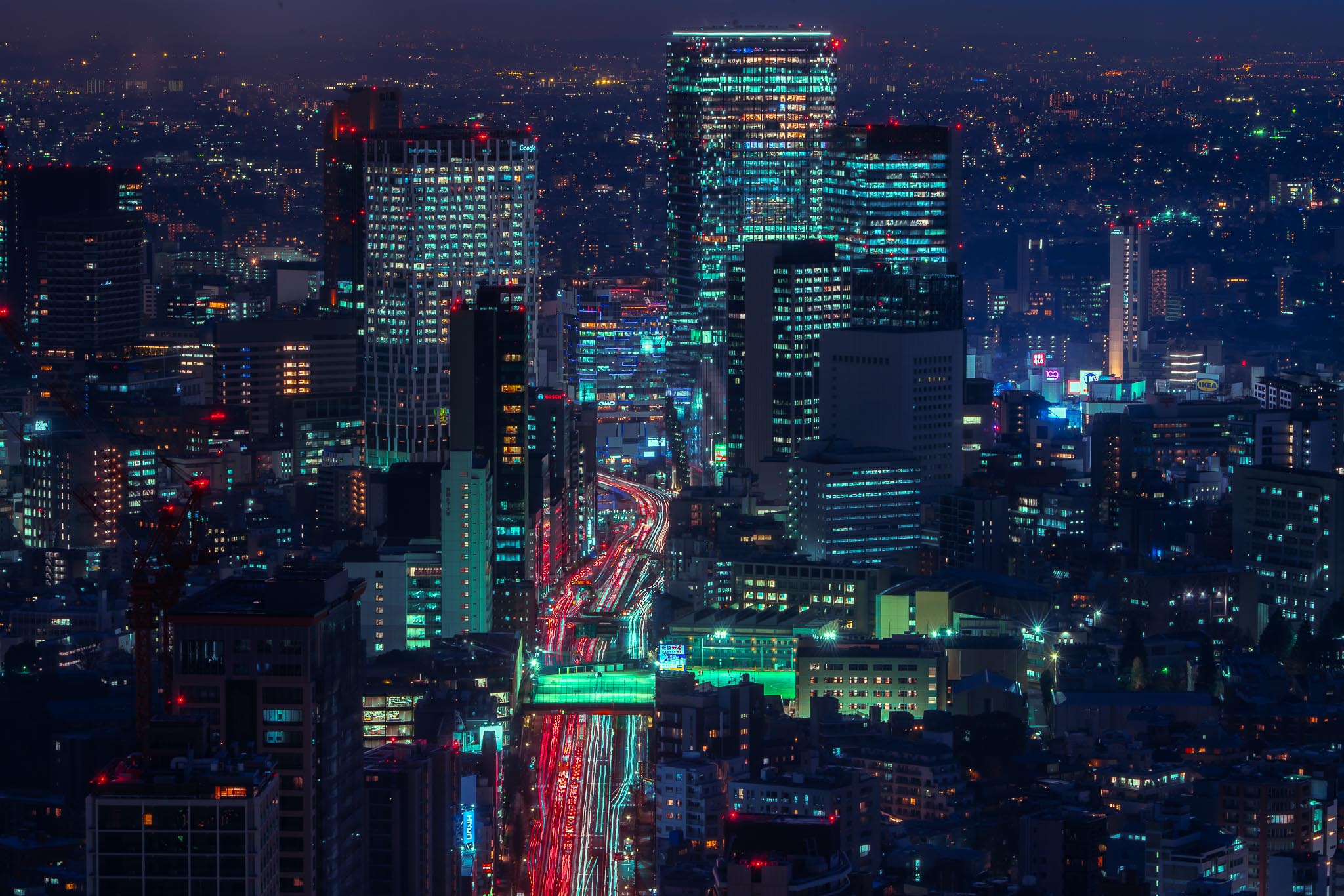
Roppongi has a reputation, and it's not entirely undeserved. The district built its international identity on nightclubs and bars aimed at tourists and military personnel, and a lot of first-time visitors to Tokyo put it on the list and come away underwhelmed or worse. As a result, Roppongi Hills — the massive Mori-developed complex anchored by the 54-floor tower in the center of the neighborhood — gets bundled in with that reputation by people who haven't been.
This is a mistake. For photography specifically, Mori Tower's observation facilities are the best in the city. Not the most famous — that's Sky Tree — and not the cheapest. But the best.
Two Decks, One Decision
Mori Tower has two observation options. Tokyo City View on the 52nd floor is the indoor deck: floor-to-ceiling glass, climate controlled, open until 11pm most nights. The Sky Deck on the 54th floor is outdoors, open air, exposed to whatever the weather is doing — which means it closes in rain and strong wind, and the ticket is extra. Buy both if the forecast looks reasonable. The Sky Deck is where the photographs are.
The glass on the indoor deck creates a problem that every photographer faces sooner or later in Tokyo's observation towers. Unless you press your lens directly against the surface and seal the edges with your jacket or a lens cloth, your own reflection appears in the frame — a ghost of yourself standing in front of whatever view you're trying to capture. It's manageable with care, but it takes time and patience and you can't always get close enough. Two floors up, on the Sky Deck, the problem doesn't exist. There's nothing between you and Tokyo but 238 metres of air.
The Tokyo Tower Problem (That Isn't Actually a Problem)
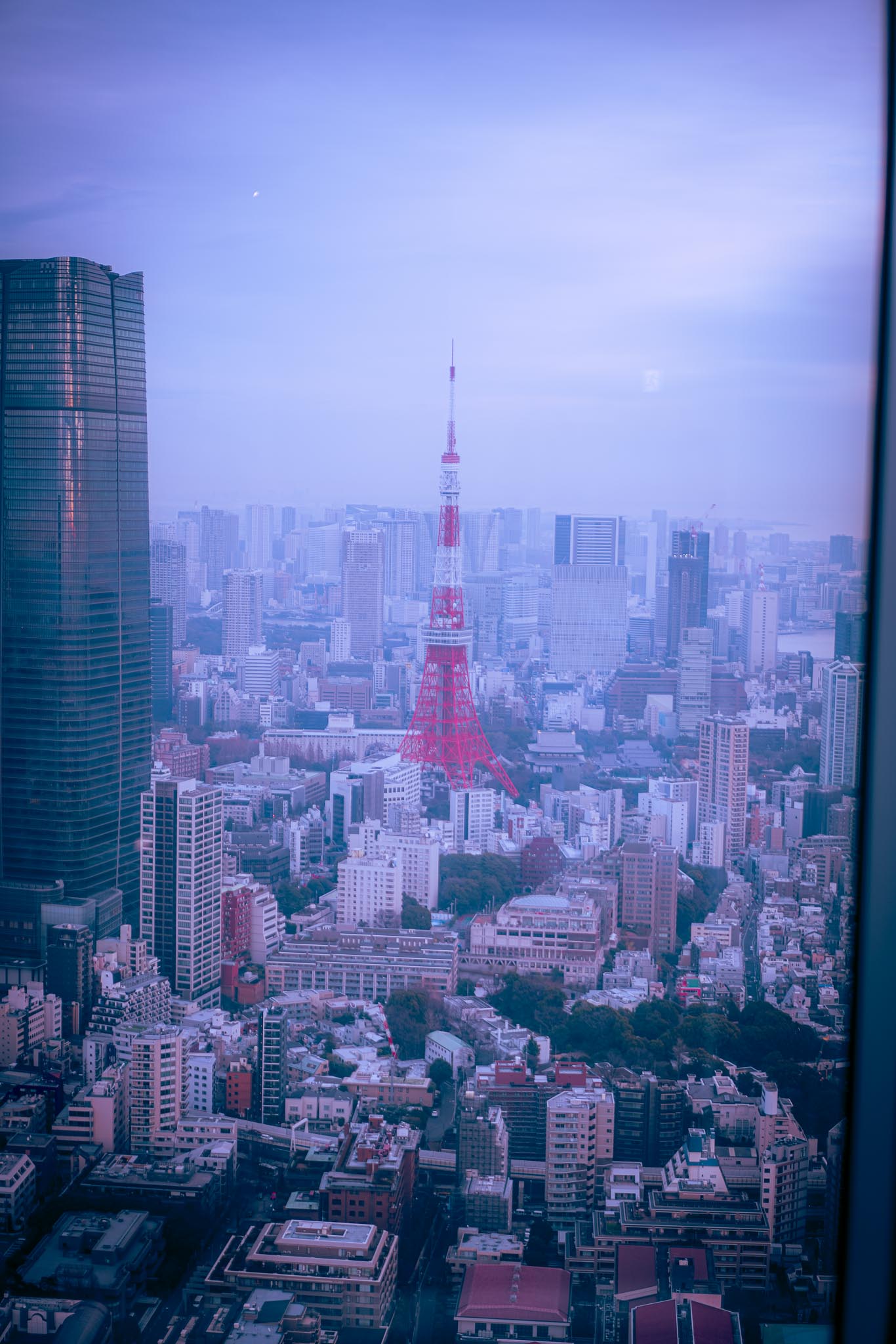
Every observation deck in Tokyo has a Tokyo Tower problem. The tower appears somewhere in the view from everywhere, it's recognizable, and the instinct is to photograph it. The results are usually unremarkable — Tokyo Tower as a distant red speck competing with the rest of the frame for attention, not actually the subject of anything.
From Mori Tower, Tokyo Tower sits almost directly ahead and close enough to be a real subject. The two structures are roughly the same height, which means you're looking at it level rather than down at it. At dusk, when the sky still holds color and the tower has just switched on its lights, this is one of the cleaner compositions available to you in Tokyo without having to work for it. The tower fills the center of the frame, the city spreads below, the sky does whatever it's going to do behind it.
On the indoor deck, getting this shot requires dealing with the glass carefully. On the Sky Deck, you just raise the camera.
When to Go: The Blue Hour Window
The most useful window is the forty minutes around civil dusk — when the sun has dropped but the sky hasn't gone fully dark yet. This is when you can use both the sky and the city in the same frame. The towers and buildings are lit, the sky is transitioning through blue and purple and whatever color the atmosphere is handing out that evening, and there's enough ambient light that you're not just shooting against darkness.
After full dark, the sky becomes a black rectangle and you're left with the city grid alone. That's still worth photographing — the highway light trails below the tower, the particular teal and cyan of Tokyo's commercial lighting across the skyline, the way the density of the city spreads out further than you can fully see. But the blue hour window is the one to plan around.
Looking West
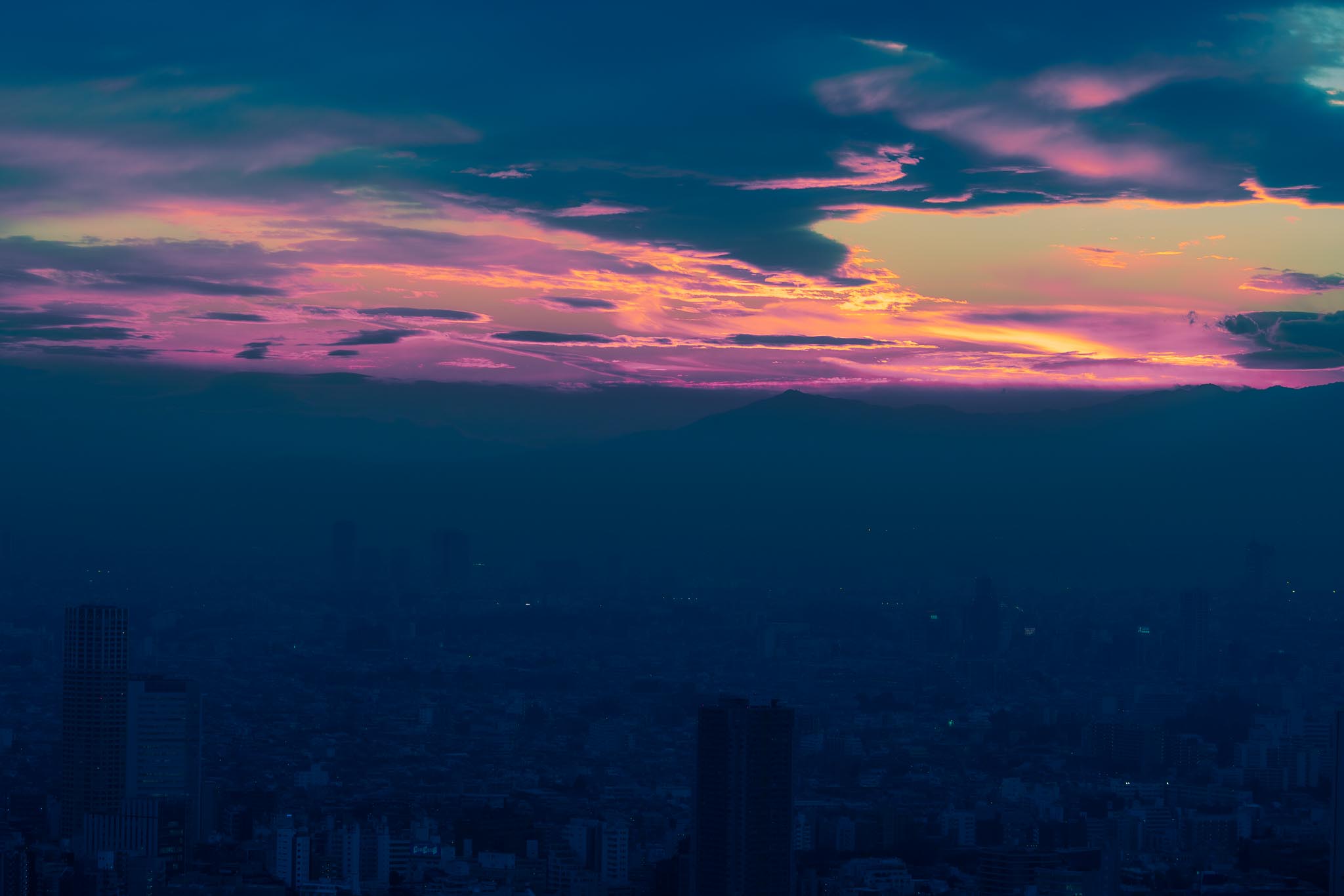
Most people look east or north from the deck, toward the main Tokyo skyline. Looking west is different. On a clear day, the Tanzawa mountain range fills the horizon, and further west on the right days, the profile of Mt. Fuji appears above the haze. Tokyo sits in a basin, which you understand intellectually without fully appreciating until you're 238 metres up and looking at the mountains that ring it.
The sunset looking west can be extraordinary. Tokyo's humid air scatters light in ways that produce unusual cloud color — deep orange at the horizon, pinks and purples moving up through the sky, the mountains as a dark silhouette at the base of all of it. This photograph requires luck. The weather has to cooperate, the haze has to clear enough, the clouds have to be doing something interesting. When it works, it produces an image that doesn't look like it was made in the same city as the neon backstreet photographs. Same camera. Same evening. Different planet.
After You Come Down
Roppongi Hills itself is worth walking after you leave the tower. The Keyakizaka street, the outdoor plaza, and the streets heading south toward Azabu-Juban have a particular quality at night — expensive and quiet in a way that's different from the loudness of the actual Roppongi entertainment district a few minutes away. The complex was designed to be walked, and it shows. Give it thirty minutes before you get back on the Hibiya line.
If you want to contrast it, the regular Roppongi streets are five minutes north. Different atmosphere. Worth seeing once.
Tokyo City View: 10am–11pm most days, last entry 10:30pm. Sky Deck closes in rain and high wind — check conditions before you make the trip specifically for it. Roppongi station on the Hibiya or Oedo line, then five minutes on foot through the Hills complex to the tower entrance.
Looking for Tokyo portraits at a different altitude?
Book a Night Session in Tokyo →