
Osaka is the first city in Japan that pushed back at me. Tokyo absorbs people — it's enormous and accepts you without asking much in return. Osaka has opinions. It's louder, more direct, the food is arguably better and the locals will tell you so without being asked. The first time I arrived and walked out of Namba station at night, the neon density was higher than anything in Shinjuku and the air smelled like frying oil and the person at the convenience store made actual conversation. That doesn't happen in Tokyo convenience stores.
For photography, all of this translates. The light is different, the chaos is more contained, and the canal at Dotonbori creates shooting conditions you can't find anywhere in Tokyo.
Dotonbori
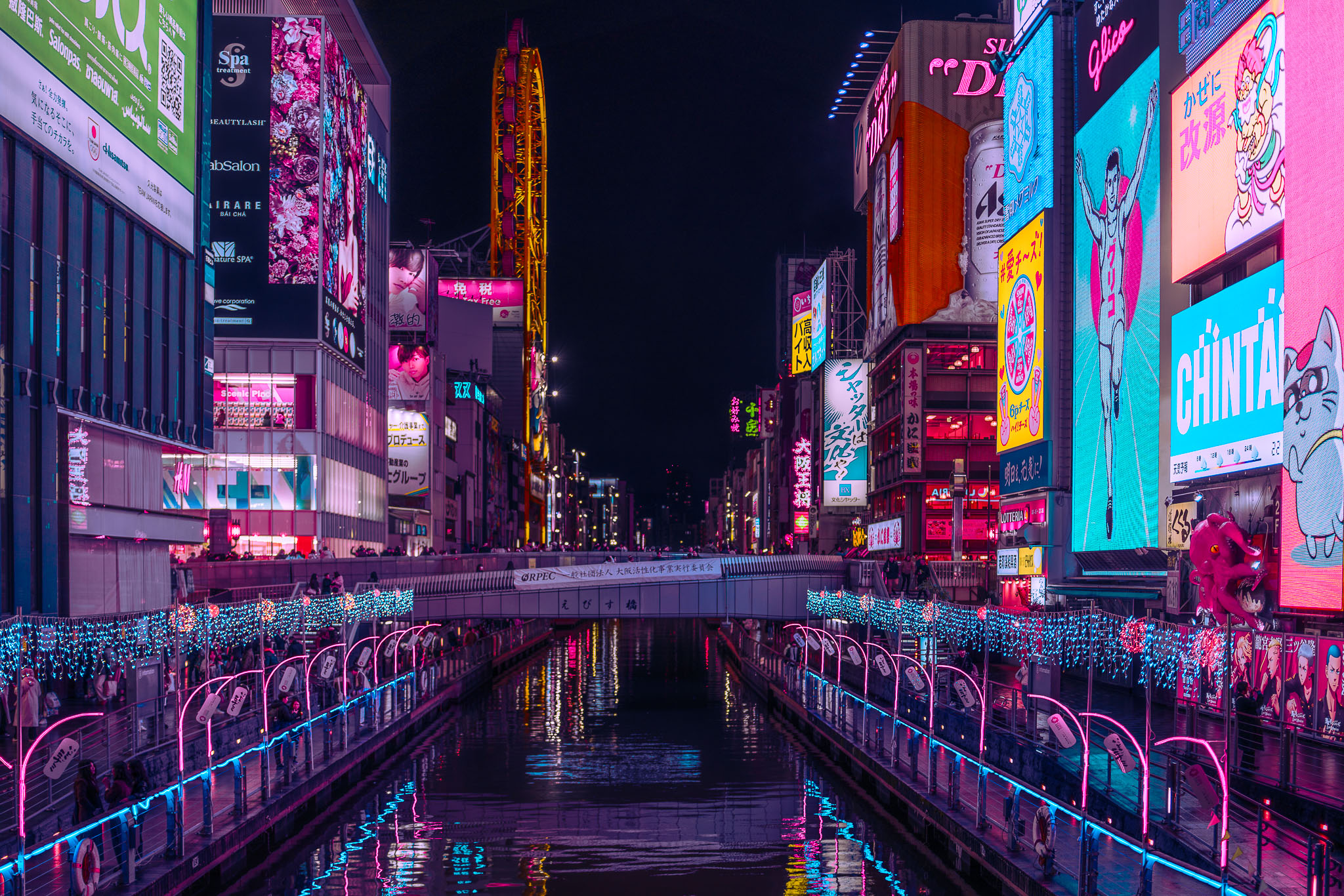
The canal is the obvious starting point and it earns the reputation. The standard photograph — from Ebisu-bashi bridge looking west toward the Glico running man and the roller coaster tower, all of it reflected in the dark water below — is a real photograph. The composition works. The problem is that it's the composition everyone makes, and standing on that bridge on any given night you're elbow-to-elbow with a hundred people making the same frame.
What works better is to get off the bridge and descend to the canal walkway. From water level, the reflected neon becomes the foreground rather than background — a second version of the canal running underneath the real one, undistorted on a calm night. Pull your focal length in and let the water do most of the work. The bridge is above you, the crowd is above you, and you have a composition that doesn't look like the ten thousand photographs taken from the bridge every evening.
Go later than you think you need to. Dotonbori runs until well past midnight and the tourist density thins around 11pm. After that, the light is identical but the streets are actually navigable.
The Alley System
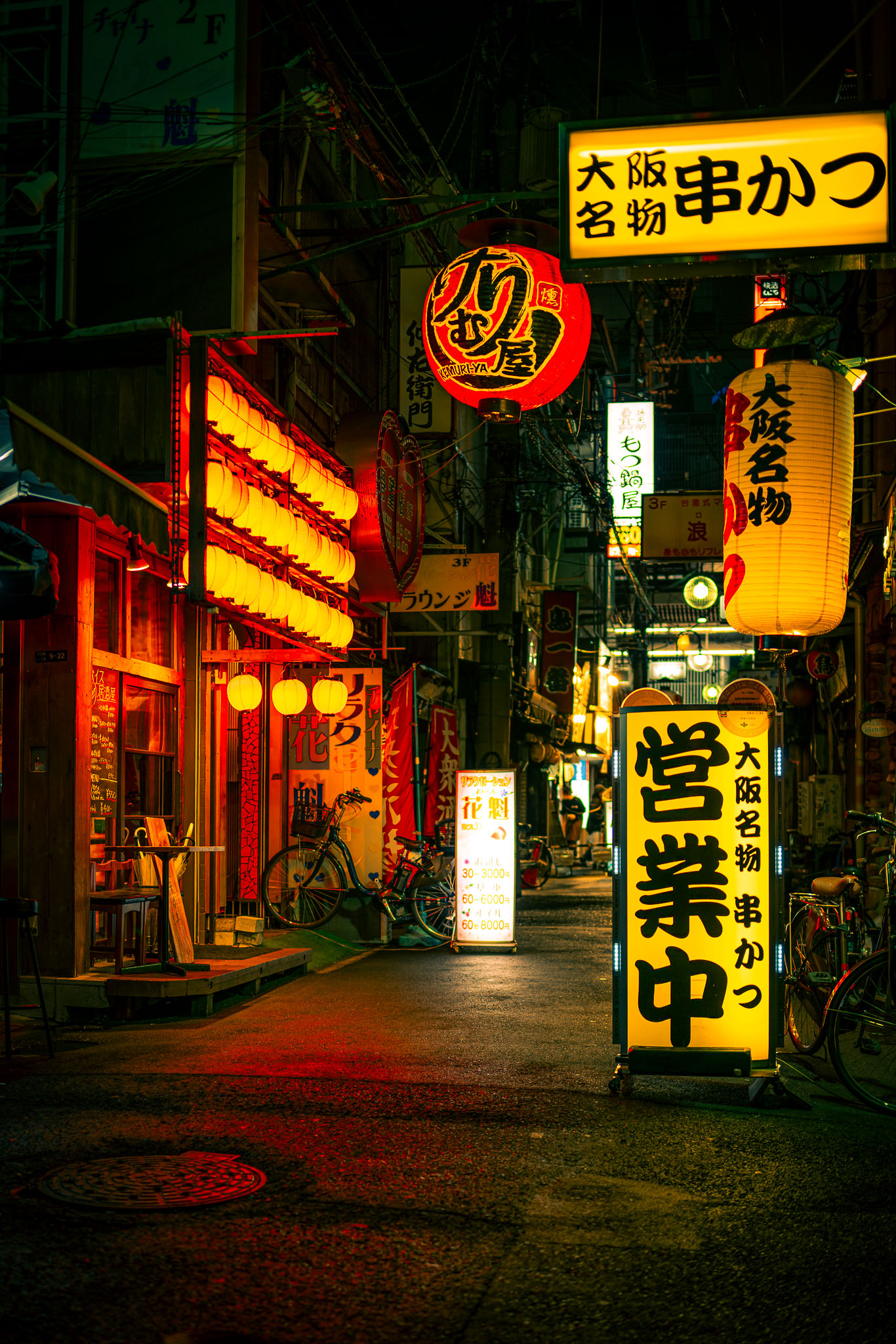
South of the canal, the streets narrow into the eating and drinking grid that makes up the real character of Namba. Kushikatsu — battered and fried skewers, never double-dip the sauce, the signs will remind you emphatically — is the Osaka food, and it's announced on every block with signs stacked vertically and paper lanterns in red and orange. The visual density here is high enough that you can photograph almost without looking for anything specific. Walk slowly, watch the light, wait for the moment when the elements in front of you decide to align.
The alley running between Dotonbori and the Kuromon area has a particular quality at night — wide enough to breathe in, narrow enough to have genuine atmosphere. Izakaya and kushikatsu signs layered on both sides, a bicycle locked outside a place that's been there for forty years, the smell of charcoal reaching you before you can see the source. Shoot into the light rather than with it behind you. The back-lit signs and lanterns are better subjects than the well-lit facades.
Rain in Osaka
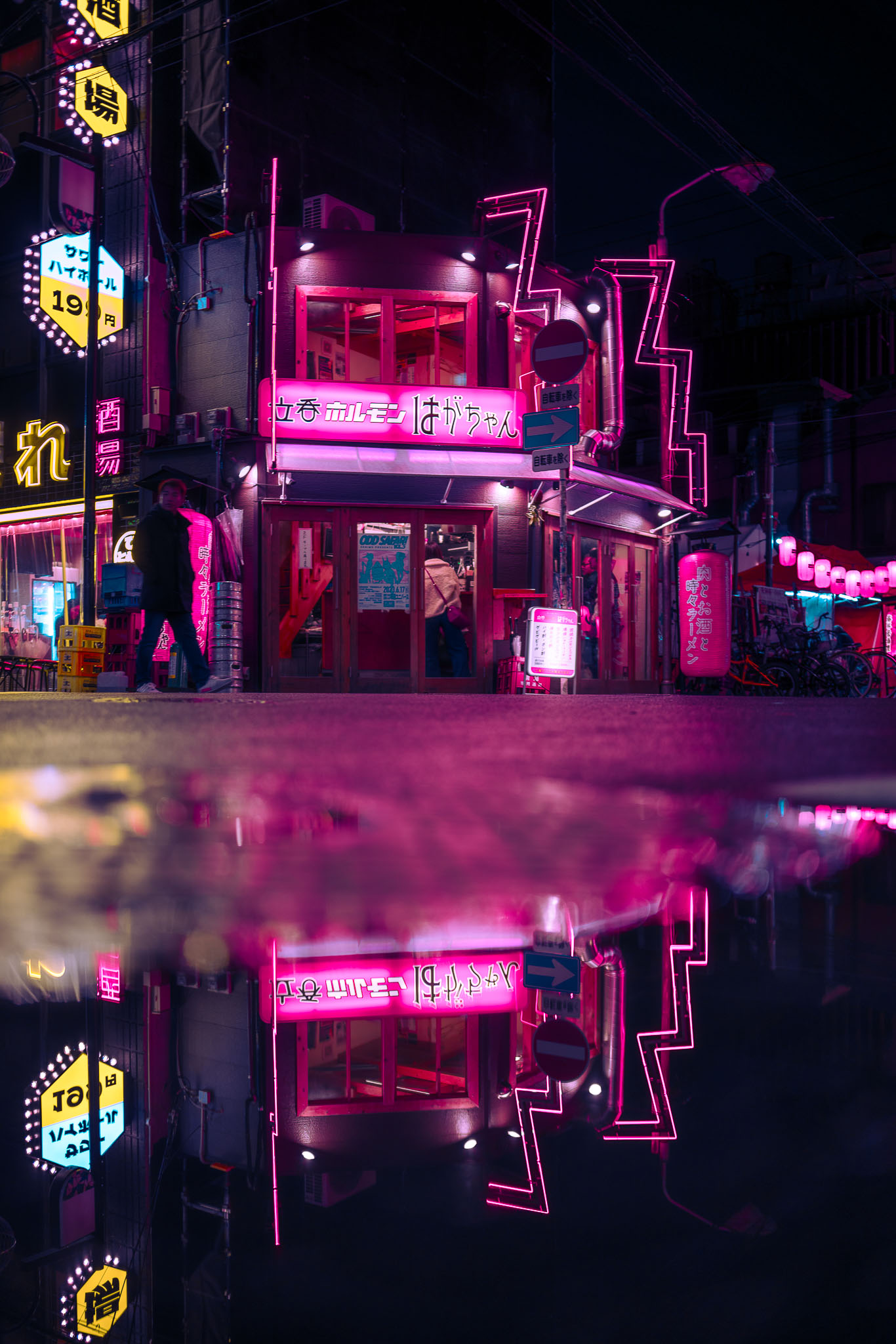
The streets in the Namba area are low-lying, and when it rains properly, puddles form across wide sections of the road. On the right night, the entire street becomes a mirror and every pink or red facade doubles into the surface below it. I found the frame I was looking for — a pink-lit izakaya reflecting perfectly into a street puddle, a single silhouette walking through — after about two hours of rain had soaked into everything and smoothed the surface out. Get low. Let the puddle fill the bottom third of the frame. The city above it organizes itself.
Osaka's rain is worth seeking out specifically, not just tolerating. Check the forecast and if there's rain in the evening, be in Namba for it.
Osaka vs Tokyo
The honest comparison: Osaka is more immediately rewarding and less infinitely deep. Tokyo takes months to understand and pays out slowly over a long time. Osaka gives you good frames faster — the light is more obliging, the neon is more concentrated, the subjects present themselves more readily. You can arrive knowing nothing and come back with photographs worth keeping.
But Tokyo has more layers. Osaka is one of the great night photography cities in Japan and worth multiple serious evenings. Just don't spend all of them on the bridge at Dotonbori. The interesting stuff is always in the alleys, and in Osaka the alleys are genuinely good.
Looking for this kind of night photography in Tokyo?
Book a Night Session in Tokyo →