
The Chuo line running west from Shinjuku passes through a string of neighborhoods that each have a specific identity: Koenji is records and vintage clothing and a particular kind of Tokyoite who has strong opinions about both. Nishi-Ogikubo is antiques — dozens of shops selling mid-century furniture, old ceramics, things salvaged from houses that no longer exist. Ogikubo sits between them and tends to get skipped. Most people are heading to one or the other.
They're missing a few things.
The Arcade
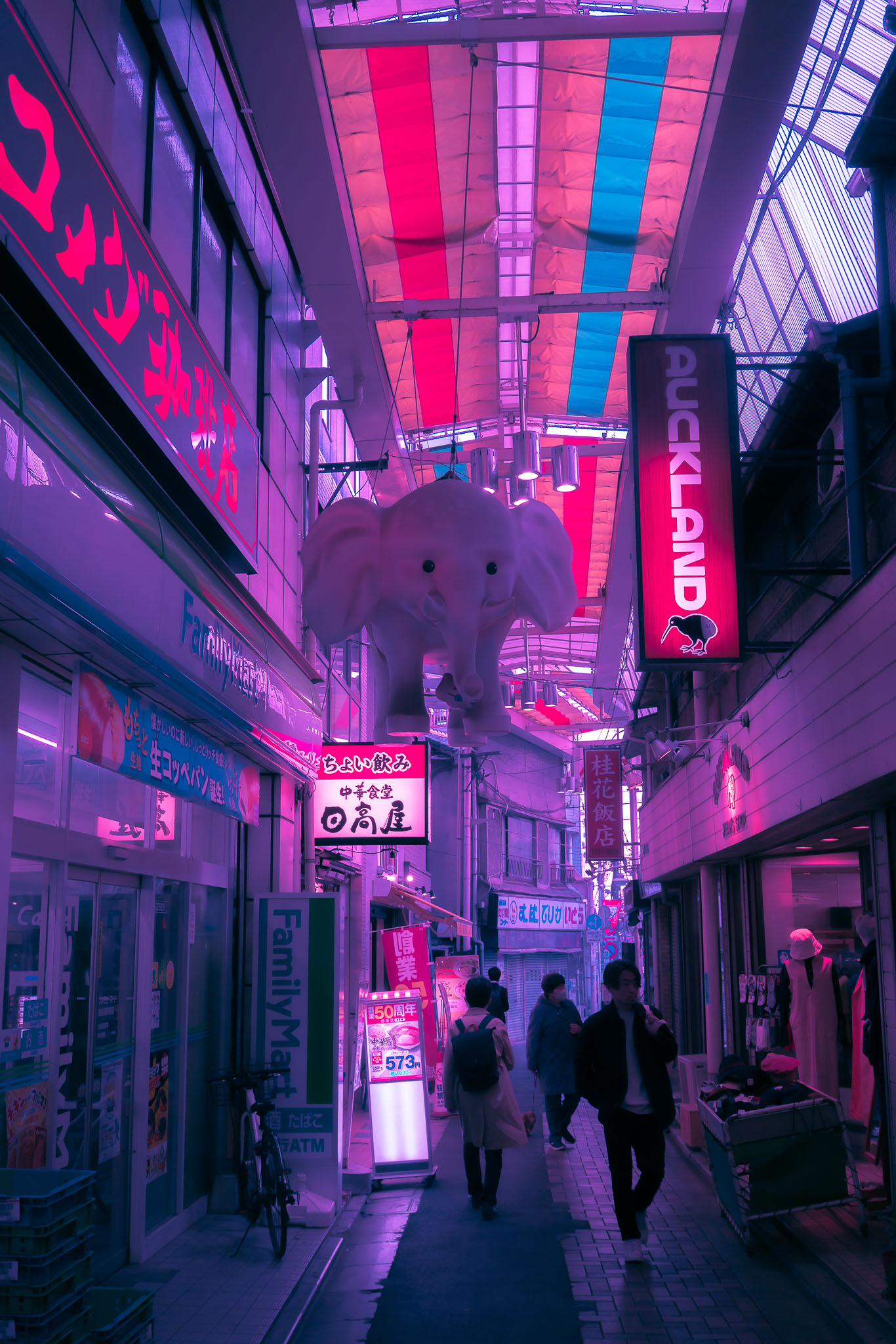
The Sun Road covered shopping street runs north from the main station exit and has the feel of every covered arcade built in this part of Tokyo during the 1970s — slightly past its commercial peak, lit in the individual color temperatures of whatever shops remain, home to the usual mix of convenience stores, dry cleaners, and places selling things you can't immediately categorize. What Ogikubo's arcade has that most don't is a large white elephant suspended from the ceiling, positioned about two-thirds of the way down, at the scale that stops you mid-walk.
At night, the arcade does something that its daytime version doesn't. The shop signs mix pink and purple and cyan in the enclosed space, and the elephant — white, slightly surreal, hanging from the ceiling of a Japanese shopping street — catches the neon from below in a way that photographs with a strangeness that's hard to manufacture. People move through the frame underneath it without looking up. It's been there long enough that nobody thinks it's unusual anymore.
The Backstreets
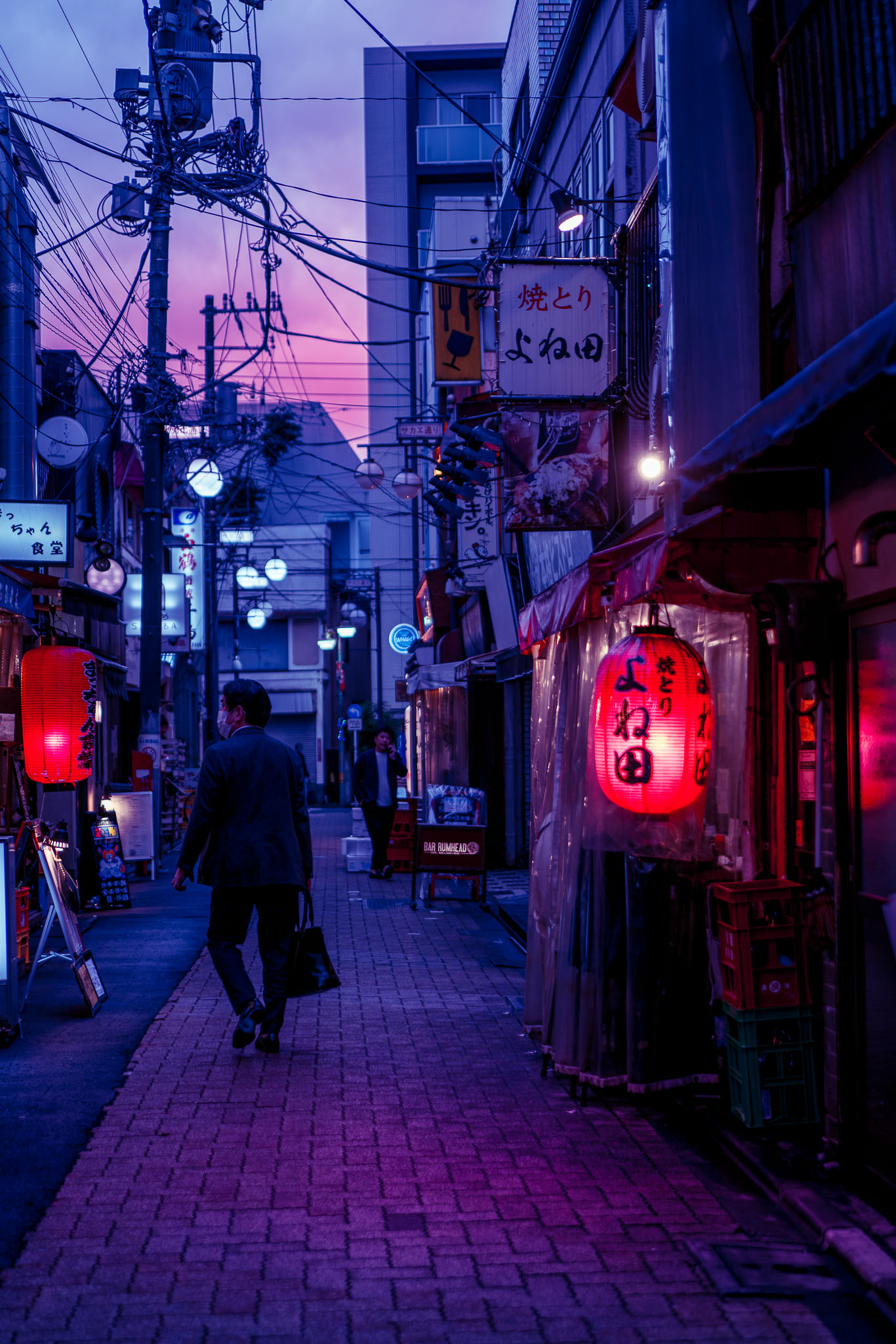
The streets running east from the arcade have a quieter residential character — izakayas sitting between apartment buildings, narrow lanes with yakitori smoke and the sound of whatever game is on the TV inside. The photograph I didn't expect from Ogikubo was a salaryman walking away from camera down one of these alleys, a red lantern for a yakitori bar in the lower right corner, power lines overhead, and the sky behind him the specific deep blue-purple that lasts about fifteen minutes before going fully dark.
That's not a photograph you plan. You walk past the right alley at the right time with your camera ready, and either you make it or you're already past it before you register what was there. The timing in those fifteen minutes of blue hour is worth building your evening around — arrive at the arcade earlier, walk the backstreets as the sky is transitioning, and stay with it until the purple goes black.
The Roofline
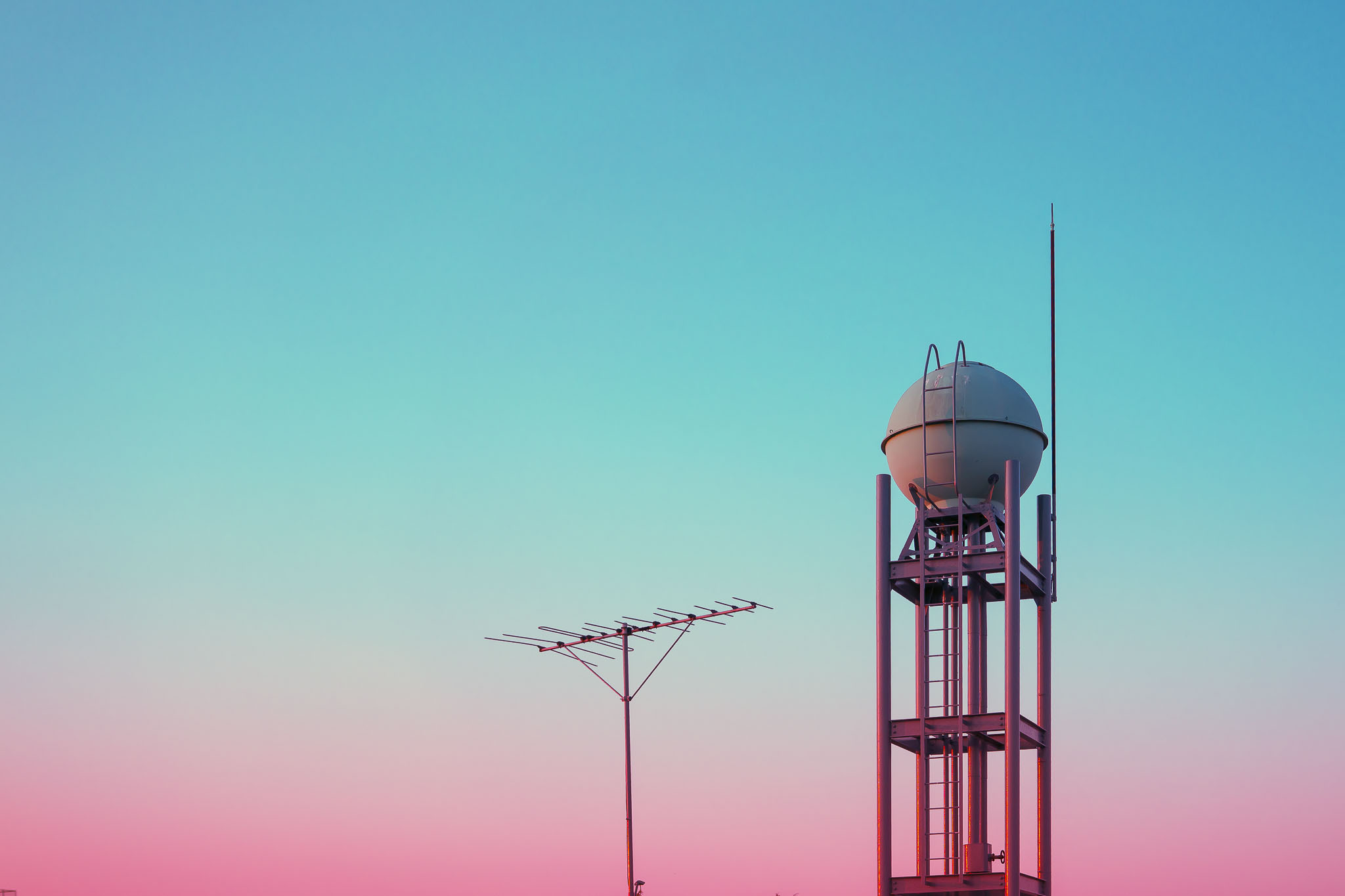
Ogikubo has a relationship with the sky that denser neighborhoods don't offer. The buildings in the commercial area run four to six floors, which is low enough that the roofline remains visible and the sky above it has actual space. Blue hour here — teal at the top of the frame, fading to pink at the horizon — hits the concrete and antennas and water towers in a way that's different from anything available in Shinjuku or Shibuya. Those neighborhoods are too vertical. Ogikubo has room.
TV antennas are still mounted on rooftops here. Water towers with their specific industrial geometry sit above the buildings against whatever color the sky is doing. Point the camera up toward the infrastructure and give yourself time — these are slow photographs that require waiting for the right moment in the transition from blue to pink to dark. They don't come from hurrying.
Why Ogikubo
It's not the most concentrated neighborhood on the Chuo line — Koenji has more interesting things per square metre and a more defined character. But Ogikubo rewards an evening specifically because it doesn't yield everything quickly. The arcade is the obvious opening. The backstreets take longer to read. The sky requires patience and showing up at the right time.
An evening that starts at the elephant, moves to the backstreets as the blue hour arrives, and ends somewhere east of the arcade after the sky has gone fully dark and you've found the yakitori bar that looked right from outside — that produces photographs that couldn't come from anywhere with more tourism pressure on it. The neighborhood isn't trying to be photographed. It's just doing what it does. That gap is worth something.
One stop from Koenji on the Chuo line. Worth the stop.
Want to shoot Tokyo's less obvious neighbourhoods properly?
Book a Night Session in Tokyo →