
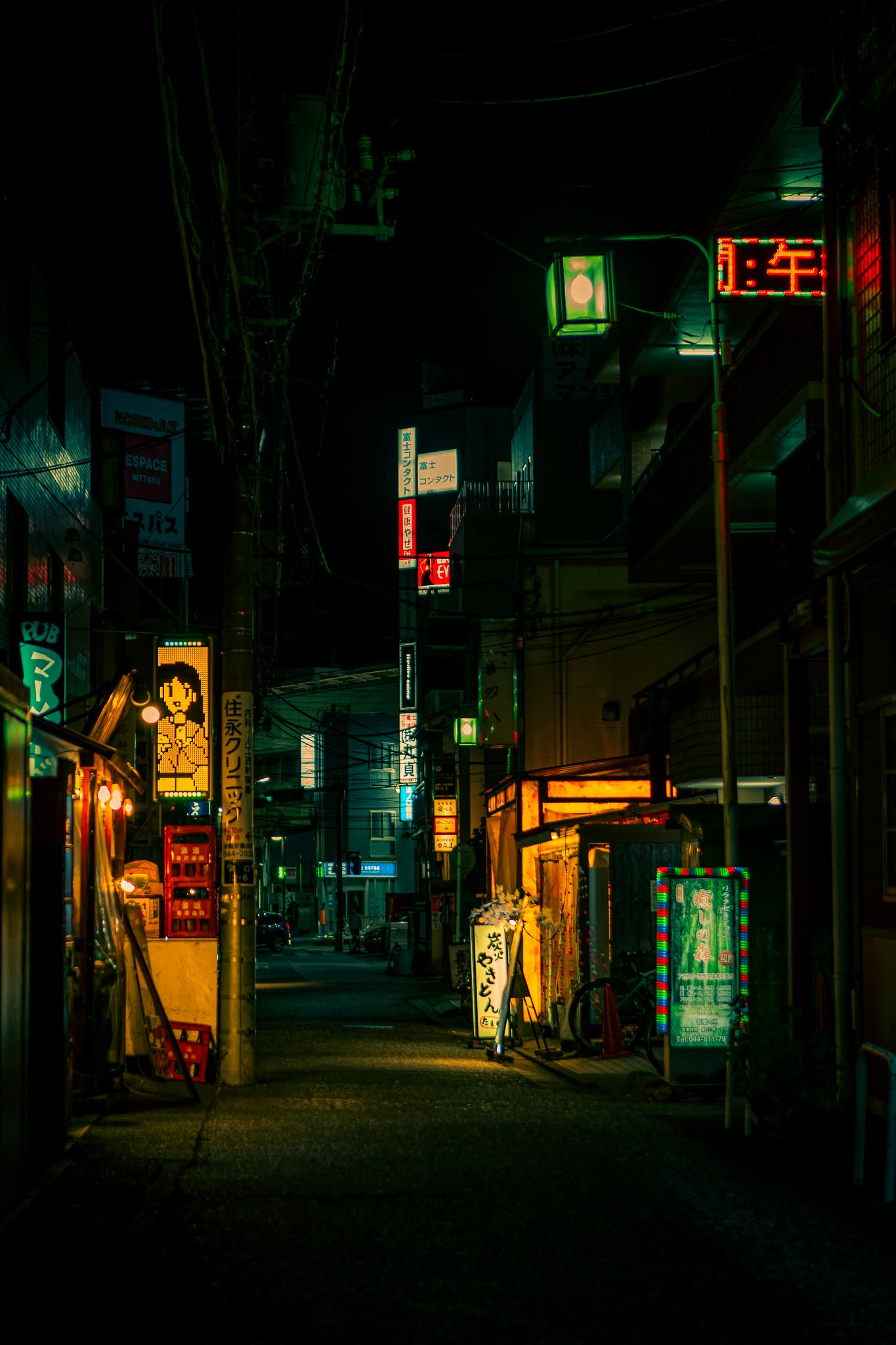
Mizonokuchi sits at a junction between the Tokyu Denentoshi line and the JR Nambu line, which makes it a through-station for a lot of people going somewhere else. That's probably why it survived — the development wave that swept through the more central parts of greater Tokyo skipped it, or arrived late, or arrived and found the covered alleys under the elevated tracks already too entrenched to move.
The area around the station exit has the feel of somewhere that made its decision about what it wanted to be in about 1975 and hasn't revisited it since. This is not a criticism. This is the whole reason to come.
The Alleys
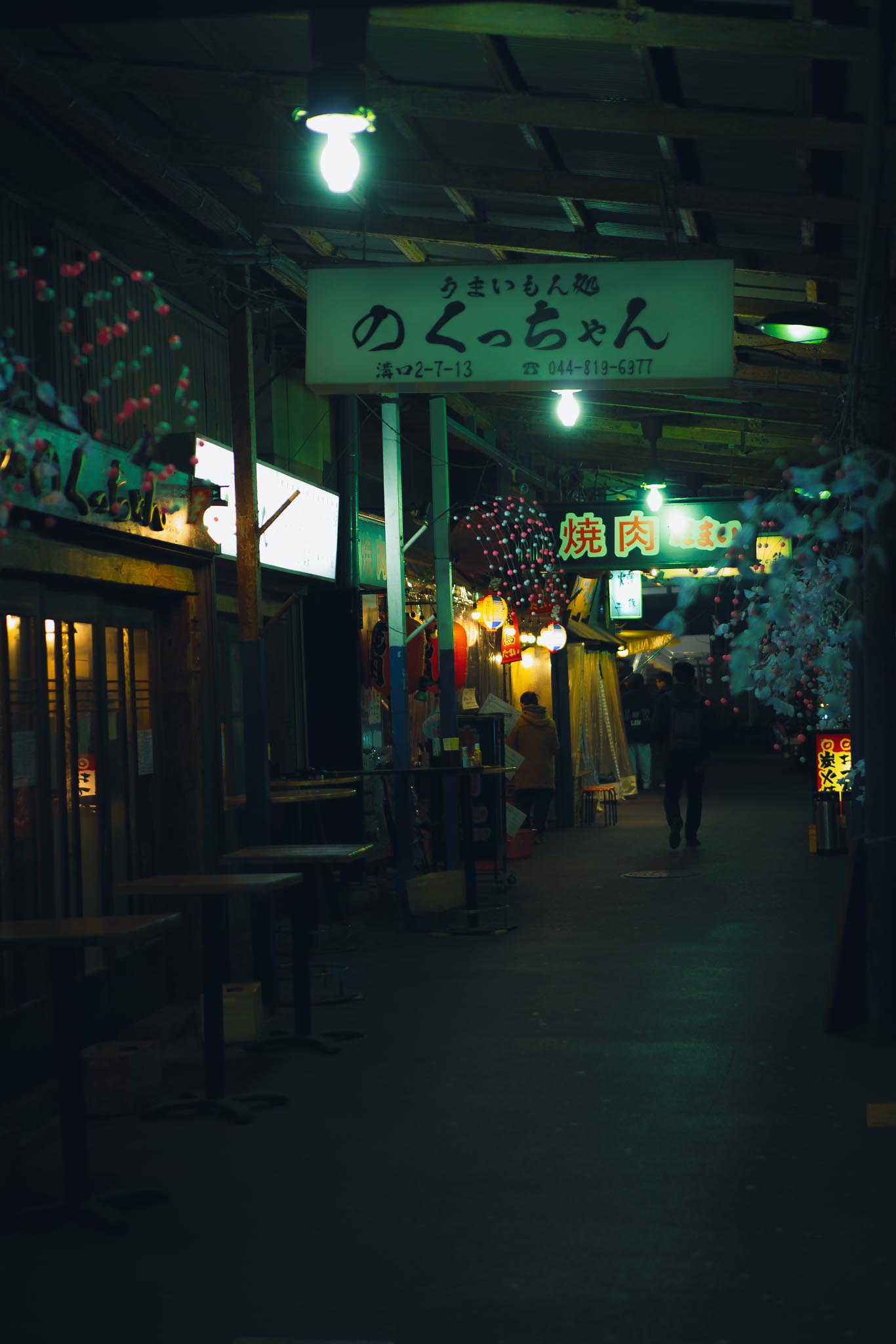
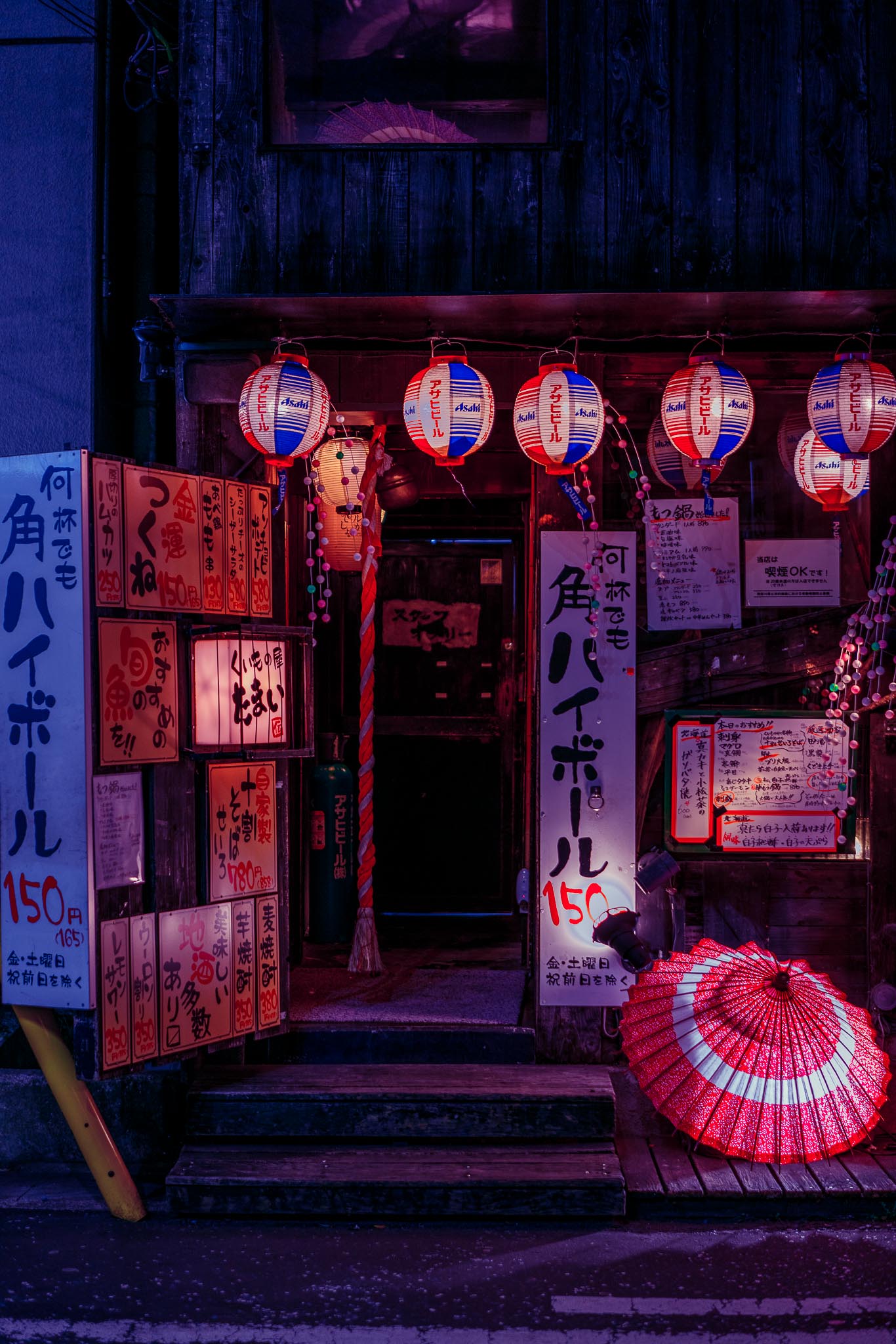
The covered shopping street running alongside and under the tracks is the core of it. Low ceilings, yakitori smoke drifting between stalls, izakayas with laminated photo menus and chairs that wobble on uneven concrete. The facades are hung with strings of ball lanterns and handwritten signs advertising 角ハイボール — Kaku highball — for 150 yen. Not a happy hour price. Not a first-drink-free deal. The regular price, all night.
This is senbero culture in practice. Senbero — from sen-en de berobero, a thousand yen to get drunk — is the working-class tradition of cheap, honest, unpretentious drinking. You find traces of it in more central neighborhoods, but Mizonokuchi has it in a concentration that's rare now, and getting rarer.
What It Costs
The drink is Kakubin whisky and soda, and the price at most places is 150 yen. For reference, a can of vending machine coffee is about 130. Sit down, order one, and figure out where you want to go next. A yakitori skewer runs about the same. An evening of real eating and real drinking — staying until you're the last person at the counter who clearly doesn't live here — costs around 2,000 to 2,500 yen if you're not trying to break anything. Less if you're disciplined, more if you order the good stuff, but the good stuff here is still cheap.
The people serving you have served a thousand of these tonight and will serve a thousand more tomorrow. Small talk with unfamiliar customers is a practiced skill. You don't need Japanese to communicate the basics. Point at the menu, hold up fingers, nod when they say something you didn't catch. It works.
Shooting Here
Mizonokuchi is narrower than it looks from a map. The covered arcade compresses everything — a 50mm starts to feel tight against the facades, and there's texture and depth pressing in from every direction. I found myself working closer than usual, using the ceiling and columns to frame shots rather than looking for open compositions. The ball lanterns diffuse the light from inside the bars into something warm and uneven, which is exactly what you want.
The backstreets outside the arcade are a different register. Darker, quieter, more scattered. Clinic signs with pixel-art illustrations, standing paper lanterns outside bars that look like they opened before you were born, the occasional neon sign doing real work in the dark. Less obviously photogenic, more interesting. If you spend the first half of the night in the covered alleys, spend the second half walking the streets on either side. Take your eyes off the bright parts and see what's in the shadows.
The Shot Worth Finding
Somewhere in the alley cluster there's an izakaya entrance decorated in red and white lanterns, every available surface carrying a sign for 150-yen highballs. On the night I was there, a red wagasa — a Japanese paper umbrella — was leaning against the doorframe, catching the light from inside. I didn't set it up. I didn't move anything. I just walked past at the right moment and raised the camera.
That photograph exists whether you're looking for it or not. The alleys here are full of arrangements that nobody staged, objects that have been in the same position for years because nobody thought to move them. Walk slowly. Look at the edges of things, not the centers.
What Mizonokuchi Isn't
There are no craft beer bars. No ramen shops with a curated aesthetic and a two-hour queue. No rooftop bars, no cocktails with thoughtful service, nothing that would appear in a Tokyo travel feature aimed at international visitors. If your benchmark for a good Tokyo night is somewhere that could appear in a design magazine, Mizonokuchi is going to disappoint you completely.
If your benchmark is cheap highballs and izakayas that haven't changed since before you were born, it's perfect. Go at night. Take the Denentoshi line from Shibuya — about twenty minutes. Follow the smell of charcoal from the station exit.
The interesting stuff in Tokyo is always nearby something that gets all the attention. Mizonokuchi is nearby Futako-Tamagawa, which is where the development money went. That's fine. Futako-Tamagawa doesn't have alleys like this.
Want to shoot Tokyo's backstreets with someone who knows them?
Book a Night Session in Tokyo →