
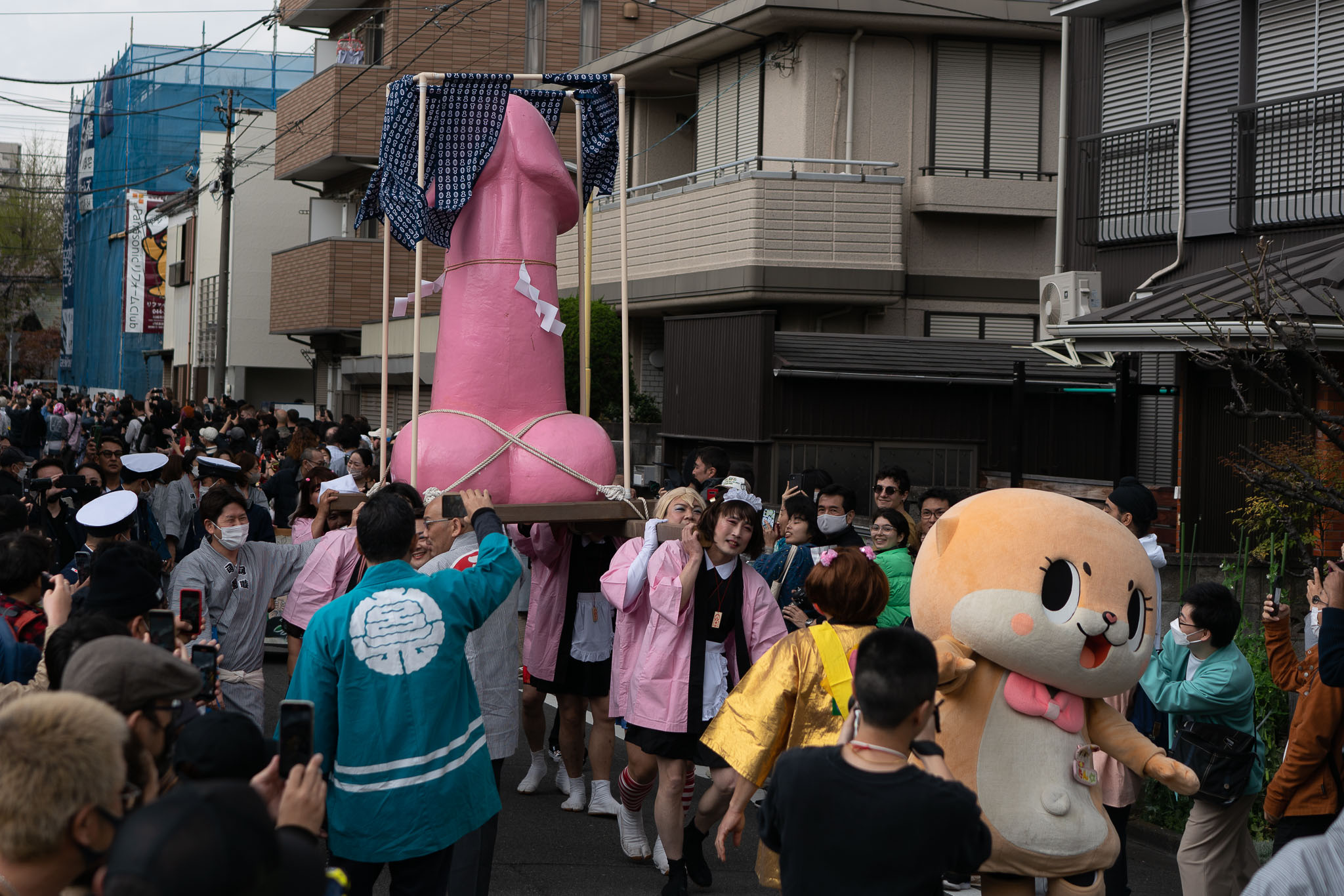
Kanamara Matsuri is a fertility festival at Kanayama Shrine in Kawasaki. It is held on the first Sunday of April. The main feature is a large pink phallus carried through the streets on a portable shrine — a mikoshi — by participants in traditional festival dress. The festival is ancient, it is well-organised, and it is one of the best events to photograph in the entire Tokyo area. The crowds are enormous, the atmosphere is genuinely joyful, and the photographs are there if you work for them.
What It Actually Is
Kanamara Matsuri translates roughly as the Festival of the Steel Phallus. The origin story involves a sharp-toothed demon hiding inside a woman, whose husbands suffered predictable consequences — local blacksmiths forged an iron phallus to break the demon's teeth. Beyond the legend, the shrine has historically been associated with praying for protection from sexually transmitted diseases, safe childbirth, and fertility. In the postwar period it became a place where sex workers in the area came to pray for protection and safety. Since the 1990s proceeds from the festival have been donated to HIV research.
This context tends to get stripped out of most coverage of the festival, which reduces it to "the weird Japan thing." It isn't. It's a community festival with a genuine history that happens to look extremely unusual to anyone who didn't grow up with it. Japanese families bring their young children and consider this completely unremarkable. The atmosphere reflects that.
The Three Mikoshi
There are three portable shrines in the procession. The most famous is the Elizabeth mikoshi — the large pink one, carried with visible effort by the participants through residential streets that have been completely taken over by the crowd. It's named after a drag bar in Tokyo that helped revive the festival in the 1980s and donates to the HIV research fund. A second iron mikoshi represents the legend directly. The third is older, wooden, and lower-key. The procession moves along a fixed route through the neighbourhood surrounding the shrine, which is absolutely ordinary apart from the 50,000 people lining the street.
The Crowd Is the Real Subject
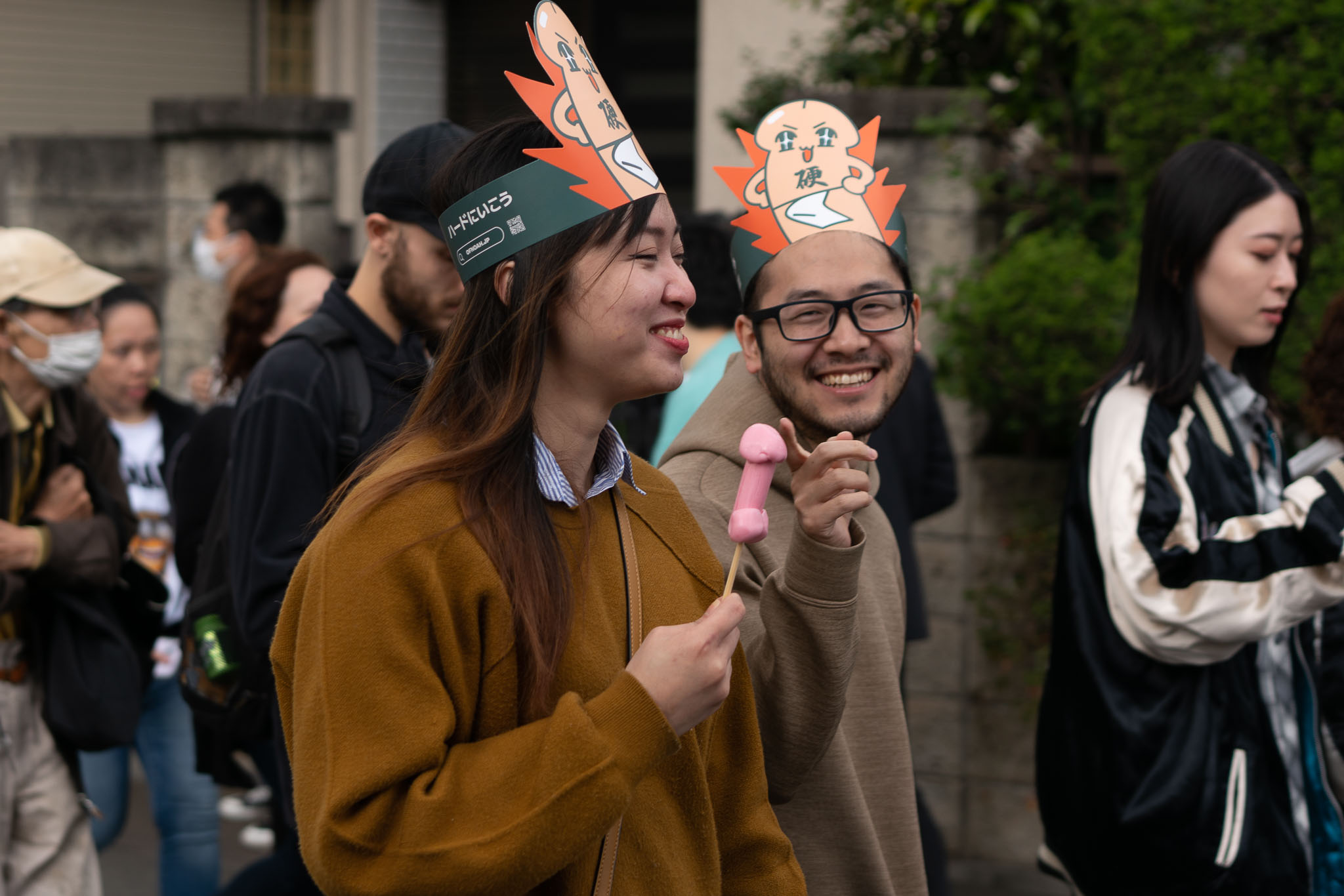
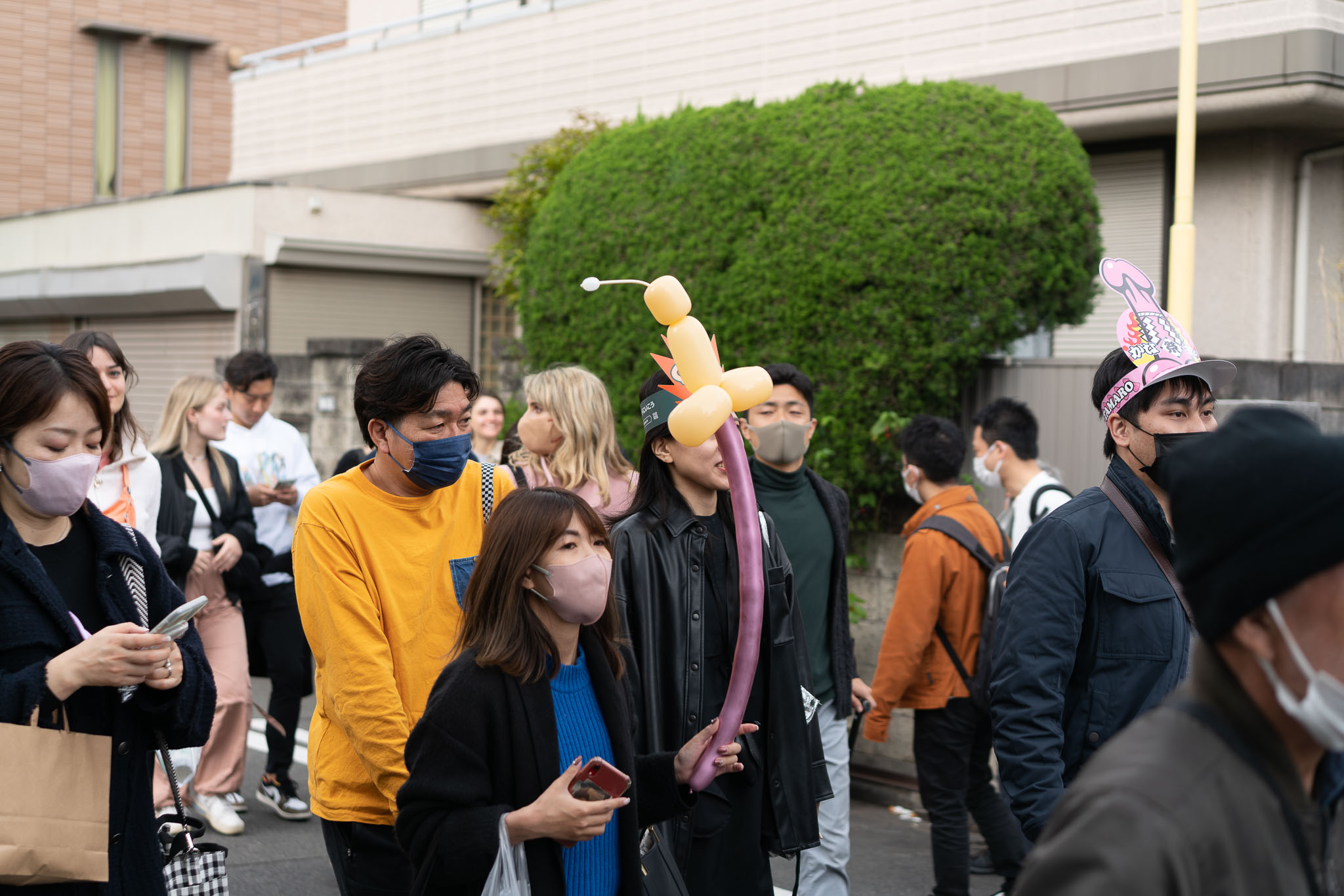
The festival draws an international crowd — Japanese families, couples on dates, tourists from across Asia, Europe, and the US, people in costumes, people in completely ordinary street clothes, all of them sharing a narrow residential street and treating the proceedings with a matter-of-fact cheerfulness. The mix is what makes it photogenic.
The frame I keep coming back to isn't the mikoshi itself — it's the crowd reacting to it. A grandmother watching with complete equanimity as the procession passes. Two people grinning in paper hats while holding the festival's signature pink candy without the slightest self-consciousness. The collective decision by everyone present to treat this as a normal community event — which, locally, it is. That gap between the outsider's bewilderment and the local's total comfort is the interesting photographic territory.
Working the crowd requires moving away from the obvious positions everyone else is using. The tour groups arrive by coach and station themselves at two or three spots along the route waiting for the mikoshi. If you want frames that don't look like everyone else's frames, work the build-up and the periphery — the stalls selling festival-themed food being operated with total commercial seriousness, the festival merchandise, the side streets where locals who've seen this forty times are watching from their doorways. A longer lens is useful for pulling faces from the crowd without intruding on people's space.
Getting There
Kanayama Shrine is about 15 minutes on foot from Kawasaki-Daishi station on the Daishi line from Kawasaki. You can also walk from Kawasaki station itself in about 20 minutes, which gives you more street time and the chance to photograph the crowd building as you approach. Get there early — by 10am the area around the shrine is at capacity and the procession route is packed. The atmosphere worth photographing, including the shrine itself, the stalls, and the crowd at manageable density, is there from opening in the morning.
The procession typically starts mid-morning and moves slowly. You'll have multiple chances to position yourself along the route before it arrives. The stalls and general festival atmosphere are active all day regardless of where the procession is, so there's material throughout even when you're waiting.
One More Thing
Kanamara Matsuri is completely appropriate for children. Japanese families bring theirs without a second thought and no one bats an eye. The crowd is well-behaved, the festival is festive without being aggressive, and nobody is doing anything that requires an explanation beyond "this is an old festival and everyone here is happy about it." The discomfort, where it exists, comes almost exclusively from foreign visitors who haven't seen it treated as the ordinary community event it is. The locals find it perfectly reasonable. It is.
Want portraits in Tokyo during festival season?
Book a Session in Tokyo →