
Ghost in the Shell The Exhibition ran at TOKYO NODE in Toranomon Hills from January 30 to April 5, 2026 — billed as the first exhibition to cover all Ghost in the Shell anime series in one place. I went on February 2nd, a Sunday, in the afternoon. The venue is on the 45th floor of Toranomon Hills Station Tower, which means you're already doing something before you walk in: the elevator ride gives you a partial view of Tokyo that contextualises the series better than any wall text could.
The exhibition was organised chronologically and thematically across several rooms, moving from the original 1995 Mamoru Oshii film through Stand Alone Complex and into later entries. The density varied by room — some sections felt lean, others were genuinely worth stopping in for a while.
The Background Art
The strongest material in the exhibition was the original production background paintings from the 1995 film. These are the works that Oshii's team built the visual language of the series on — the Hong Kong-derived urban density, the layered signage, the sense of a city that had grown beyond any single planning logic. Under glass, in person, they're more detailed and more hand-made than any reproduction suggests.
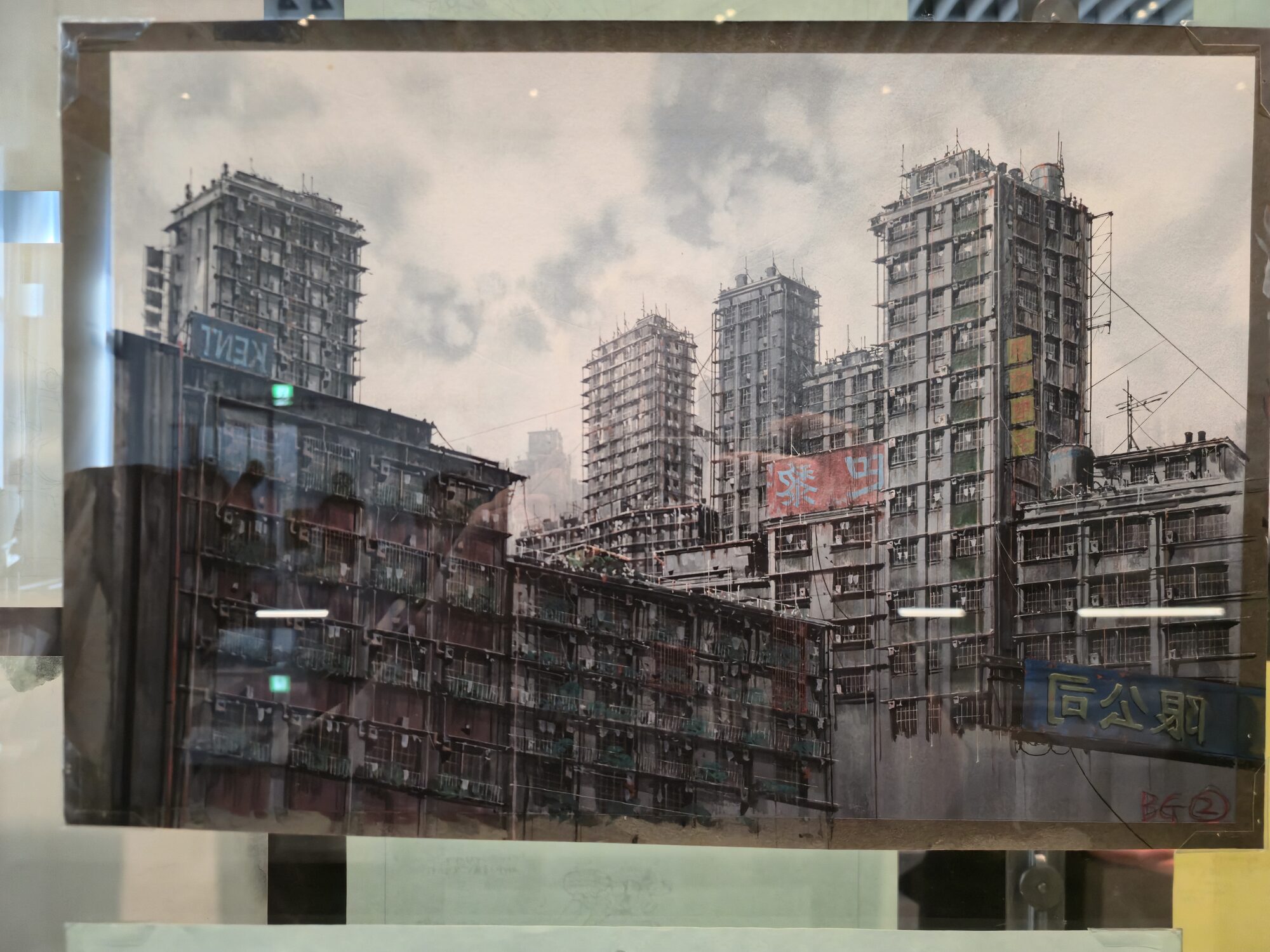
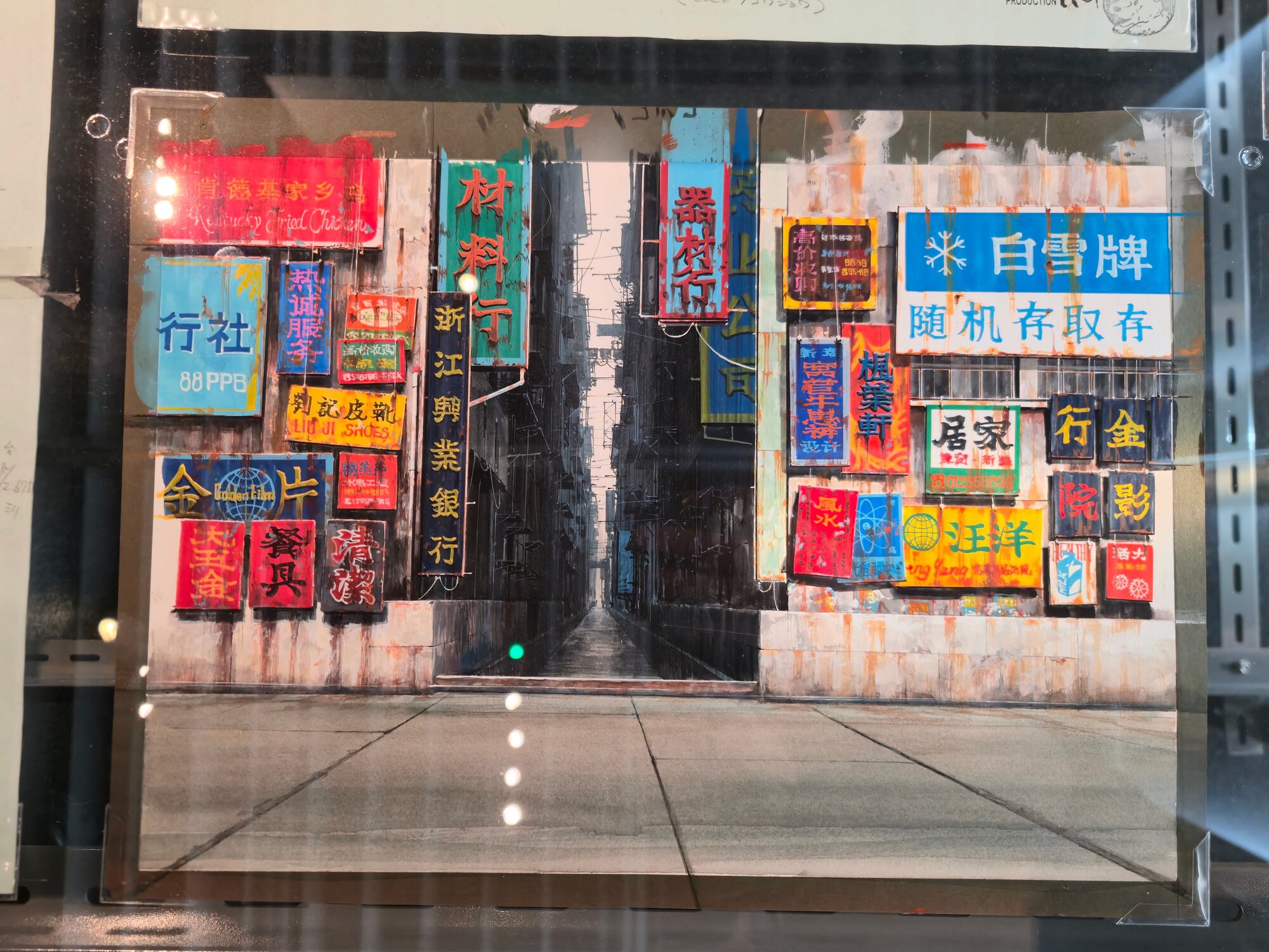
The cityscape painting shows the view that opened Oshii's film — towers stacked behind towers, windows dense enough to read as texture, Chinese-character signage on every surface. The alley piece is less well-known and more interesting to look at: a narrow lane compressed by coloured shop boards until the vanishing point is almost entirely blocked. Both look painted, which they are, and the brushwork is visible in the transitions between tones. The 1995 film was cel animation but the backgrounds were traditional media. You can see that here in a way you can't on screen.
Animation Cels
A section of the exhibition displayed original animation cels — the transparent sheets that were photographed in sequence to produce the final film frames. The cels on show were of Motoko Kusanagi in her thermoptic bodysuit: six frames across two rows, each slightly different, each numbered in pencil in the margin. The label read セル画.
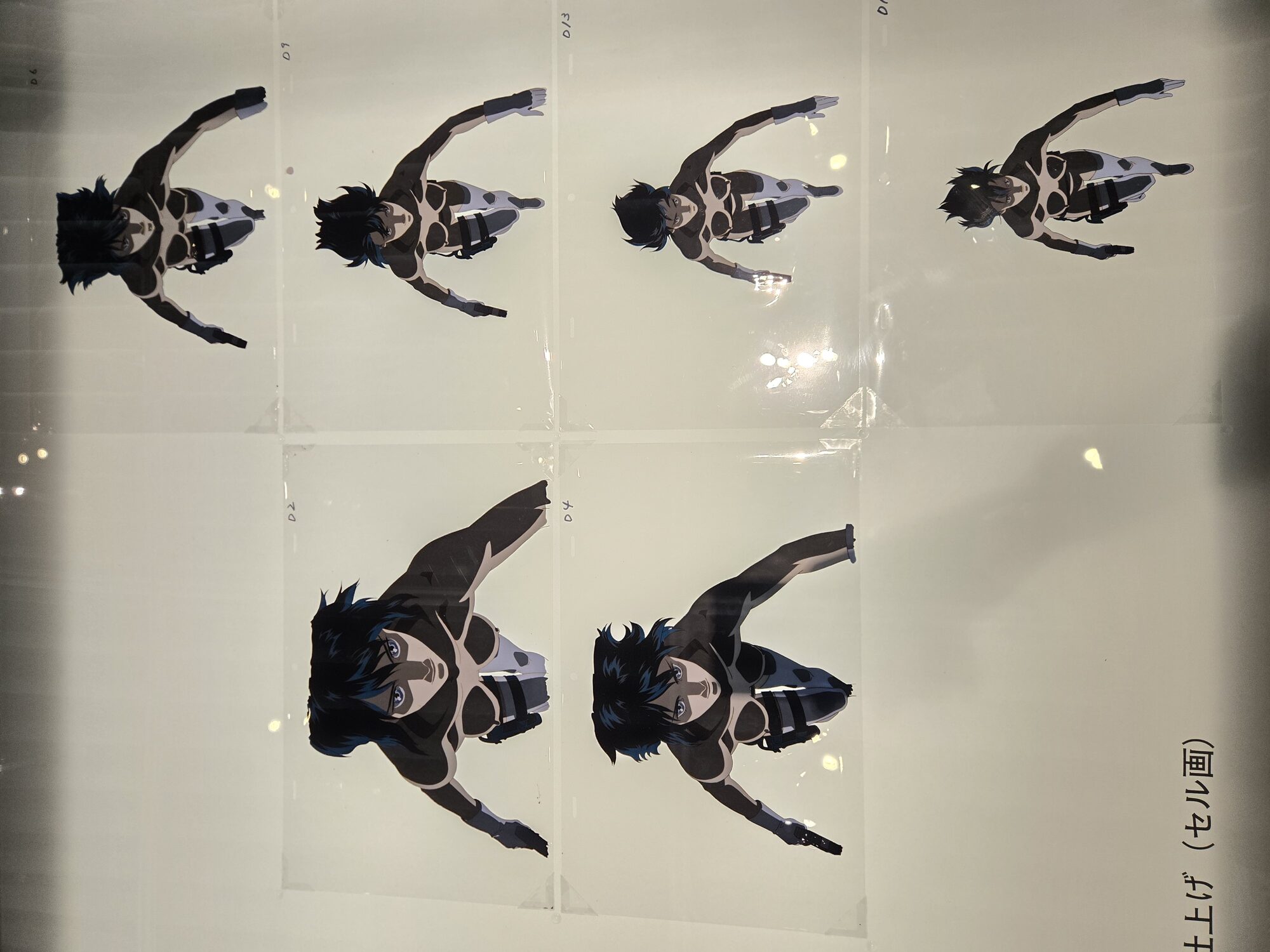
Cel animation at this scale — production cels from a feature film — is something most people have only seen in reproduction. The actual objects are smaller than expected and more provisional-looking: the paint is applied cleanly but the registration marks and pencil notations give them a working quality. They were made to be filmed, not displayed. Seeing them under glass reverses that intention.
The Digital Installation
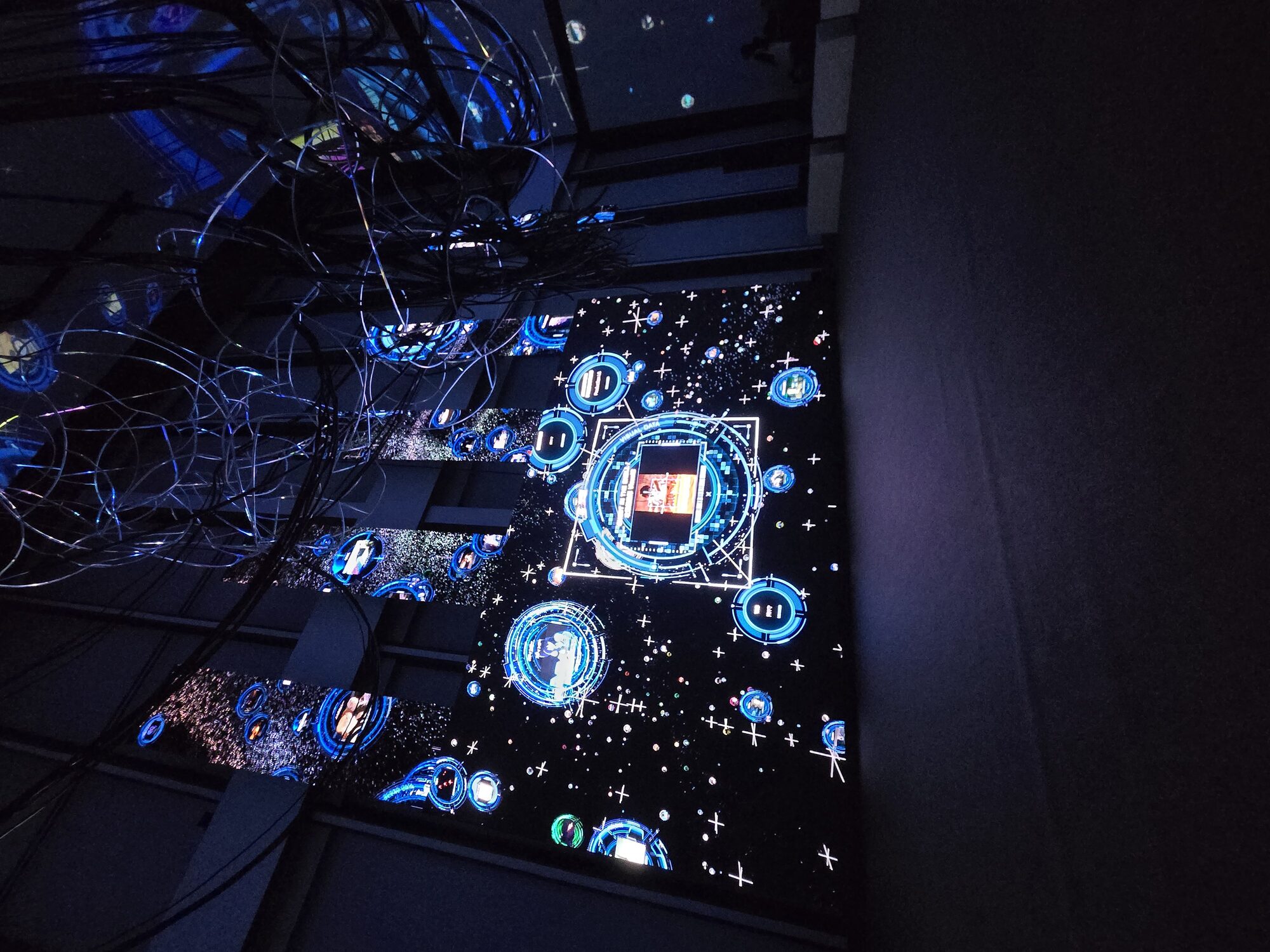
One room was given over to a large immersive projection piece — floor-to-ceiling and floor itself lit, running a looping sequence of Ghost in the Shell iconography: network nodes, data streams, the circular UI elements from Stand Alone Complex rendered at room scale. Shot from the mezzanine level looking down, it had the quality of being inside a circuit diagram. More spectacle than content, but effective spectacle.
The Surveillance Piece
A separate interactive section used real-time camera feeds of visitors moving through the space, processed with AI tracking overlays — skeletal tracking, bounding boxes, annotated data readouts displayed alongside the live footage. The piece was doing what the series always did: making the act of being watched visible as a formal experience rather than a background condition. Standing in front of it, you were on the screen being labelled. The annotations were accurate.
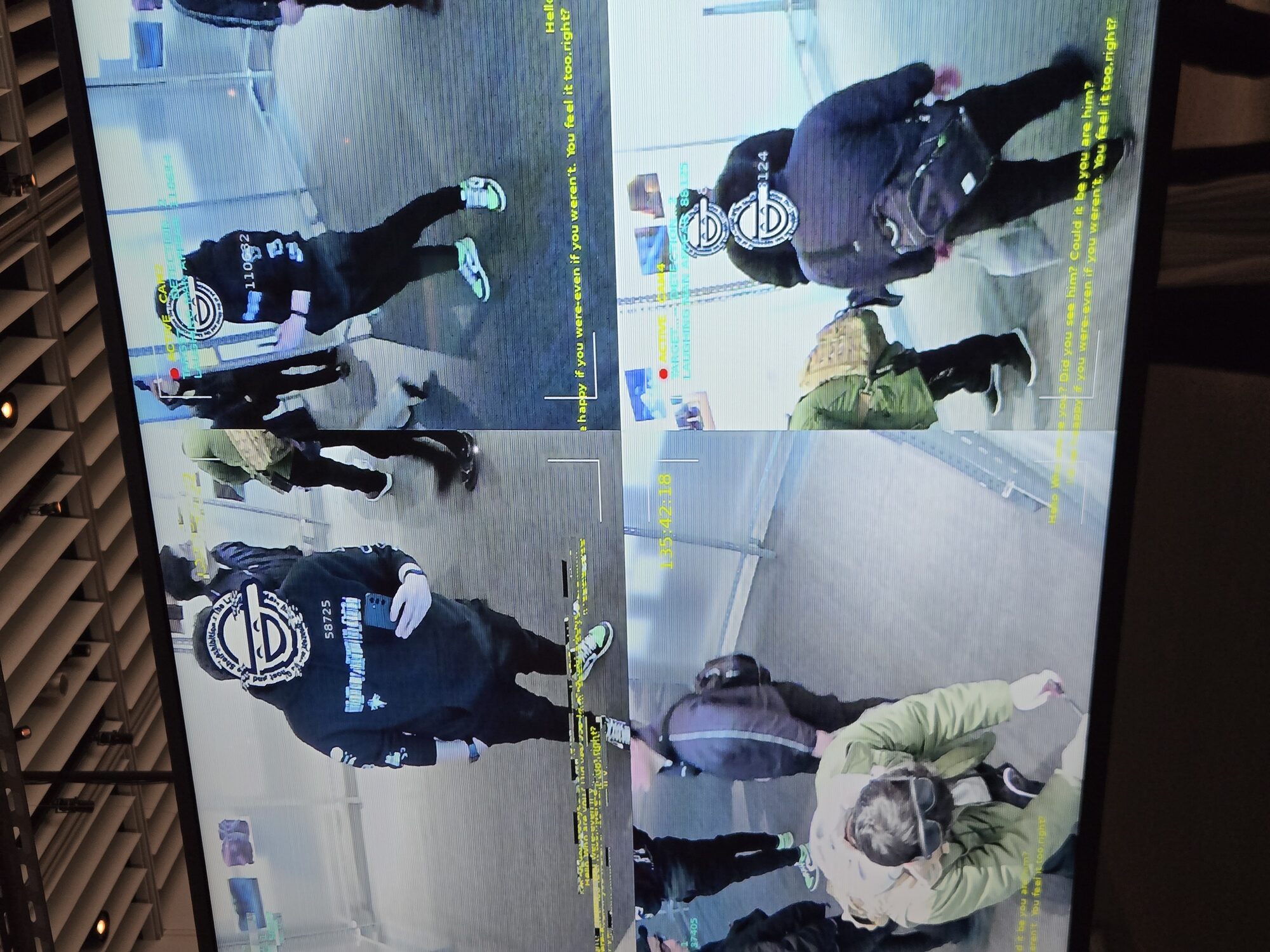
The Chrome Sculpture
The largest single piece in the exhibition was a chrome sculpture of a female figure suspended horizontally from the ceiling — arms extended, body merging into mechanical components and tubing at the periphery. It referenced the opening sequence of the 1995 film, in which the Major's cyborg body is manufactured: assembled from chrome components, suspended, gradually completed. The sculpture read differently depending on your position — from below, the figure is dominant; from the side, the mechanical attachment points become more visible. It was the only piece with genuine physical presence in the room.
The Tachikomas
At the café level, two Tachikoma models were displayed in glass cases — the spider-tank units from Stand Alone Complex, rendered at roughly 1:8 scale and placed where you order coffee. One was painted white and covered in handwritten text, the surface dense with kanji and annotations. The other had a weathered red base coat with a rainbow iridescence across the legs — visually loud in a way that the white one wasn't.
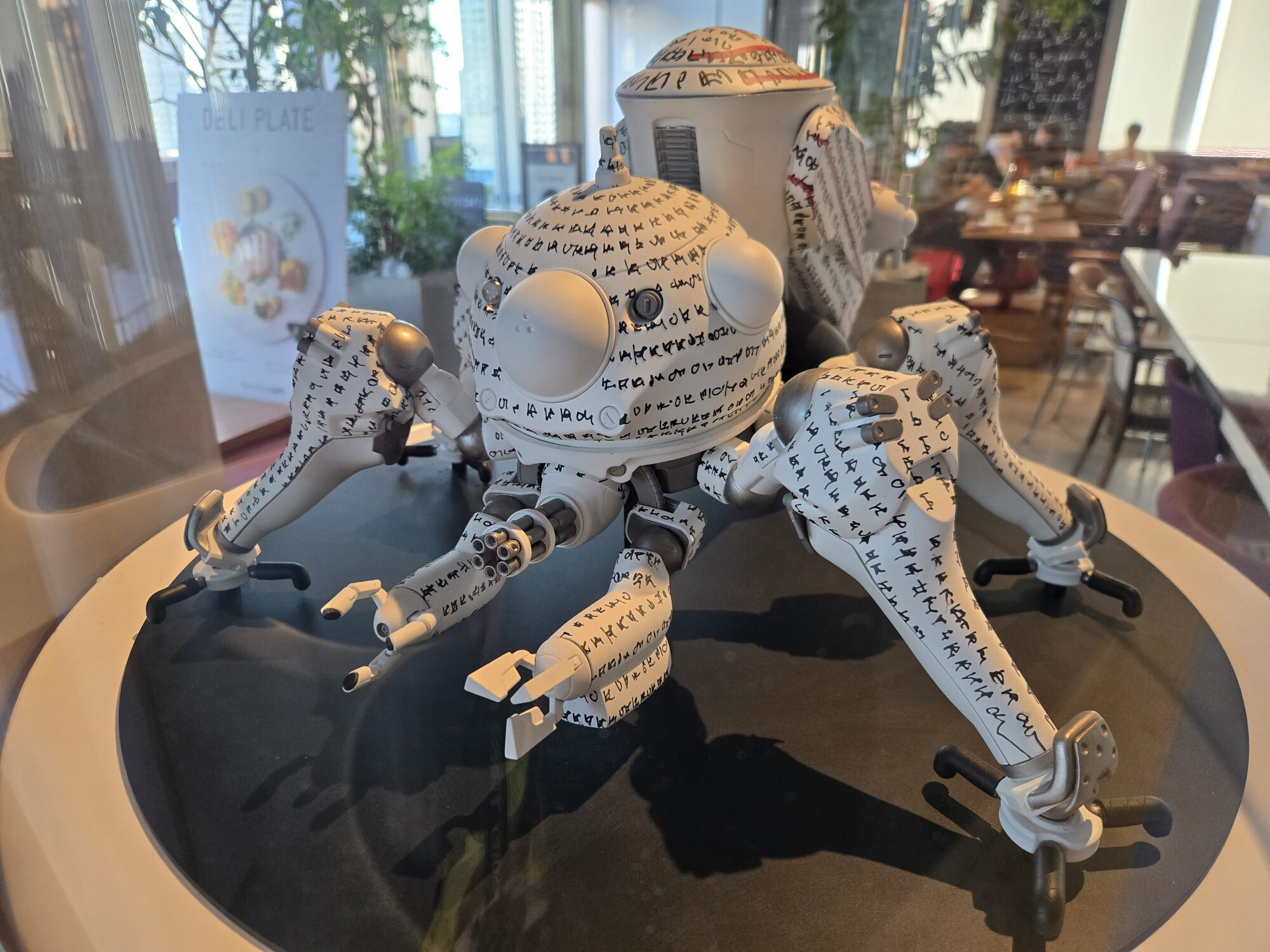
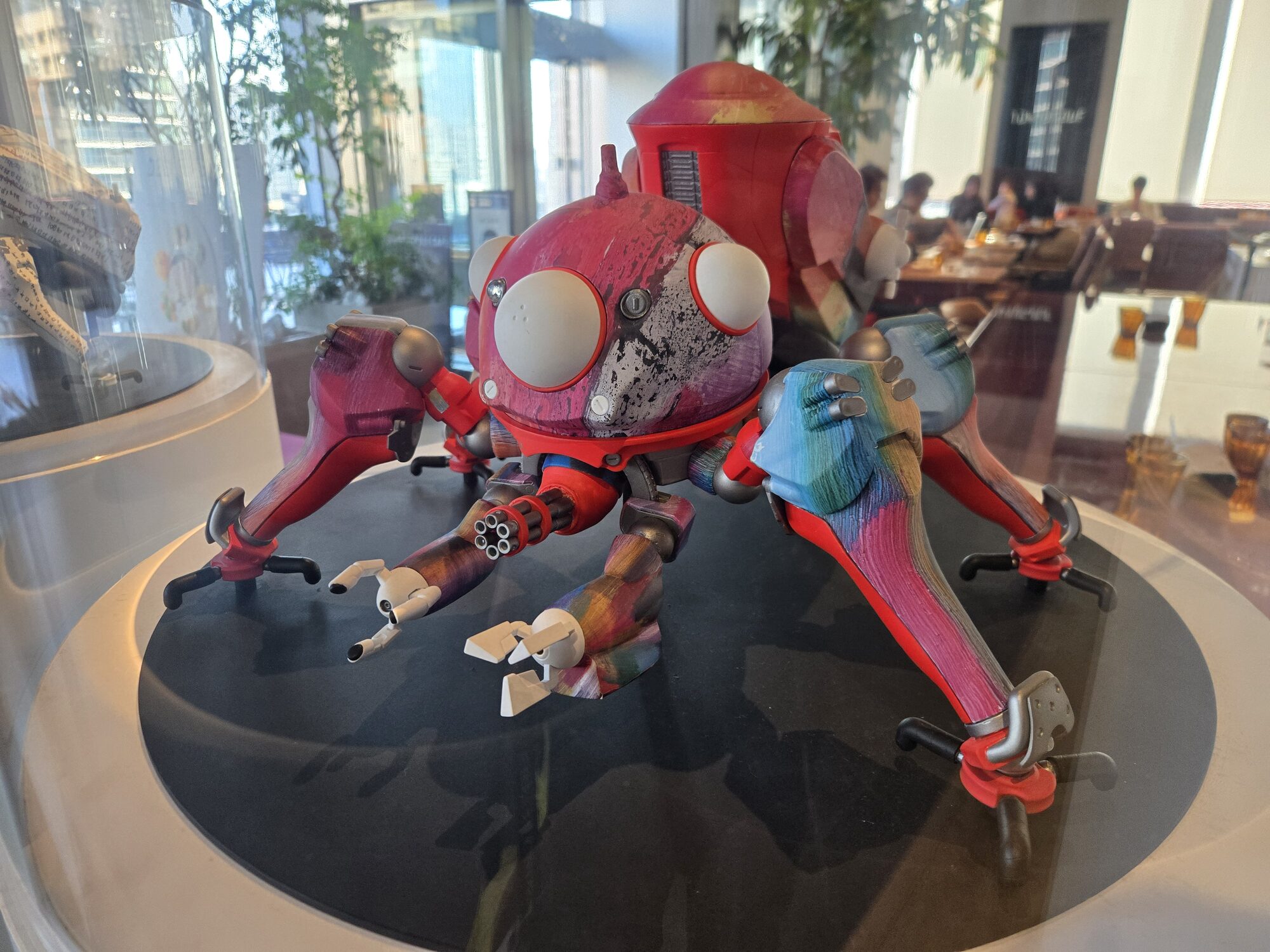
The Tachikoma placement — in a café, in cases, beside a menu board — was either an afterthought or a deliberate decision to make them ambient rather than centrepiece. Either way it worked. You got a coffee, you looked at a Tachikoma through glass, you sat down. The series has always had that register: heavy philosophical content delivered casually. Putting the robots in the café tracked.
Worth Going
The exhibition ran through April 5th and has closed — this is a record of what was there, not a reason to book tickets. If another leg of it surfaces elsewhere (these productions often travel), the background art section alone is worth the entry. The 1995 film's visual language has aged into something that looks increasingly prescient rather than dated, and seeing the production materials that built it is a different experience from watching the film again.
TOKYO NODE as a venue is also worth knowing about separately. The 45th floor of the Station Tower has a clear-span event space with a view of the city that most Tokyo venues don't have. Whatever runs there next, the building itself does half the work.
Shooting Tokyo — the exhibitions, the arcades, the things that don't stay?
Book a Session in Tokyo →