
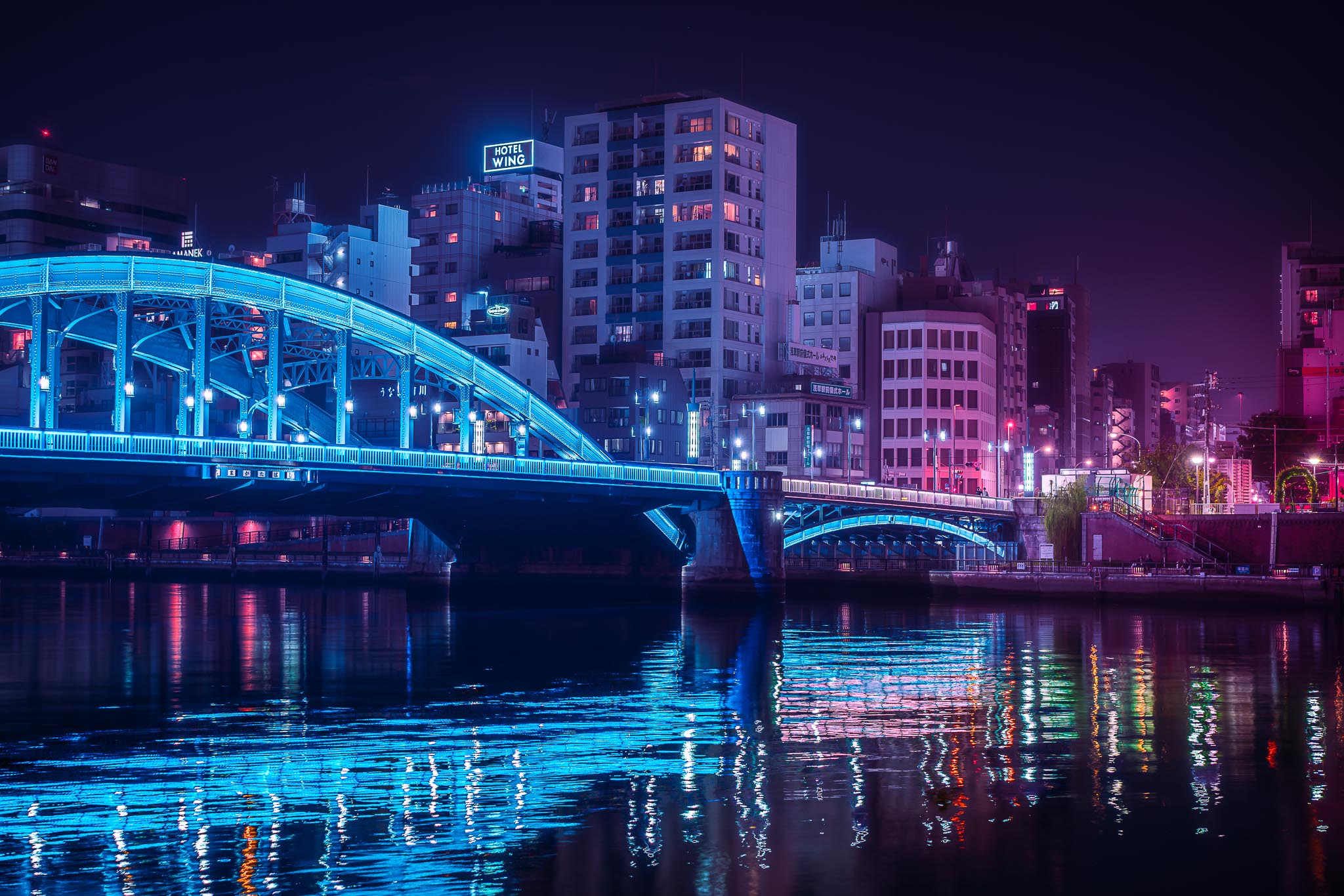
Asakusa night photography has a problem: everyone is pointing the camera at the same thing. Senso-ji temple, the Kaminarimon gate, Nakamise-dori — these are genuinely photogenic and genuinely worth visiting, but they've been shot so many times, in such consistent conditions, that it's hard to make an image that doesn't look like a hundred others. The real Asakusa photography happens after the tour groups leave and you walk two minutes west to the Sumida River. The bridges, the canals, the yakatabune moored along the banks — this is where the neighbourhood reveals something that isn't in any travel guide.
Senso-ji: How to Shoot It and When to Move On
The temple deserves its reputation. Built in the 7th century, repeatedly destroyed and rebuilt, it has a physical presence that photographs can't fully communicate. But the conditions for making an interesting photograph there are narrow. During the day it's crowded year-round — managing the crowds becomes the primary compositional challenge, and the images end up being about the crowds rather than the temple. The sweet spot is early morning before 6am, when the gates are open but the tourists haven't arrived, and the courtyard has the quality of a different era entirely. Late night after midnight works too — the main gate closes, but the approach and the outer areas stay accessible and empty.
Outside those windows, if you're at Senso-ji with a camera and it's peak hours, point toward the details rather than the wide shot: the lanterns close up, the incense smoke in raking light, a single person against the gate architecture. The comprehensive temple shot requires patience or luck. The detail shot is available most of the time.
The Sumida River: The Real Asakusa Photography
Walk west from Senso-ji for five minutes and you reach the Sumida River, and at night the Sumida River is one of the most photographically interesting stretches of water in Tokyo. The bridges crossing it are lit in electric blue and white, and those lights reflect into the dark water in a way that the camera responds to dramatically. The city skyline — including the Tokyo Skytree to the north — sits behind the bridges and provides depth and scale. The whole scene reads as the cyberpunk Tokyo that film has been imagining for forty years, and it's just there, visible from a public footpath, available to anyone who makes the short walk from the temple.
Azuma-bashi, the red bridge directly west of Senso-ji, is the most well-known crossing point and worth shooting from multiple positions — from the Asakusa side looking toward the Asahi Beer building, from the bridge itself looking north or south along the river, and from the far bank looking back. The light on the bridge is engineered for visibility rather than aesthetics, but the way it reflects in the river at night is accidental and excellent.
Komagata-bashi, one bridge south, is less trafficked and gives you a longer, cleaner sightline down the river with the bridges as layered elements receding into the distance. This is the compressed-focal-length shot — 135mm or longer, isolating the bridge structure against the skyline, everything in the frame contributing to the same visual argument. It requires finding the right position on the riverbank, which takes some walking, but the frame exists.
The Canals and Yakatabune
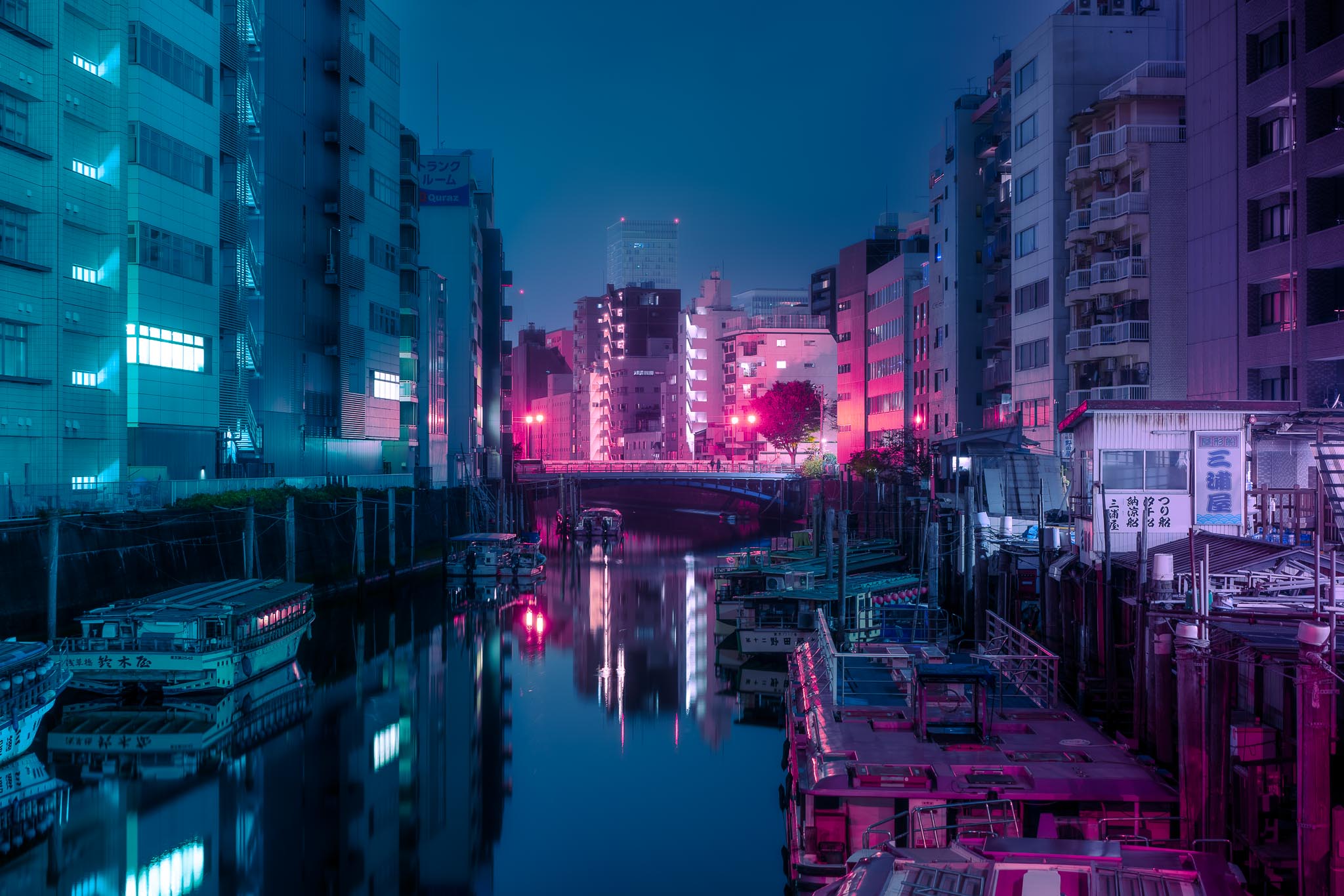
The smaller canals east of the Sumida — threading through the Asakusa and Mukojima areas — are less visited and photographically distinctive in a different way. Where the river is open and dramatic, the canals are enclosed: buildings rising on both sides, a bridge closing the frame at the end, the water reflecting whatever light exists at street level. At night, with the canal perfectly still and the ambient glow of the surrounding city coming in from above, these shots have a compressed, almost interior quality despite being entirely outdoors.
The yakatabune — traditional flat-bottomed pleasure boats used for dinner cruises — moor along the canal banks after their evening runs and sit lit in warm light against the darker water. They're not a famous photography subject, which means the frame isn't already exhausted. A moored yakatabune with the canal's neon reflections around it, and the city rising behind it, is an Asakusa photograph that doesn't look like anyone else's Asakusa photograph.
Timing the River Shoot
Blue hour — the 20 to 30 minutes after sunset when the sky retains colour but the artificial lights are fully on — is the best time to be at the river. The balance between the electric blue of the bridges and the remaining natural light in the sky produces colour relationships that are difficult to replicate any other way. This window is short and moves fast. Be at the water before sunset and start shooting immediately when the sky begins to change.
Full darkness works too, but differently. After blue hour the sky goes black and you're working entirely with artificial light — the bridges, the city, whatever reflections are available. The images become more abstract and less spatially oriented, which can be the right choice depending on what you're looking for. The blue hour version reads as a place. The full dark version reads as a mood.
Late night — after midnight — is when Senso-ji becomes accessible for the kind of photograph that's worth making. The crowds are gone, the gate is closed, and the outer areas of the temple have a silence that's genuinely unusual in central Tokyo. The combination of a late night temple visit and a river shoot in the same evening covers most of what Asakusa has to offer a photographer.
Getting to Asakusa
Asakusa is well-served by public transport. The Tokyo Metro Ginza line terminates here, connecting directly from Shibuya and Shinjuku. The Tobu Skytree line runs from Asakusa north toward Nikko. The Tsukuba Express also stops at Asakusa station. From most central Tokyo locations, a single train or one transfer is enough. The Sumida River is a five-minute walk from any of the station exits.
Want portraits along the Sumida River at night?
Book a Session in Tokyo →